

BRRRR Calculator: How to Analyze a BRRRR Deal in South Florida
June 9, 2026 · 6 min read · By Onias Derilus, Broker
A BRRRR calculator tells you whether a deal lets you recycle your capital. Here's how the BRRRR method works in South Florida, and a free tool to run the numbers.
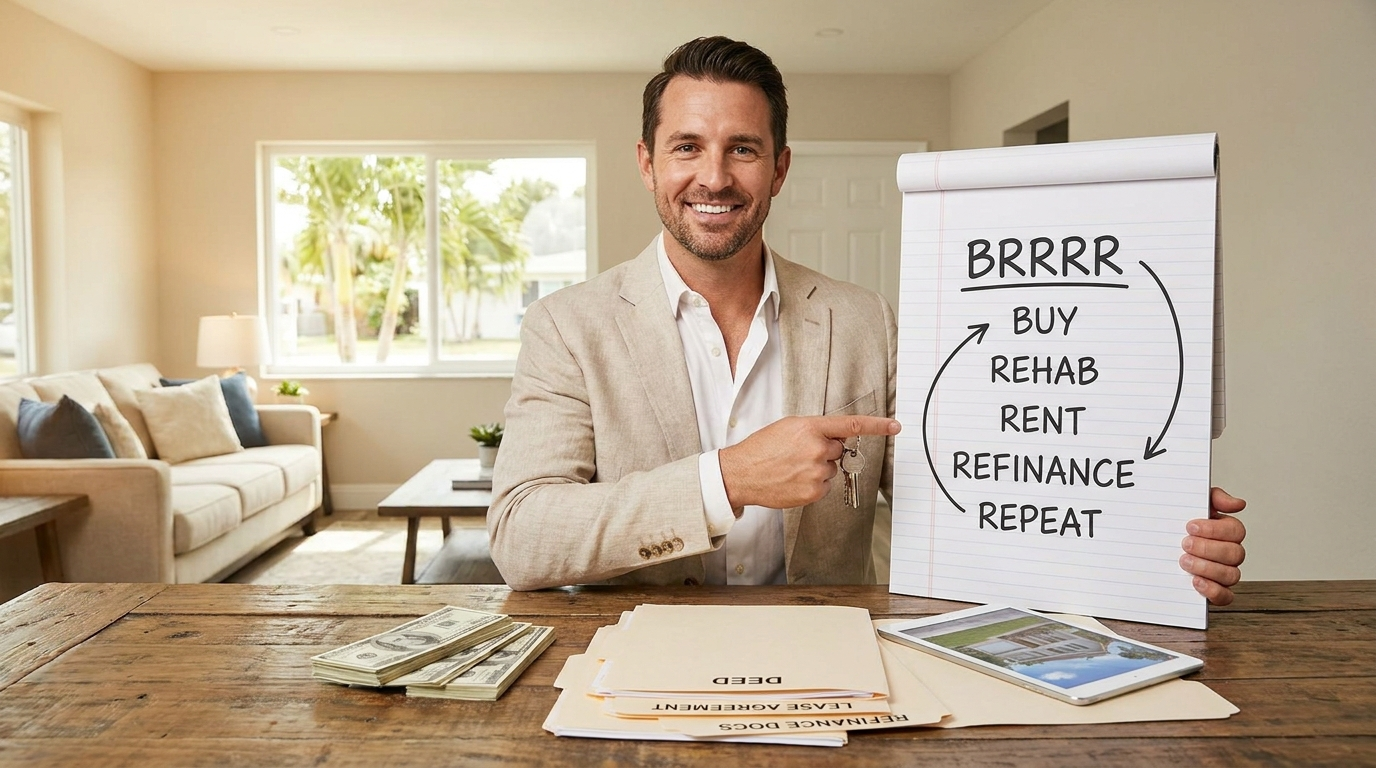
A BRRRR calculator answers the question every investor cares about: how much of my cash can I get back? BRRRR stands for Buy, Rehab, Rent, Refinance, Repeat. It is a strategy that lets you recycle your capital into deal after deal. In this guide, we explain the method and show you how to analyze it correctly in South Florida.
What is the BRRRR method?
The BRRRR method turns a single down payment into a repeatable system. You buy a distressed property below market value, rehab it, rent it out, and refinance based on the higher after-repair value. Then you pull your capital back out and do it again on the next deal.
When the numbers work, you build a rental portfolio while leaving little of your own money trapped in each property.
Why you need a BRRRR calculator
BRRRR lives and dies on the numbers. A good BRRRR calculator models five things at once: your all-in cost, the after-repair value, the refinance loan amount, the cash you pull out, and the cash flow that remains. Miss any one of them and a deal that looks great can quietly trap your capital.
Our Fix & Flip / BRRRR calculator runs all of it in seconds, including whether you achieve an "infinite return" by recovering 100% of your investment.
How to analyze a BRRRR deal
- Estimate the ARV. What will the home be worth after repairs?
- Add up your costs. Purchase, rehab, closing, and holding costs all count.
- Project the refinance. Most lenders refinance at 70 to 75 percent of ARV.
- Calculate cash left in. Subtract your cash-out from your total invested.
- Check the cash flow. The new mortgage still needs to leave room for profit after expenses.
BRRRR in South Florida: what to watch
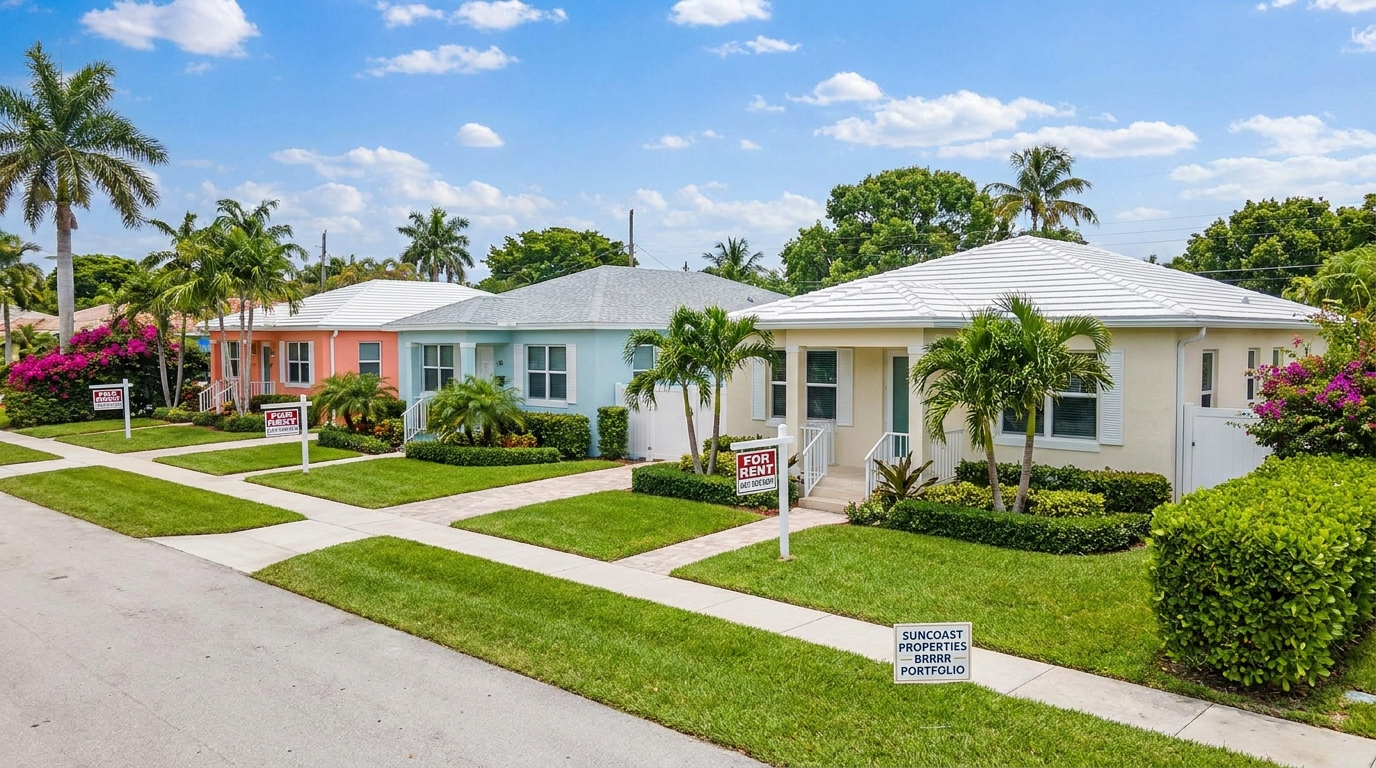
South Florida has strong rents and appreciation, which helps BRRRR deals. Insurance costs and condo restrictions can complicate both the rental and refinance steps, though. Single-family homes inland, in St. Lucie or Highlands County, often make cleaner BRRRR candidates than coastal condos.
To compare buy-and-hold returns after you refinance, our rental property ROI calculator shows cap rate and cash-on-cash return.
Start your first BRRRR
A BRRRR calculator turns a layered strategy into a clear go/no-go decision. Once you have run the numbers, the next step is finding the right distressed property. Tell us your criteria and our team will source off-market BRRRR candidates across South Florida.
Where BRRRR deals actually break
The strategy is buy, rehab, rent, refinance, repeat, and it only works if the refinance returns most of your capital. Everything before that step is ordinary investing. The refinance is what makes it BRRRR, and it is the step that fails.
It fails for one reason more than any other: the after-repair value came in lower than assumed. A lender refinances against an appraisal, not against your spreadsheet. If you bought at $300,000, spent $60,000, and expected a $480,000 appraisal, a $420,000 result changes everything. At 75 percent loan to value that is $315,000 back against $360,000 in, leaving $45,000 stranded in the deal rather than recycled into the next one.
Underwriting the after-repair value honestly
Base it on closed sales of genuinely comparable renovated homes within a tight radius, not on active listings and not on what the neighbourhood feels like. Asking prices are other sellers' hopes, and appraisers do not use them.
Every street has a ceiling. Renovating past what the best homes on that street have actually closed for does not produce a higher appraisal, it produces an over-improved property. That is the most common way an ambitious rehab budget destroys a BRRRR return.
The seasoning question
Lenders impose seasoning requirements, meaning a minimum period of ownership before they will refinance based on the new appraised value rather than your purchase price. That period varies by lender and by product, and it directly determines how long your capital stays trapped.
Ask about seasoning before you buy, not after the rehab. An investor who assumed a quick refinance and discovers a longer requirement is left carrying expensive short-term financing for months longer than budgeted, which can consume the entire projected return.
South Florida specifics that change the model
Three local factors matter more here than the national BRRRR literature suggests.
Insurance. The refinanced property has to be insurable at a cost the rent can support. Roof age drives this heavily, which is an argument for including the roof in the rehab even when it is not the most visible use of the budget.
Permitting. Municipal timelines vary widely across South Florida, and a project waiting on inspection is still accruing interest. Build realistic permitting time into the holding cost rather than the contractor's optimistic schedule.
Taxes. Florida reassesses on sale, so the post-purchase tax bill is not the seller's. Underwrite the rental phase on the new figure, because it directly affects whether the property cash flows after the refinance.
Running the numbers before you commit
- Establish after-repair value from closed comparables, then reduce it and see whether the deal still works. If it only works at your optimistic figure, it does not work.
- Build the rehab budget from itemised contractor bids, then add 10 to 20 percent contingency.
- Total your cash in: purchase, rehab, closing costs both times, and every month of holding.
- Apply the lender's actual loan to value against a conservative appraisal to find what comes back.
- Check that the property cash flows after the refinance, using real insurance and reassessed taxes. A refinanced property with negative cash flow is a liability, not an asset.
When BRRRR is the wrong tool
If the spread between distressed and renovated pricing in your target area is narrow, there is no room for the strategy to work. That spread is what funds the rehab, the holding costs, and the return, and in newer or uniform housing stock it often is not there.
In those markets a straightforward rental purchase, or a flip if the exit is strong, usually beats a forced BRRRR. The strategy is not superior to the alternatives; it suits a particular kind of property in a particular kind of market.
Questions about BRRRR in South Florida
How much cash do I need to start?
More than the down payment. Purchase, rehab, two sets of closing costs, holding through the rehab and seasoning period, and a contingency all come before any money returns. Running out mid-project is the common failure.
What loan to value should I expect on the refinance?
It varies by lender and property type, and it is the single most important number in the model. Confirm it with a specific lender before purchasing rather than assuming a figure.
Can I BRRRR a condominium?
It is harder. Association rules may restrict renovation and leasing, and lenders scrutinise building finances. Read the documents before assuming the model applies.
Will you help me check comparables?
Yes. Establishing a defensible after-repair value from actual closed sales is the step that decides the deal, and we can pull those for any address in the eight counties we serve.
Managing the rehab so the timeline holds
Holding cost is the silent killer in a BRRRR, and it is almost entirely a function of schedule rather than budget. Interest, taxes, insurance, and utilities accrue every month whether or not a contractor turned up.
Two habits protect the timeline. The first is ordering work correctly: structure and systems before finishes, so nothing gets torn out and redone. The second is scheduling around permits rather than around the contractor's optimism. Inspections in South Florida can add weeks, and a project that assumed same-week turnarounds is a project that will run over.
Pay on a draw schedule tied to completed and inspected work, never in a large upfront lump. A contractor holding most of your money has no reason to prioritise your job over the next one.
What to do when the appraisal disappoints
It happens, and having a plan beforehand prevents a bad decision under pressure. The options are to accept a smaller cash-out and leave capital in the deal, to hold the property as a straightforward rental and refinance later once values support it, or to sell rather than refinance if the numbers work better that way.
What does not work is stretching to a higher-cost loan simply to recover the capital. That trades a one-time shortfall for permanent negative cash flow. A BRRRR that becomes an ordinary rental is a disappointing outcome; a BRRRR that becomes a rental losing money every month is a genuine problem.
Keeping records the next lender will want
Document the rehab as you go. Keep itemised invoices, permit records, and before and after photographs. When the refinance appraisal happens, an appraiser who can see exactly what was replaced and when has a far easier job supporting your value than one walking into a nice-looking house with no history. This costs nothing at the time and repeatedly makes the difference at the step where the whole strategy either works or does not.


