

The BRRRR Method in South Florida: How to Build a Rental Portfolio
June 9, 2026 · 8 min read · By Onias Derilus, Broker
The BRRRR method, Buy, Rehab, Rent, Refinance, Repeat, is one of the most powerful strategies for building a rental portfolio with limited capital. Here's how it works in South Florida.
The BRRRR method (Buy, Rehab, Rent, Refinance, Repeat) is one of the most capital-efficient strategies for building a rental portfolio in real estate. The concept is straightforward. You buy a distressed property below market value and renovate it to lift both condition and rental income. Then you place tenants and refinance based on the new appraised value to pull out your equity. That returned capital funds the next deal. In South Florida, where distressed properties and value-add opportunities exist across every price point, the BRRRR method has built real wealth for local investors over the past two decades. Understanding brrrr meaning and applying it correctly here takes market knowledge that goes beyond the acronym.
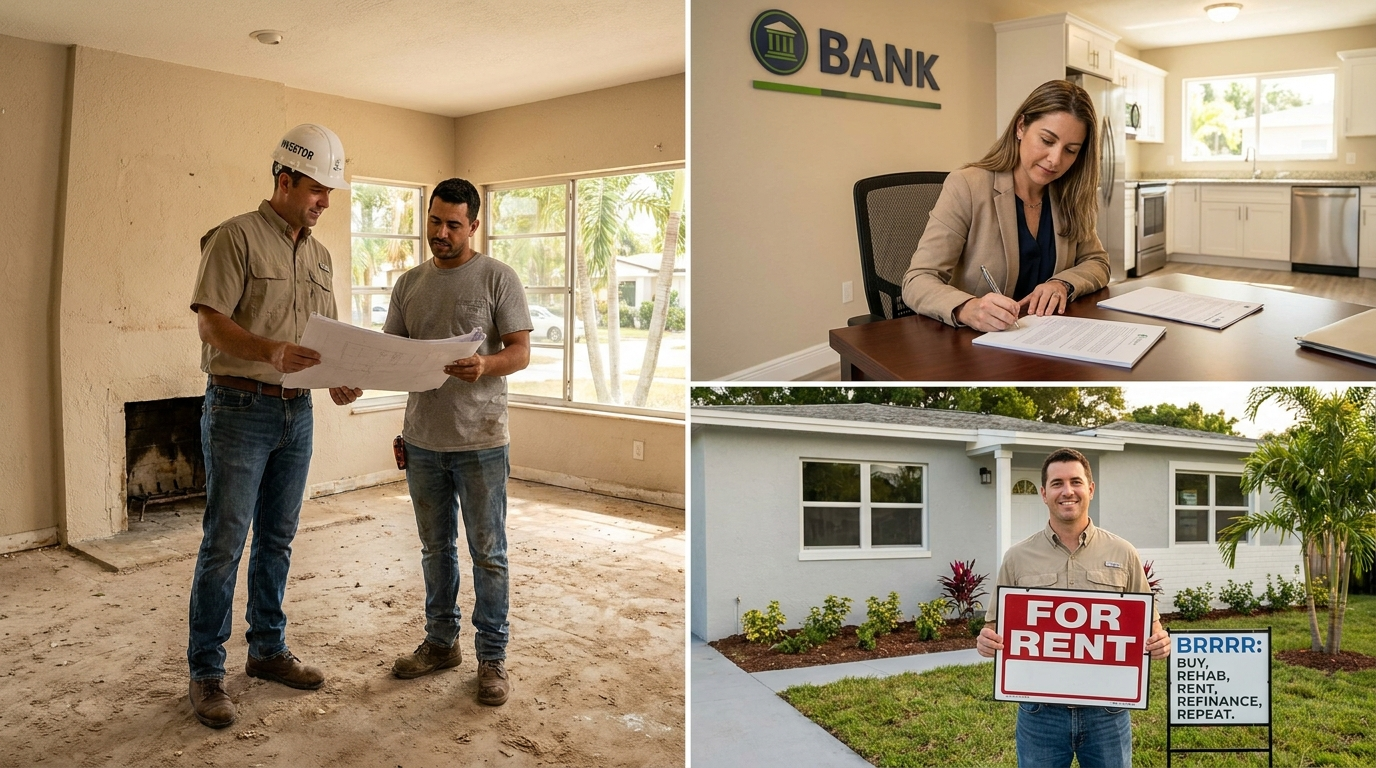
Breaking down the BRRRR acronym
Buy: Acquire a distressed property at a meaningful discount to its post-renovation value (ARV). The standard rule is that purchase price plus renovation cost should land at no more than 70 to 75 percent of ARV. In South Florida, that means hunting for dated properties in strong rental markets: older Broward County single-family homes, West Palm Beach workforce housing, or multifamily properties with deferred maintenance that scared off less patient buyers.
Rehab: Complete the renovation efficiently. The goal is not perfection. It is maximizing rental income and appraised value per dollar spent. Focus on kitchens, bathrooms, flooring, paint, and mechanical systems. In South Florida, roof upgrades and wind mitigation improvements are worth the added cost. They pay back through lower insurance premiums and stronger appraisals.
Rent: Place quality tenants at market rent before refinancing. Lenders underwriting a cash-out refinance want to see the property stabilized with a lease in place. South Florida's rental market, particularly in workforce housing, typically allows quick tenant placement at solid rents.
Refinance: Once the property is rented and stabilized, refinance with a conventional cash-out loan based on the new appraised value. Buy and renovate correctly and the appraisal should come in at or above ARV, letting you pull out a substantial portion of the equity you created. Most lenders will go to 75 to 80 percent LTV on an investment property.
Repeat: Use the returned capital to fund your next acquisition and run the cycle again.
The BRRRR math: a South Florida example
Purchase price: $180,000 (distressed single-family in Lauderhill)
Renovation: $45,000 (kitchen, baths, flooring, HVAC)
Total invested: $225,000
ARV (post-renovation appraised value): $320,000
Cash-out refinance at 75% LTV: $240,000
Capital returned: $240,000 minus $225,000 = $15,000 net return
In this scenario, you have bought and renovated a rental property for roughly $15,000 out of pocket. You own an asset that cash flows while a tenant pays down your mortgage. That $15,000 plus any retained cash flow goes toward the next BRRRR property.
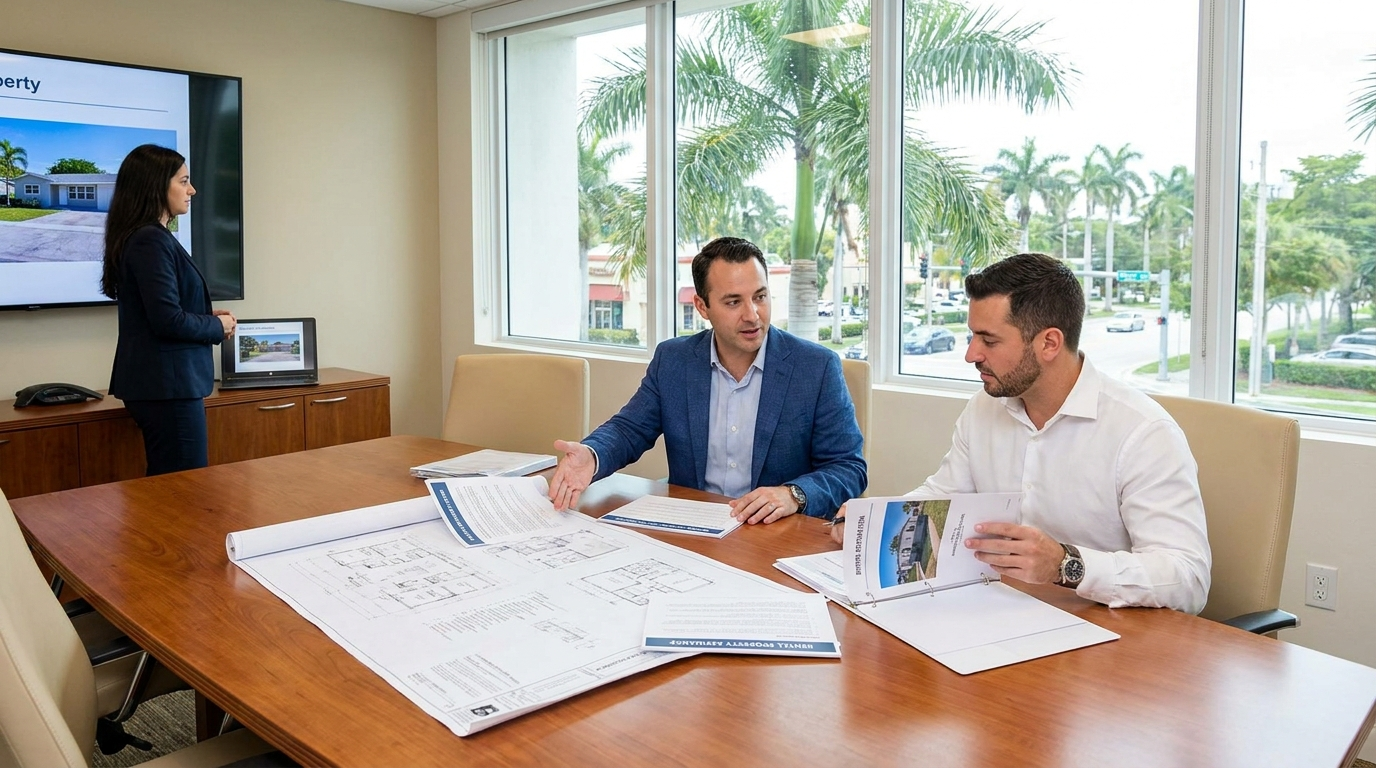
BRRRR challenges in South Florida
The BRRRR method requires accurate renovation cost estimation and consistent deal-sourcing discipline. South Florida adds a few layers that out-of-state investors often underestimate:
- Contractor availability and cost: South Florida's construction market is active and labor costs are elevated. Budget conservatively, get multiple quotes, and verify them carefully before closing.
- Insurance costs: Renovations that skip roof and wind mitigation work can leave you with an uninsurable or extremely expensive property to hold. Factor insurance costs into your hold analysis from day one.
- Appraisal risk: If the post-renovation appraisal comes in below your ARV estimate, the refinance loan amount drops and you may not recover all your invested capital. Know your comps before you buy, not after you renovate.
- Seasoning requirements: Many lenders require 6 to 12 months of ownership before a cash-out refinance. Plan your capital timeline with that buffer built in.
Use our Fix & Flip Calculator to model your BRRRR numbers before committing to a deal, and talk to our team about active value-add opportunities across South Florida's six counties.
Ready to find your next BRRRR property? Pure Equity works with South Florida investors sourcing distressed single-family homes and small multifamily properties across Palm Beach, Broward, and Miami-Dade counties. Contact us to discuss what you are looking for, or browse current listings to see what is available now.
Frequently asked questions
What does BRRRR stand for in real estate?
BRRRR stands for Buy, Rehab, Rent, Refinance, Repeat. It describes a strategy where an investor purchases a distressed property, renovates it to increase value and rental income, places tenants, refinances to recover invested capital, then uses that capital to acquire the next property.
Is the BRRRR method legal?
Yes. The BRRRR method is a legitimate real estate investment strategy. It combines standard property acquisition, renovation, landlording, and mortgage refinancing. All steps are legal, provided the investor complies with local permitting, landlord-tenant law, and lender guidelines.
How much money do I need to start BRRRR investing in South Florida?
The capital required depends on your target market and deal structure. Many investors start with $50,000 to $100,000 in available capital to cover purchase costs, renovation, carrying costs, and a reserve. Hard money or private money lenders can reduce the upfront cash needed, but they carry higher interest rates that must be factored into your numbers.
What is the 70 percent rule in BRRRR?
The 70 percent rule says that your total acquisition and renovation cost should not exceed 70 percent of the property's after-repair value. At 70 percent of ARV, there is enough margin to refinance at 75 to 80 percent LTV and recover most or all of your invested capital.
Does BRRRR work in South Florida's current market?
It works, but deal-finding requires more effort than it did five years ago. Elevated purchase prices have compressed margins, so off-market sourcing, direct outreach, and patience are more important now. Workforce housing in Broward and western Palm Beach County still produces viable BRRRR deals for investors who know where to look.
The refinance is the whole strategy, and the whole risk
BRRRR gets taught as five steps of equal weight. In practice four of them are ordinary property activity and one determines whether the strategy works at all.
The premise is that after renovation the property appraises high enough that a refinance returns most or all of your capital, letting you repeat. If the appraisal comes in short, the money stays in the deal, and you own a renovated rental with your capital trapped rather than a repeatable system.
So the honest way to underwrite BRRRR is to model the refinance first and treat everything else as execution. Ask what a lender will advance against the finished value, what that value realistically is from closed sales, and what is left after the existing debt is repaid.
Three constraints decide the refinance
- The advance rate. A lender will lend a percentage of the appraised value rather than all of it. That percentage caps what you can pull out regardless of how well the renovation went.
- The seasoning requirement. Many lenders require the property to be held for a period before refinancing at the new value rather than at your purchase price. That waiting period is capital sitting idle and it belongs in your model.
- The appraisal itself. Appraisers work from comparable closed sales, and they are conservative about improvements that do not add measurable square footage. A high specification finish in a modest neighbourhood does not return what it cost.
Ask a lender about the advance rate and seasoning before you buy the first property, not after the renovation. Those two numbers determine whether the strategy is available to you at all.
Why South Florida makes this harder than the tutorials suggest
The method was popularised in markets where purchase prices are low relative to rents. This region is the opposite case, and that affects the last R more than the first four.
County medians currently run about $599,000 in Miami-Dade, $480,000 in Palm Beach and $390,000 in Broward. At those entry prices the rent required to support the refinanced loan is substantial, and a property that refinances successfully can still fail on cash flow, which leaves you with a repeatable strategy that produces nothing to live on.
Inland the arithmetic improves, with Highlands at about $309,000 and Okeechobee at $274,900. The trade there is the exit and the comparables: thinner sales data makes appraisals less predictable, and Highlands averages about 206 days on market against 107 in Palm Beach.
The insurance step nobody includes
In Florida there is effectively a sixth step, and omitting it is why some BRRRR projects stall at the refinance.
A lender will require insurance in place, and on an older property roof age and opening protection determine both cost and whether cover can be placed at all. A renovation that improves kitchens and bathrooms but leaves a fifteen year old roof can produce a property that is difficult to insure and therefore difficult to refinance.
Include the roof and openings in the renovation scope where they are near end of life, and get an insurance quote during the project rather than at the end. That sequencing prevents the most avoidable failure in this strategy here.
Model the version where it does not work
Before the first deal, work out what happens if the appraisal comes in ten or fifteen percent below your target.
Can you leave the capital in and still hold the property comfortably. Does the rent cover the payment at the smaller refinance you would actually get. Could you sell instead without a loss, allowing for selling costs and the local marketing period.
If the answer to all three is no, the deal only works in the good case, which is not a plan. Investors who survive this strategy are the ones who could absorb the capital staying in, and who therefore never had to accept bad terms to get it out.
More common questions
Does BRRRR still work here?
It works where the numbers work, which is more often inland than on the coast. Model the refinance first rather than assuming the last step.
How much capital do I need to start?
Enough for the purchase, the full renovation, holding costs through the seasoning period, and reserves for the case where the capital stays in.
What is the most common failure?
An appraisal below target, leaving capital trapped. The second most common is a property that refinances but does not cash flow afterwards.


