

Delayed Possession After Closing: What South Florida Buyers Need to Know
June 9, 2026 · 6 min read · By Onias Derilus, Broker
Sellers who need extra time to move out after closing are more common in South Florida than you'd think. Here's how delayed possession agreements work, and what you need to know before agreeing to one.
In a standard real estate transaction, keys change hands at closing and the buyer walks into an empty home. That is not always how it goes. In South Florida's competitive market, sellers sometimes need extra time to move out after the deal closes. This is the core of a delayed possession after closing arrangement, also called a post-occupancy agreement, and it comes up regularly in residential transactions across Palm Beach, Broward, and Miami-Dade counties.

What is a post-occupancy agreement?
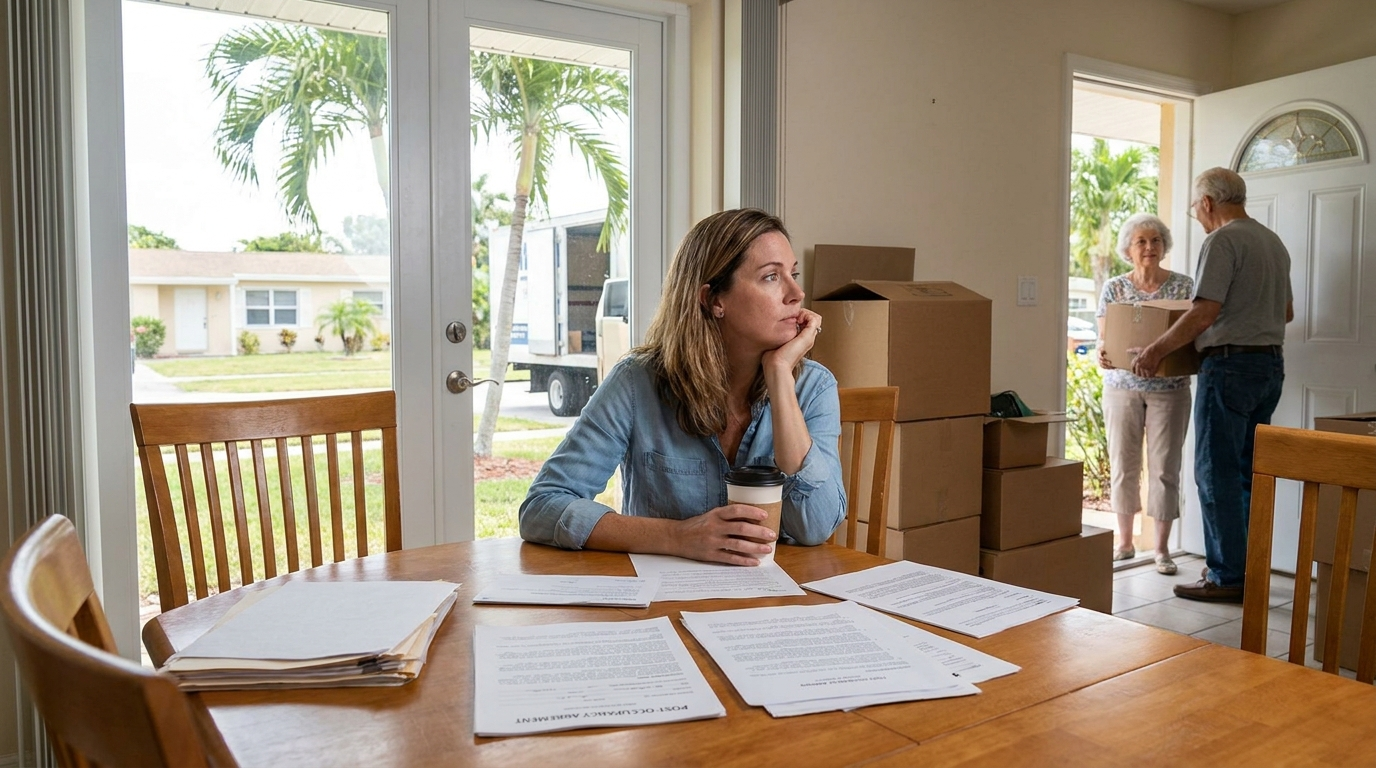
A post-occupancy agreement (also called a "seller in possession" or SIP agreement) is a written arrangement that lets the seller stay in the property after closing for a negotiated period, typically anywhere from a few days to 60 days. The seller pays rent to the buyer (now the legal owner) during that window, and the terms are spelled out in a formal contract.
These arrangements come up most often when a seller is buying a replacement home at the same time. A timing gap opens, or the seller's new purchase has not yet closed. Sometimes the seller simply needs more time to relocate than the closing schedule allows.
Why buyers agree to delayed possession
Agreeing to a post-occupancy arrangement can make your offer more attractive in a competitive market. If your own move-in date is flexible, offering the seller an extra week or two to vacate costs you little and can be the factor that wins the deal. In the higher-price segments across Palm Beach and Broward, where sellers have options, that kind of flexibility has closed more than a few transactions that otherwise would have gone to another buyer.
The risks for buyers
Post-occupancy agreements are common, but they carry real exposure for buyers:
- Property damage. Once you close, you own the property and your insurance is on the hook. If the seller still in possession causes damage, recovering those costs can be difficult and slow.
- Seller refuses to vacate. It does not happen often, but sellers do sometimes overstay the agreed possession date. Under Florida law, a seller who will not leave is treated as a holdover tenant. The eviction process is time-consuming regardless of how clear the contract language is.
- Conditions discovered late. You take possession only after the seller moves out. Any damage or system failure that occurred during the post-occupancy period may not surface until well after you could have addressed it at closing.
- Lender restrictions. Some lenders will not allow post-occupancy agreements on primary residence loans because the arrangement can look like an investor deal. Check with your lender before you agree to anything in writing.
How to protect yourself
If you agree to delayed possession in a South Florida transaction, take these steps before you sign:
- Put it in writing. A verbal agreement is worth nothing here. Use a formal written contract (Florida's standard forms cover this) that spells out the daily rent amount, the exact end date, the required condition of the property, the security deposit, and the penalties for overstaying.
- Require a security deposit. A deposit held in escrow gives you concrete recourse if the seller damages the property or refuses to leave on time.
- Do a walkthrough before the seller re-enters. Document every room, appliance, and system right after closing, before the seller moves anything back in or resumes occupancy. Photos and video with timestamps are your best evidence if a dispute arises.
- Charge realistic rent. A token daily rate of a few dollars is a red flag in any agreement. Set a rate close to actual market rent so the seller has a real financial reason to vacate on schedule.
- Set a firm end date with penalties. Leaving the termination open-ended is how problems start. The agreement should name a specific date and spell out exactly what happens if the seller does not leave by then.
Our agents negotiate post-occupancy agreements regularly across Palm Beach, Broward, and Miami-Dade counties. If you are buying or selling and a timing gap is making the deal complicated, we can walk you through the right protections and contract language. Reach out to Pure Equity or browse our service areas to get started.
Frequently asked questions
How long can a seller stay in the home after closing in Florida?
There is no legal maximum, but most post-occupancy agreements in Florida run between a few days and 60 days. Longer periods are possible with mutual agreement, though lenders and title companies may push back on anything beyond 60 days.
Does the seller pay rent during delayed possession?
Yes. Under a properly drafted post-occupancy agreement, the seller pays the buyer a daily or monthly rent for the time they remain in the property. The rate should reflect fair market value; a nominal fee is hard to enforce and gives the seller less reason to vacate on time.
What happens if the seller will not leave?
If the seller refuses to vacate by the agreed date, they become a holdover tenant under Florida law. The buyer would need to pursue an eviction proceeding, which takes time even when the contract is clear. This is exactly why the security deposit and penalty clauses in the agreement matter so much.
Can a lender block a post-occupancy agreement?
Some lenders do prohibit seller-in-possession arrangements on owner-occupied loan types. The concern is that the arrangement resembles an investment property situation. Always confirm your lender's policy before you agree to delayed possession in a purchase contract.
Is a post-occupancy agreement the same as a leaseback?
The terms are often used interchangeably. A leaseback or seller leaseback means the seller is leasing the property back from the buyer after closing. A post-occupancy agreement is the same concept with slightly different paperwork. Either way, the key elements are the same: a written contract, a set end date, a deposit, and defined consequences for overstaying.
Insurance is the gap nobody closes
This is the risk that gets missed in almost every post closing occupancy arrangement, and it is the one most likely to produce a genuine loss.
At closing the buyer becomes the owner, so the buyer's policy covers the structure. The seller is now an occupant rather than an owner, and their homeowner policy generally assumed they owned and occupied the property. Their contents may no longer be covered where they sit, and their liability position has changed.
Both parties should call their agents before closing rather than after. The buyer needs to confirm that a policy written for an owner occupied home responds when someone else is living there, since some carriers treat that differently. The seller needs cover for their own belongings and liability during the period.
Neither call takes long and the alternative is discovering the gap through a claim.
Treat the daily rate as risk pricing, not rent
Arrangements commonly provide for the seller to pay a daily amount, frequently calculated from the buyer's carrying cost of mortgage, taxes and insurance.
That is a reasonable baseline and it should not be the whole calculation. The buyer is also carrying the cost of not having possession: temporary accommodation, storage, a second move, and the risk that the stay extends.
A useful structure is a base daily rate for the agreed period and a materially higher rate for any day beyond it. That is not punitive, it is the only mechanism that makes the deadline mean something, since without it the seller's incentive to leave on time is goodwill alone.
The escrow holdback is the enforcement
The single most effective protection is holding money back at closing, in escrow, released when the property is delivered vacant and undamaged.
Size it against the real risk rather than symbolically. It should comfortably cover the daily rate for a period beyond the agreement, plus a margin for damage and for the cost of removing someone who will not leave.
Agree in writing who releases it, on what condition, and what happens in a dispute. An escrow with vague release terms produces its own argument at exactly the wrong moment.
Removing a holdover occupant is a legal process
This is the part buyers underestimate. If the seller does not leave, you cannot change the locks and put their belongings outside.
They are an occupant of a property you own, and removing them requires a legal process whose route depends on how the occupancy was characterised. That takes time and costs money, and it happens while you are paying for somewhere else to live.
Because the characterisation matters, this is worth having a Florida real estate attorney draft rather than relying on a short form. The agreement should be explicit about the nature of the occupancy, the end date, and the consequences of overstaying.
Document the condition at closing
Your final walkthrough happens before the seller moves out, which means you are accepting a property you will not actually receive for weeks.
Photograph and video everything at closing, thoroughly, and keep it dated. Agree in writing what condition the property will be in at delivery and what counts as damage beyond ordinary wear.
Also agree the practical items that cause arguments. Those are who pays utilities during the period and who is responsible for maintenance and repairs that arise. Settle whether the seller may make alterations, and whether they may allow others to occupy the property.
Tell your lender
Loans written for an owner occupied purchase generally carry an occupancy requirement, with a period in which the buyer is expected to take up residence.
A short post closing occupancy is common and generally workable, and it is not something to conceal. Tell the lender in advance and confirm it does not conflict with the loan terms, because a misrepresentation about occupancy is a serious matter and the alternative is a problem you created for no benefit.
More common questions
How long can a seller stay after closing?
Whatever the parties agree, and shorter arrangements are far easier. Longer periods can change the legal character of the occupancy, which is a question for an attorney.
Does the seller pay rent?
Usually a daily amount based on the buyer's carrying cost, and a higher rate beyond the agreed date is what makes the deadline real.
What if they refuse to leave?
Removal is a legal process rather than a practical one. The escrow holdback and a properly drafted agreement are what protect you.


