

How Much Does It Cost to Fix a House in Florida? (2026 Breakdown)
June 9, 2026 · 7 min read · By Onias Derilus, Broker
The cost to fix a house in Florida depends on scope, age, and county. Here's a room-by-room 2026 breakdown to help investors and buyers budget with confidence.
The cost to fix a house in Florida can run anywhere from a few thousand dollars to a full six figures. What you pay comes down to the home's age, how much work it needs, and which county you're buying in. Whether you're flipping, house hacking, or just fixing up the place you live in, a budget that holds up is what keeps you in the black. Here are the real 2026 numbers.
What drives the cost to fix a house?
A few things move the total more than anything else. Condition comes first. Swapping finishes is cheap compared to repairing what holds the house up. Then there are the Florida items that out-of-state buyers never see coming: impact windows, roof age, wind-mitigation upgrades. Those add up fast. Labor and permit fees vary by county. Coastal markets cost more than inland ones, sometimes a lot more.
Cost to fix a house, room by room
These are the ranges we see on South Florida renovations in 2026:
- Kitchen remodel: $15,000 to $45,000
- Bathroom remodel: $8,000 to $20,000 per bathroom
- Flooring for the whole home: $6,000 to $18,000
- Interior paint: $3,000 to $7,000
- Roof replacement: $12,000 to $30,000
- Impact windows: $12,000 to $30,000
- HVAC system: $7,000 to $14,000
Don't forget the hidden costs
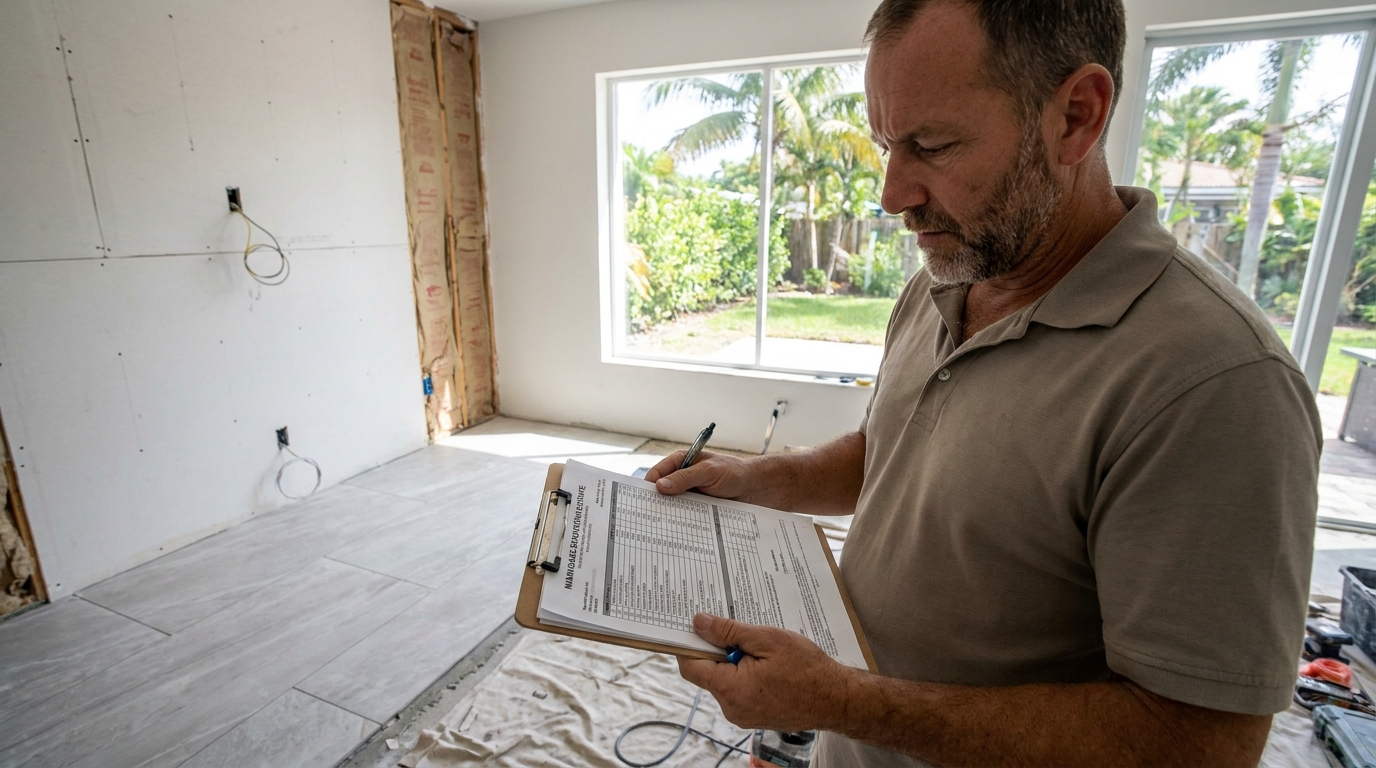
The work you can see is only part of it. Budget for permits, dumpster fees, and inspections too. Older Florida homes also tend to hide things behind the walls: outdated wiring, tired plumbing, hurricane damage nobody disclosed. That is why experienced investors pad the rehab budget by 10 to 15 percent before they ever start.
If you're renovating to flip, run your numbers through our Fix & Flip / BRRRR calculator and make sure the deal still profits once repairs are paid for.
How to budget your rehab accurately
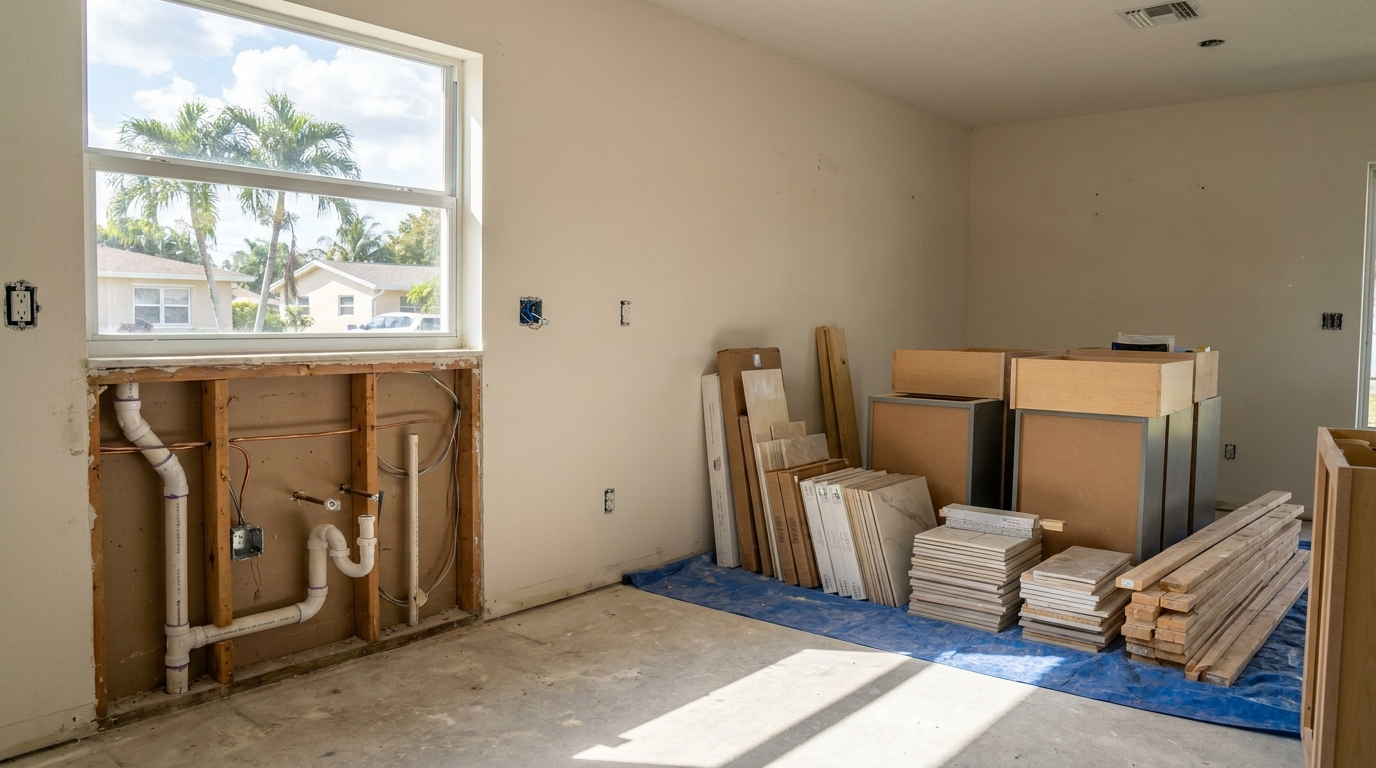
Start with contractor bids, not the averages you find online. From there, put your money where it returns the most: kitchens, bathrooms, flooring, and curb appeal. One warning: don't over-improve past what the neighborhood supports, because buyers won't pay you back for finishes the block can't carry.
Buying with an FHA renovation loan? Our 203k loan guide walks through how to fold the repair costs into your mortgage.
Plan the work, then work the plan
The cost to fix a house stays manageable when you budget with real bids and spend on projects that move value. Whether you're updating a forever home or turning around an investment, our team can point you to vetted contractors and value-add properties across South Florida. Tell us what you're looking for and we'll help you find a home with room to grow.
Start with the systems, not the finishes
Renovation budgets go wrong when they are built around what the owner can see. Kitchens and bathrooms are visible and easy to price. Roofs, electrical panels, plumbing, and air conditioning are neither. They are also what determine whether a Florida home is insurable and financeable.
Insurance is the reason this ordering matters more here than elsewhere. Carriers price heavily on roof age and condition, and some will not write a policy at all past a certain point. A buyer who cannot obtain affordable coverage cannot close, which means a deferred roof is not only a maintenance issue but a marketability issue.
The items that drive most Florida renovation budgets
- Roof. Cost varies enormously by material, pitch, and square footage, but it is usually the largest single line and the one with the biggest effect on insurance.
- Impact windows and doors. Expensive, and often the best return in this market because they affect both insurance pricing and buyer perception.
- Electrical. Older panels, certain brands in particular, are an insurance problem as much as a safety one. Rewiring an older home is disruptive and priced accordingly.
- Plumbing. Cast iron and polybutylene are common in older South Florida stock and are frequent causes of both claims and failed inspections.
- Air conditioning. A necessity here rather than a comfort, and a failed system stops a sale.
- Kitchens and bathrooms. Highly visible, wide cost range depending on finish level, and the place where budgets inflate fastest.
Why estimates vary so much
Published cost-per-square-foot figures are close to useless for planning a specific project, because the variables are larger than the average. Permitting requirements differ by municipality, labour availability shifts with demand and after storms, and material costs move. An older home also hides more, and opening walls reveals what no inspection could see.
The practical answer is to get several written bids with itemised scope rather than lump-sum quotes, and to carry a contingency of 10 to 20 percent of the renovation budget. That contingency is not pessimism; on any project touching an older structure it is a planning assumption.
Permits, and why skipping them costs more later
Unpermitted work is common in South Florida and reliably surfaces at the worst moment, usually during appraisal or a buyer's inspection. Enclosed patios, converted garages, and added bathrooms are the frequent offenders.
The consequences are real. A buyer's lender may refuse to finance, an insurer may decline coverage on the affected area, and the municipality can require the work be opened up, corrected, or removed. Permitting properly costs time upfront and far less than resolving it under contract with a deadline running.
What to fix before selling, and what to leave
Sellers rarely recover the full cost of a major renovation completed immediately before listing, and buyers often want different finishes than the ones chosen for them. The work that reliably pays is different in character: it is the work that removes objections rather than the work that adds features.
- Usually worth doing: repairing anything visibly broken, deep cleaning, neutral paint, tidy landscaping, and resolving anything that would fail an inspection or block insurance.
- Worth considering: a pre-listing inspection, which lets you address findings on your own schedule and price rather than under a buyer's deadline.
- Usually not worth it: a full kitchen or bathroom remodel, or a pool, immediately before a sale.
There is also a genuine as-is buyer pool in South Florida. Selling as-is at a realistic price is frequently the better answer for an owner who does not have the cash, the time, or the appetite to manage a renovation. We can tell you both figures for your address: what it would fetch as-is, and what renovated homes nearby have actually closed for.
Questions about renovation costs
Should I renovate before selling?
Only where the work adds more to the sale price than it costs, which depends on the ceiling for your street. Compare the as-is figure against the renovated figure minus cost and months before deciding.
Can I finance repairs into a purchase?
Yes, through renovation loans such as an FHA 203k for owner occupants, or conventional renovation products. Each has its own rules and timelines.
How much contingency should I hold?
Ten to twenty percent of the renovation budget is a realistic allowance on an older property, and more if the scope involves opening walls or touching systems.
How do I find a reliable contractor?
Verify the licence and insurance, ask for recent local references on comparable work, and insist on an itemised written scope rather than a single lump sum. Be cautious of anyone requiring large payment before work begins.
Sequencing a renovation so money is not wasted
Order matters as much as budget. Work that will be disturbed by later work should not be done first, and finishes should never precede systems. The usual sequence is to make the structure sound and dry, then address systems, then finishes.
That means roof and any structural repair, then windows and doors, then electrical, plumbing, and air conditioning, and only then kitchens, bathrooms, flooring, and paint. Owners who reverse this end up paying twice, because a plumbing repair under a newly tiled floor costs the tile as well as the plumbing.
Getting comparable bids
Three bids on a vague scope produce three incomparable numbers. Write the scope yourself, in as much detail as you can manage, and give every contractor the identical document. Ask each to itemise labour, materials, and permit costs separately, and to state what is excluded.
The cheapest bid is often the one that has understood the least. When one number sits far below the others, the usual explanation is a missing line item rather than a better price, and that gap reappears later as a change order.
Insurance and the work you choose
Some renovation work pays back through reduced insurance premiums rather than through resale value, which is a distinction worth understanding in this market. Roof replacement, impact-rated windows and doors, and documented wind mitigation features can all affect what a carrier charges.
Ask your insurer what specific improvements would change your premium before you finalise a scope. In some cases the annual saving materially changes the calculation on work you were treating as purely discretionary, and the improvement also becomes a selling point later because it lowers the next owner's costs too.


