

How to Buy a Multifamily Property With No Money in South Florida
June 9, 2026 · 8 min read · By Onias Derilus, Broker
Buying a multifamily property with no money down isn't a myth, but it requires the right strategy. Here's how house hacking, FHA loans, and creative financing make it possible in South Florida.
One of the most practical wealth-building moves in South Florida real estate is buying a multifamily property with little to no money out of pocket. The question "how to buy a multifamily property with no money" comes up constantly from aspiring investors, and while the reality takes work and the right setup, it is genuinely possible. The key is knowing which strategies hold up and which are internet hype.
Strategy #1: house hacking with an FHA loan
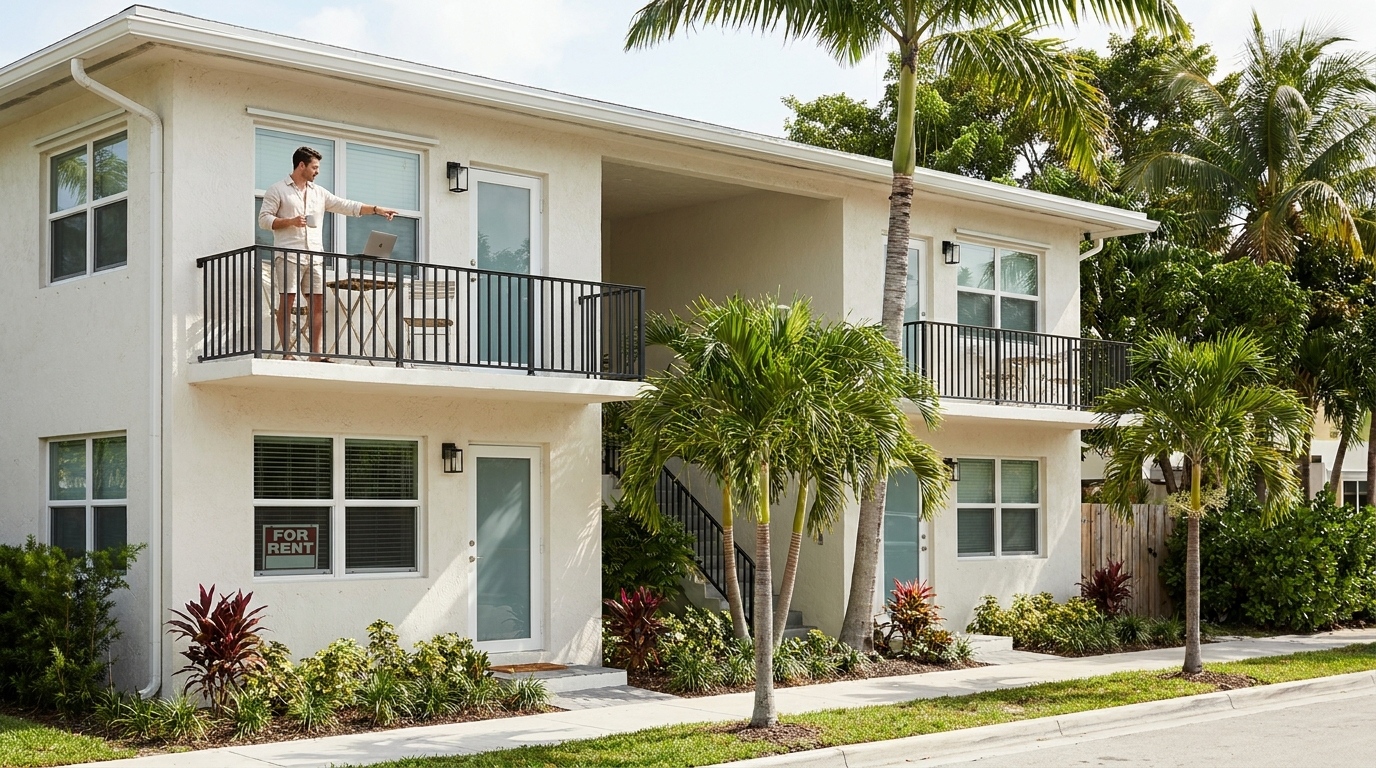
House hacking is the foundation for buying a multifamily property with minimal money down. You purchase a 2-4 unit property using an FHA loan, live in one unit as your primary residence, and rent out the others. Because you occupy the property, you qualify for owner-occupant financing, which means a 3.5% down payment instead of the 20-25% a conventional investment loan requires.
In South Florida, a duplex in a workforce housing area of Broward or Palm Beach County often runs $350,000-$500,000. At 3.5% down, that is $12,250-$17,500. The rental income from the other units can cover a significant portion of the mortgage, sometimes eliminating your housing cost entirely.
This is the strongest first-time buyer play available in South Florida. You build equity, generate income, and get into a multi-unit investment all at once.
Strategy #2: VA loans for eligible buyers
If you are a veteran or active-duty service member, the VA loan is the most powerful tool for buying a multifamily property with no money down. VA loans require zero down payment on 1-4 unit properties, provided you live in one unit as your primary residence. There is also no private mortgage insurance requirement, which keeps monthly costs lower.
South Florida has a large veteran and active military population, particularly around Broward County near Fort Lauderdale. If you are VA-eligible and have not looked into using your benefit to buy a multifamily property, it deserves serious attention.
Strategy #3: USDA loans in eligible areas
USDA loans offer zero-down-payment financing in designated rural and suburban areas. In South Florida, this applies mainly to parts of Highlands County, St. Lucie County, and rural pockets of Martin County. Multifamily properties (2-4 units) are not eligible for USDA loans directly, since USDA covers only single-family residences. That said, in rural areas where single-family home purchase frees up capital, USDA can still fit into a broader investment strategy.
Strategy #4: seller financing and creative structures
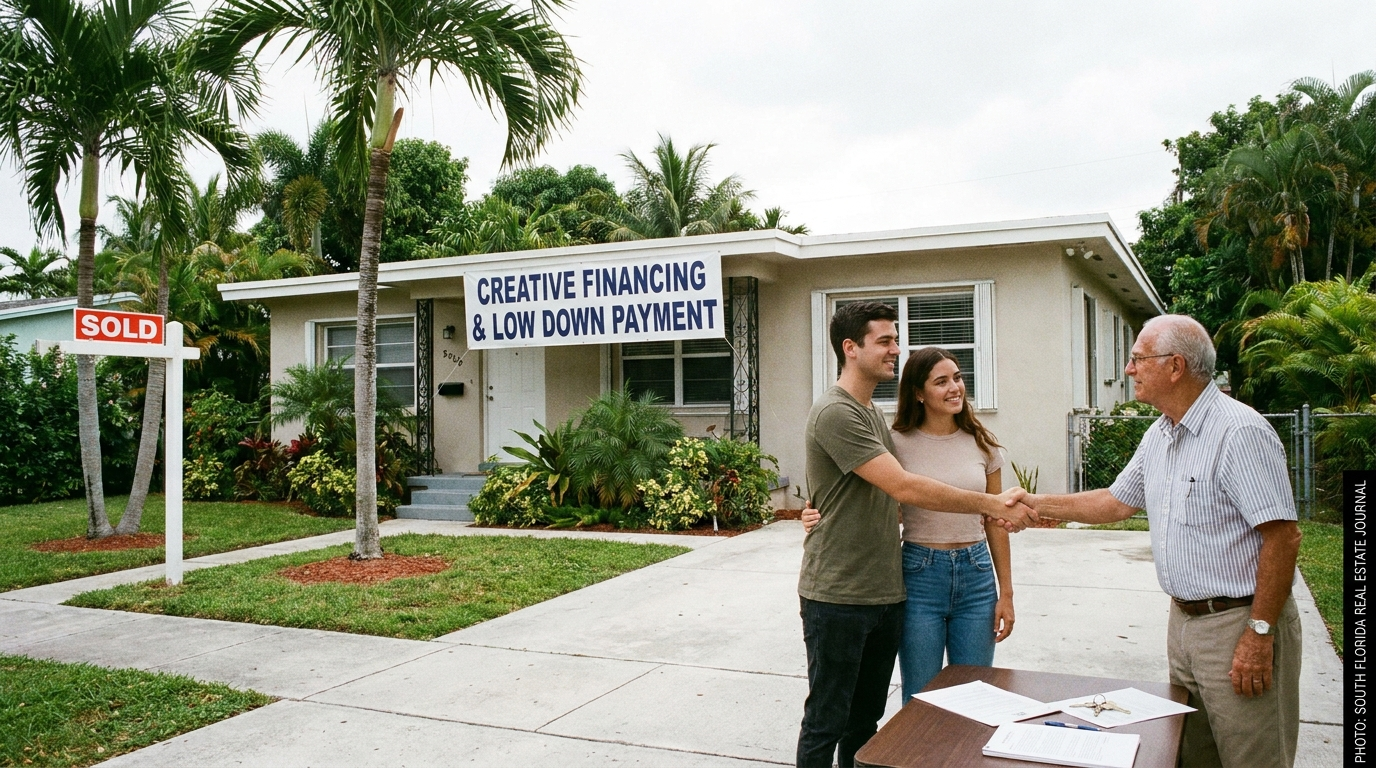
Some multifamily sellers, particularly those who own free and clear or are highly motivated to close, will consider seller financing. In a seller-financed deal, the seller acts as the lender: you make payments directly to them under a promissory note and mortgage, bypassing the conventional lending system entirely.
This opens the door to negotiated down payments, sometimes as low as 5-10%, and more flexible qualifying criteria. Seller-financed deals are less common but more available than most buyers realize, especially on older multifamily properties in markets like Broward County where long-term owners want retirement income rather than a lump sum.
The real math on "no money down"
Full transparency: truly zero-out-of-pocket multifamily acquisitions are rare. Even with an FHA loan at 3.5% down, closing costs run 2-3% of the purchase price. That said, careful negotiation, seller-paid closing costs, lender credits, or family gifts can bring total out-of-pocket costs close to zero in some transactions.
The better frame is to minimize the down payment through legitimate owner-occupant strategies rather than chasing a literally zero-dollar acquisition. A $10,000-$20,000 investment that puts you in a $400,000 multifamily asset generating rental income is a strong use of capital, even if it is not technically nothing.
Ready to explore multifamily opportunities in South Florida? Use our Rental ROI Calculator to model cash flow on specific properties, and talk to our team about what is currently available across our six-county service area.
Frequently asked questions
Can you really buy a multifamily property with no money down?
In practice, zero-out-of-pocket deals are uncommon. Owner-occupant strategies like FHA and VA loans get the down payment to 3.5% or 0%, but closing costs still apply. With seller concessions or lender credits, you can get very close to zero total out of pocket.
What is the minimum credit score for an FHA multifamily loan?
FHA requires a minimum 580 credit score for the 3.5% down payment option. Scores between 500-579 require 10% down. Most lenders who originate FHA loans also impose their own overlays, typically requiring 620 or higher.
Does the rental income from other units count toward FHA qualification?
Yes, under FHA guidelines lenders can count a portion of projected rental income from the other units to help qualify the borrower. Documentation requirements vary by lender.
What counties in South Florida are best for multifamily house hacking?
Broward County and Palm Beach County have the most active duplex and triplex markets with strong rental demand. Miami-Dade County also has solid inventory but at higher price points. For lower entry costs, St. Lucie County and Martin County offer more affordable multifamily options.
Read the phrase carefully before you plan around it
No money down almost always means no down payment rather than no money. Those are different situations and confusing them is how people arrive at a closing unable to fund it.
Even with the down payment financed or waived, you will generally need closing costs, prepaid taxes and insurance, an inspection, an appraisal, and reserves the lender wants to see. On top of that a multifamily purchase realistically needs a maintenance fund from day one, because you are taking on other people's homes and their problems arrive on their schedule rather than yours.
So the honest version is that low down payment programmes reduce the largest single barrier and do not remove the need for capital. Anyone presenting them as requiring nothing is selling something.
House hacking is the genuinely accessible route
Living in one unit of a small multifamily property and letting the others is the strategy that actually works for people starting with limited capital, and the reason is regulatory rather than clever.
Owner occupied financing carries far lower down payment requirements than investment property financing, and certain government backed programmes allow small multifamily purchases on those terms. Some also allow a portion of the projected rent from the other units to be counted toward qualification, which is what makes the numbers work.
The requirements, the number of units permitted, occupancy periods and how rental income is treated are set by each programme and are revised, so confirm the current position with a lender who writes them rather than relying on any article. Ask specifically about the occupancy requirement, since it is a genuine obligation rather than a formality.
What house hacking actually costs you
The financial case is strong and the lifestyle case deserves honesty, because this is where people underestimate the trade.
You are living beside your tenants. You will be the person they contact about the air conditioning, the noise upstairs and the parking, and you will see them daily whether or not the relationship is comfortable. Screening matters more here than in any other rental scenario, because a difficult tenant is not at arm's length.
You also cannot easily step back. Employing a manager is possible and it looks odd to a tenant who knows you live in the building. Go in expecting to be hands on for the period you occupy the property.
Seller financing, and why it is rarer than it sounds
Creative structures genuinely exist and they are far less available than the content around them suggests.
Seller financing requires a seller who owns the property outright or nearly so, who does not need the proceeds immediately, and who is willing to carry risk on you. That combination is uncommon, and it is most likely with long term owners of smaller properties, often approached directly rather than through a listing.
If you do structure one, use a Florida real estate attorney to paper it. Seller financing of residential property carries specific rules, the consequences of getting them wrong are real, and this is not a place for a template found online.
Partnering is the honest alternative
The most realistic route for someone genuinely without capital is not a financing trick, it is bringing something other than money to a deal.
That usually means finding the property, managing the renovation, or managing the tenancy, while a partner funds it. It is a real business arrangement rather than a shortcut, and it should be documented properly: who contributes what, how decisions are made, how profits split, and what happens if one party wants out.
Doing your first deal as the junior partner in someone else's is frequently the fastest way to learn what you do not know, at somebody else's risk rather than your own.
More common questions
Can I really buy with nothing at all?
Realistically no. Low down payment programmes reduce the largest barrier, and closing costs, reserves and a maintenance fund remain.
Does projected rent help me qualify?
Under some programmes a portion can count. The treatment varies and is revised, so confirm with a lender who writes that product.
What is the biggest risk?
Buying with no reserve. A vacancy or a major repair on a property you could barely close on is how a first investment becomes a forced sale.


