

How to Flip a House in South Florida: 2026 Step-by-Step Guide
June 9, 2026 · 7 min read · By Onias Derilus, Broker
Learning how to flip a house in South Florida takes more than an HGTV binge. Here's the exact, numbers-first process our investor clients use to profit in 2026.
If you want to learn how to flip a house in South Florida, start with the numbers, not the paint colors. Flipping looks effortless on TV, but the investors who actually profit treat every deal like a spreadsheet first and a renovation second. This guide walks through the exact process we coach our investor clients through across Palm Beach, Broward, and Miami-Dade counties.
The South Florida market moves fast, so a clear system matters more here than almost anywhere else. Here is how it works, step by step.
Is flipping houses profitable in South Florida?
Yes, but margins are tighter than the highlight reels suggest. In 2026, a typical South Florida flip targets a 10 to 20 percent return on total project cost. Coastal markets like Boca Raton and Fort Lauderdale carry higher purchase prices, so rehab budgets and holding costs climb with them. Inland areas offer cheaper entry points and steadier margins.
Demand stays strong. Migration into Florida keeps buyer interest high, which means a well-renovated home in the right neighborhood still sells quickly.
How to flip a house in 7 steps
Here is the repeatable framework. Follow it in order, and resist the urge to skip the math at the start.
- Set your budget and financing. Decide how much cash you can invest and how you will fund the rest. Most flippers use hard-money loans, which fund quickly but carry higher rates and points.
- Find the right property. Look for distressed, dated, or off-market homes in desirable areas. Driving for dollars, auctions, and agent relationships all surface deals.
- Run the numbers with the 70% rule. Before you offer, calculate your maximum allowable offer (more on this below).
- Estimate the rehab accurately. Get contractor bids, not guesses. Pad your budget by 10 to 15 percent for surprises, because older Florida homes often hide them.
- Renovate with the buyer in mind. Focus on kitchens, bathrooms, flooring, and curb appeal. Avoid over-improving beyond what the neighborhood supports.
- Price and market the finished home. Professional photos and accurate pricing sell flips fast. This is where a local listing agent earns their fee.
- Sell, then repeat. Close, collect your profit, and roll it into the next deal.
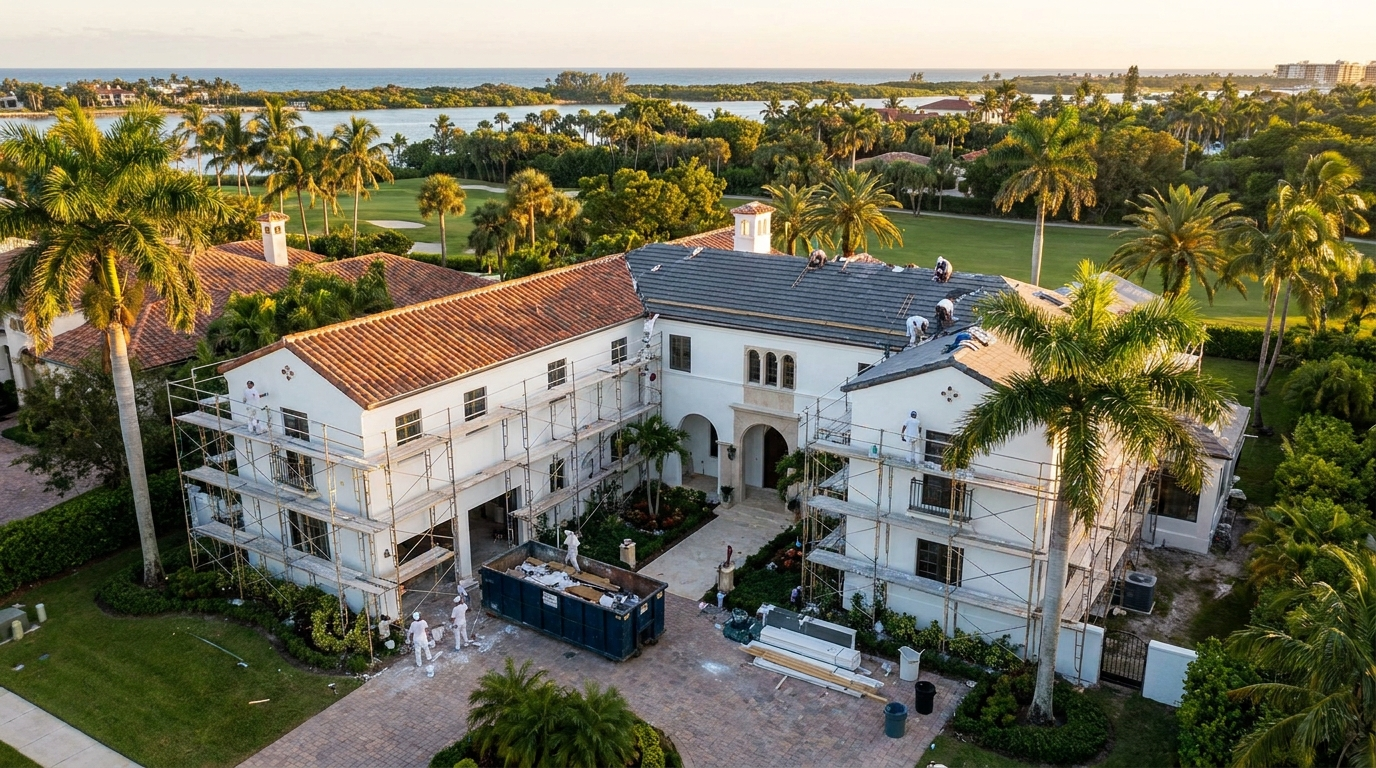
The 70% rule: your flipping safety net
The 70% rule keeps flippers from overpaying. You should pay no more than 70 percent of the home's after-repair value (ARV) minus your rehab costs. Say the ARV is $500,000 and the rehab will cost $60,000. Your maximum offer is $290,000, which is 500,000 multiplied by 0.70, minus 60,000.
Rather than run this math by hand on every deal, use our Fix & Flip / BRRRR calculator. It handles the 70% rule, profit, ROI, and holding costs in seconds so you can analyze more deals and offer with confidence. For sourcing distressed deals, financing, and the local rules, see our South Florida fix and flip guide.
Financing your flip
Most investors do not pay all cash. They combine a down payment with short-term financing. Hard-money lenders fund flips quickly because they lend against the property, not just your credit. Those loans cost more though, so factor points and interest into your budget from day one.
If you plan to keep the property as a rental instead of selling, consider the BRRRR strategy. Our rental property ROI calculator shows whether the numbers cash-flow after a refinance.
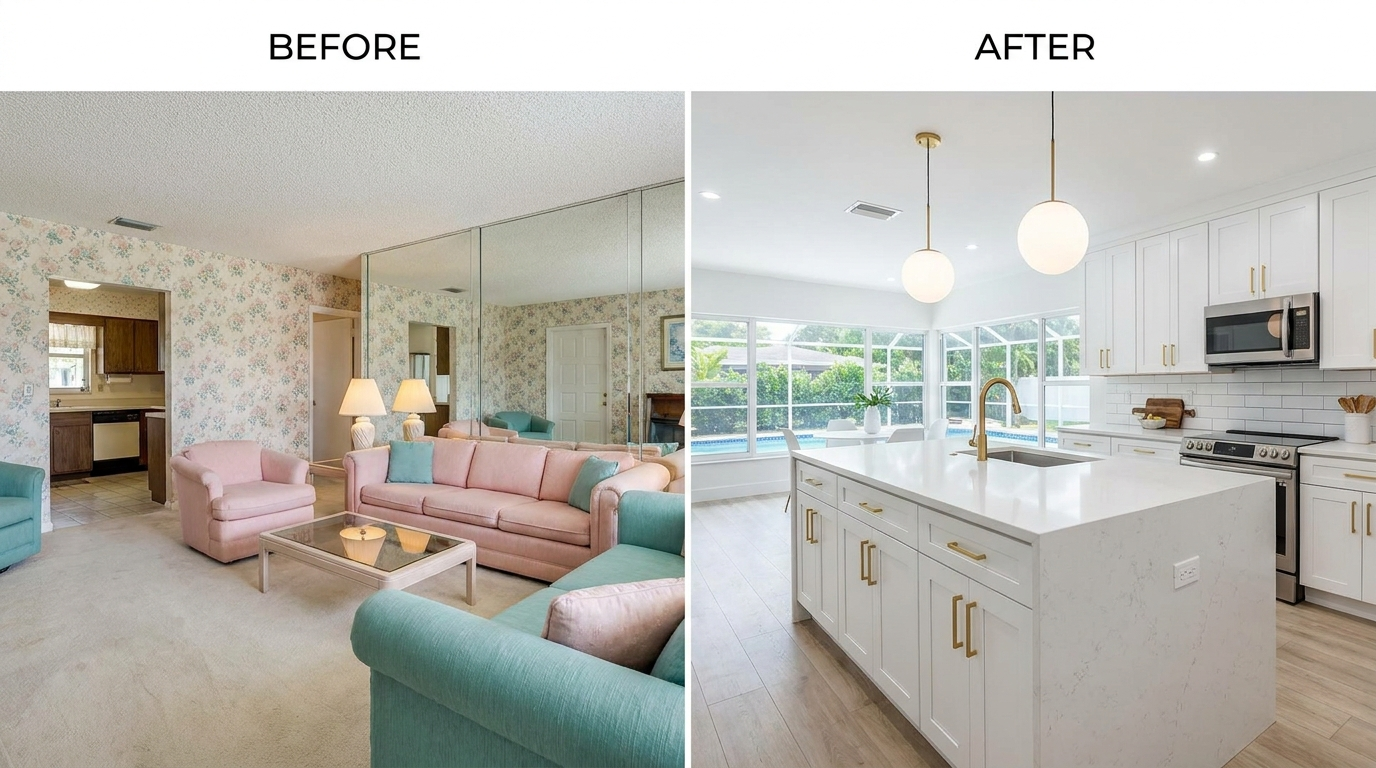
Common house-flipping mistakes to avoid
Even experienced investors stumble. Watch for these pitfalls:
- Underestimating the rehab. Permits, insurance, and surprise repairs add up fast in older Florida homes.
- Ignoring holding costs. Every month you own the property, you pay interest, taxes, insurance, and utilities.
- Over-improving. A $90,000 kitchen in a $350,000 neighborhood will not return your money.
- Skipping the local market read. What sells in Wellington differs from what sells in Miami Beach.
To pick the right market in the first place, browse our South Florida area guides for pricing and demand by county.
Is house flipping right for you?
Flipping rewards investors who plan carefully, control costs, and move decisively. The opportunity in South Florida is real. According to Florida Realtors, the state's housing demand remains among the strongest in the nation heading into 2026.
When you're ready to find your first (or next) flip, our team sources distressed, off-market, and value-add properties across all eight counties we serve. Tell us what you're looking for, and we will send deals that fit your numbers so you can put what you have learned about how to flip a house to work.
Ready to run the numbers on a deal? Use our free Fix & Flip / BRRRR calculator to model any property in seconds. Or contact our team to get distressed and off-market properties delivered to your inbox.
Frequently asked questions
How much money do you need to flip a house in South Florida?
Plan on having at least 20 to 30 percent of the purchase price in cash for a hard-money loan down payment, plus reserves to cover the rehab and holding costs. On a $300,000 purchase with $50,000 in rehab, that means roughly $110,000 to $140,000 liquid before you start.
How long does it take to flip a house?
Most South Florida flips take three to six months from purchase to closing. Simple cosmetic renovations run closer to 90 days. Larger structural jobs or permit delays can push a project past six months, which is why holding costs matter so much.
Do I need a license to flip houses in Florida?
You do not need a real estate license to buy and sell investment properties for your own account. A general contractor license is required if you plan to pull permits under your own name. Most investors hire a licensed GC and manage the project themselves.
What is the best county to flip houses in South Florida?
There is no single answer. Broward County has strong resale demand and a wide range of price points. Palm Beach County offers higher ARVs in coastal cities but also higher entry costs. Miami-Dade has the deepest buyer pool. Your best market depends on your budget, your network, and where you can consistently find deals below market.
The critical path is permits, not paint
Most flip plans are organised around visible work, which is why schedules slip. The items that actually control the timeline are the ones you cannot start until someone else says yes.
Anything structural, electrical, plumbing or mechanical generally requires a permit, and permits require drawings, submission, review and inspections at defined stages. Review times are set by the municipality and are entirely outside your control, and a failed inspection puts you back in a queue rather than costing an afternoon.
So sequence the project around those approvals. Submit permit applications before demolition rather than after, because the review clock can run while other work proceeds. A crew standing idle waiting for an inspection is costing you interest and holding costs at full rate.
Work in the right order, from the top and the inside out
There is a conventional sequence and deviating from it means redoing finished work.
Roof and any envelope work first, because everything inside depends on the building being dry. Then demolition. Then the rough in trades, meaning framing changes, electrical, plumbing and mechanical, all of which happen inside open walls and must be inspected before those walls close.
Then insulation and drywall, then flooring, cabinetry and fixtures, then paint, then landscaping and exterior finishes last so they are not damaged by ongoing work. Cleaning genuinely last.
The expensive mistake is closing walls before an inspection, since opening them again costs the work twice and can delay the permit sign off that everything else waits on.
Order long lead items on day one
Schedule failures more often come from materials than from labour, and the fix is a purchasing decision made early.
Cabinetry, specialty windows and doors, tile in quantity, and appliances can all carry lead times measured in weeks. Impact rated windows and doors in particular matter in this market, since they are required in much of the region and are not a stock item.
Make selections at the start rather than as each trade arrives. A crew waiting on your tile choice is a crew that has moved to another job and will return when it suits them, which is the most common cause of a two week gap in the middle of a project.
Manage the money against completed work
The payment discipline is the same one that protects homeowners and it protects you identically, because Florida's construction lien law does not care that you are an investor.
Subcontractors and suppliers can record a lien against your property even where you have paid your general contractor in full. Release payment against lien waivers at each stage, reconcile the notices to owner you receive against the waivers you hold, and never fund substantially ahead of completed work.
A lien discovered at closing stops the sale, which on a flip means the interest keeps running while you resolve it. That is the specific way this risk hurts a flipper rather than a homeowner.
Start the exit before the work finishes
Marketing time is part of the project rather than something that begins afterwards, and treating it that way shortens the whole cycle.
Get comparable closed sales refreshed as the work nears completion, since the market has moved since you underwrote the deal. Book photography for the day after the final clean rather than a week later. Have the listing ready to go live immediately.
County absorption tells you what to expect: Palm Beach and St. Lucie currently average about 107 days on market, Broward 124, Miami-Dade 137 and Highlands 206. Every one of those days carries interest, taxes, insurance and utilities, which is why a week saved at the end is worth as much as a week saved in the middle.
More common questions
What controls the timeline most?
Permit review and inspections, then long lead materials. Neither is fixed by working harder, which is why both should be started first.
Do I need a licence to flip?
Not to buy, renovate and sell your own property. The work itself must be done by appropriately licensed trades where a licence is required.
What order should the work go in?
Envelope, demolition, rough in trades and inspection, then close walls, then finishes, with exterior and cleaning last.


