

How to Own and Manage a Rental Property in South Florida
June 9, 2026 · 8 min read · By Onias Derilus, Broker
Owning a rental property in South Florida is one of the most reliable ways to build long-term wealth, but it requires preparation, systems, and local market knowledge. Here's what successful landlords do differently.
Owning a rental property in South Florida is one of the most reliable ways to build wealth, but it is not passive by default. The investors who do it well buy strategically, manage systematically, and treat the property as a business from day one. This guide covers everything you need to know about how to have a rental property that actually performs in Palm Beach, Broward, Miami-Dade, and beyond.
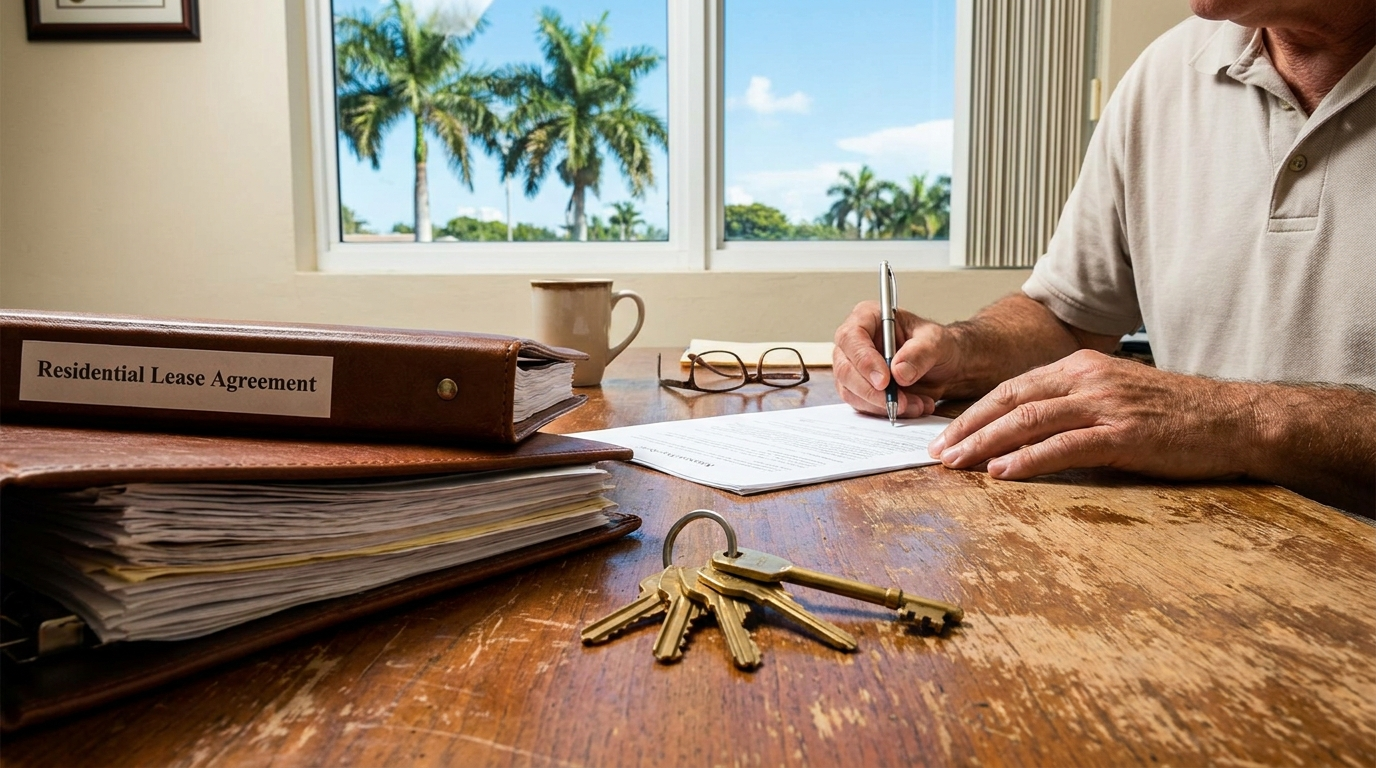
Step 1: buy the right property
The biggest determinant of your success as a rental property owner is the acquisition. Pay too much, buy in a weak rental market, or ignore structural issues and no amount of management skill will save the investment. Key criteria for South Florida rental property selection:
- Confirm rental demand and achievable rent before buying. Check comparable rentals on Zillow, Rentometer, and through local property managers.
- South Florida has unusually high insurance costs and strong property tax assessments. Model actual expenses, not pro-forma guesses, before making an offer.
- A property that needs a new roof, significant plumbing work, or an electrical panel replacement in year one will destroy your first-year cash flow. Get a thorough inspection and price repairs into your acquisition offer.
- Many South Florida communities prohibit or restrict rentals. Verify the HOA rental policy before purchase. This is a non-negotiable due diligence item.
Step 2: insurance and legal structure
South Florida's insurance environment is one of the most challenging in the country. Landlord insurance (also called DP-3 or rental dwelling policies) is more expensive here than virtually anywhere else in the U.S. Budget $3,000 to $8,000 or more annually depending on property age, construction type, roof condition, and flood zone. Do not skip flood insurance if the property is in a flood zone. A single flood event without coverage can wipe out years of rental income.
Many South Florida investors hold rental properties in LLCs for liability protection. There are costs and administrative requirements to maintain an LLC, but the asset protection benefits can be significant, especially for multi-property investors. Consult a Florida real estate attorney to determine the right structure for your situation.
Step 3: tenant selection is everything
The quality of your tenants will determine your experience as a landlord more than almost any other factor. A rigorous screening process is the foundation of profitable rental property ownership. Screen for:
- Credit score and credit history (minimum 620 to 650 for most South Florida rentals)
- Income verification (aim for gross monthly income at least 3 times the monthly rent)
- Employment stability
- Rental history: contact previous landlords directly
- Criminal background check (follow Fair Housing guidelines on criminal record review)
Step 4: professional management vs. self-management
Property management companies in South Florida typically charge 8 to 12 percent of monthly rent plus leasing fees, usually 50 to 100 percent of one month's rent. For out-of-state investors or those with multiple properties, professional management is often worth every dollar. For local investors with a single property and the time to manage it, self-management can meaningfully improve cash flow.
The key question: do you have systems for maintenance coordination, rent collection, legal compliance, and emergency response? If not, a property manager provides those systems.
Step 5: track your numbers
Treat your rental property like a business. Track every dollar of income and expense: rent collected, repairs, insurance, property taxes, management fees, capital improvements. At minimum, maintain a simple spreadsheet. More sophisticated investors use software like Stessa or Buildium. Your numbers tell you whether the investment is performing to expectations, and they are essential for accurate tax reporting.
Use our Rental ROI Calculator to model your property's expected performance before and after purchase. Contact Pure Equity to find investment properties across our six-county South Florida service area.
Ready to buy your first rental property in South Florida? Our team works with investors across Palm Beach, Broward, Miami-Dade, St. Lucie, Martin, and Okeechobee counties. We help you identify properties with strong rental fundamentals, connect you with local property managers, and close efficiently. Start the conversation or explore current listings in your target market.
Frequently asked questions
How much money do you need to buy a rental property in South Florida?
Most conventional investment property loans require 20 to 25 percent down. On a $350,000 property, that is $70,000 to $87,500 down, plus closing costs (typically 2 to 4 percent) and a reserve for repairs and vacancy. Some investors use FHA loans on owner-occupied duplexes with as little as 3.5 percent down, then rent the second unit.
Is rental income taxed in Florida?
Florida has no state income tax, so rental income is only subject to federal income tax. You can deduct mortgage interest, property taxes, insurance, repairs, depreciation, and management fees. Consult a CPA familiar with real estate investing to maximize your deductions.
What is a good cap rate for a South Florida rental property?
Cap rates in South Florida typically run 4 to 7 percent depending on location, property type, and current market conditions. Lower cap rates are common in high-demand coastal markets. Higher cap rates appear in inland markets like parts of Palm Beach County west or Okeechobee. What matters most is whether the property cash-flows after your actual financing costs.
Do I need a license to rent property in Florida?
Landlords renting out residential property generally do not need a real estate license. However, short-term rentals (under 30 days) are regulated differently and may require a Florida DBPR license. Check local municipal rules as well. Some cities in South Florida have additional licensing or registration requirements for landlords.
How long does it take to find a tenant in South Florida?
In most South Florida markets, a well-priced, properly marketed rental finds a qualified tenant within two to four weeks. Overpriced properties sit longer. Having professional photos, accurate listings on Zillow and Apartments.com, and a fast response to inquiries will shorten your vacancy window significantly.
Decide how you will hold it before you close
Ownership structure is easier to set at purchase than to change afterwards, and changing it later can carry costs including documentary stamp tax and a possible due on sale issue if there is a mortgage.
The options generally discussed are holding personally with appropriate liability insurance and an umbrella policy, or holding through an entity. Each has consequences for liability, financing, tax reporting and cost, and the right answer depends on how many properties you expect to own and what else you have to protect.
This is genuinely a question for a Florida attorney and a CPA rather than a default. What matters here is knowing to ask it before closing rather than after, because that is when it is cheapest to act on.
The lease is your operating manual, so use a Florida one
A generic lease downloaded from anywhere is the wrong document, because landlord and tenant obligations are state specific and Florida has its own requirements on deposits, notices and disclosures.
Make sure the lease covers the things that actually cause disputes. That means who maintains what, how maintenance requests are made and answered, and late payment terms. It also means pet and smoking rules, guest and occupancy limits, and how the deposit is handled and returned.
Add the items specific to this state and this region. Hurricane preparation responsibilities, who secures the property and when, and what happens if the property becomes uninhabitable. If the property is in an association, incorporate its rules by reference, because your tenant is bound by them and you are answerable to the association.
Set up the systems in the first month
The administrative habits established at the start determine whether this stays manageable, and none of them take long.
- A separate bank account for the property, from the first rent payment. It makes bookkeeping straightforward and keeps any entity structure meaningful.
- Bookkeeping as you go, categorised monthly rather than reconstructed at tax time, so deductions are captured rather than remembered.
- A written maintenance process, so tenants know how to report and you have a record of what was reported and when.
- A trades list before you need it: plumber, electrician, air conditioning, roofer and a general handyman who answers the phone.
- A capital reserve account, funded monthly, for the roof and air conditioning that will eventually need replacing.
That last one is the discipline most often skipped, and it is what turns a major repair from a crisis into a withdrawal.
The first ninety days set the tenancy
How you behave at the start establishes what the tenant expects for the rest of the term.
Document the property's condition thoroughly at move in, with dated photographs, and give the tenant a copy. Respond promptly to the first maintenance request whatever it is, because that response teaches them whether reporting problems is worthwhile. Enforce the rent due date from the first month, politely and consistently.
A landlord who is responsive on repairs and firm on payment gets both. One who is slow on repairs and lax on payment generally gets neither, and the pattern is very hard to reset later.
Review the numbers annually, not just at purchase
The model you built to justify buying is not the model of what the property is doing, and the gap grows.
Once a year, compare actual income and expenses against the projection, and shop the insurance rather than accepting the renewal, since Florida premiums move enough to justify it. Check the rent against current market rather than assuming, and check that the capital reserve is keeping pace with the age of the roof and systems.
That annual review is also when you decide whether the property still fits your plan, which is a question worth asking deliberately rather than by default.
More common questions
Should I hold it in an entity?
It depends on liability, financing and tax position. Ask an attorney and a CPA before closing, since changing it later is more expensive.
Can I use a standard lease from online?
Use a Florida specific lease. Deposit handling, notices and disclosures are state specific and a generic form can leave you unprotected.
Do I need a licence to rent out my own property?
Not for your own property. Managing rentals for other owners is regulated in Florida and is a separate question.


