

Florida Real Estate Agent Education Requirements: What You Need to Know
June 9, 2026 · 6 min read · By Onias Derilus, Broker
Becoming a real estate agent in Florida requires completing a 63-hour pre-license course and passing the state exam. Here's exactly what the education requirements look like and how long they take.
If you're considering a real estate career in South Florida, knowing the real estate agent education requirements in Florida is where to start. The process is straightforward. Most people finish everything within three to six months while working full-time. Here is exactly what you need to get licensed and keep that license active.
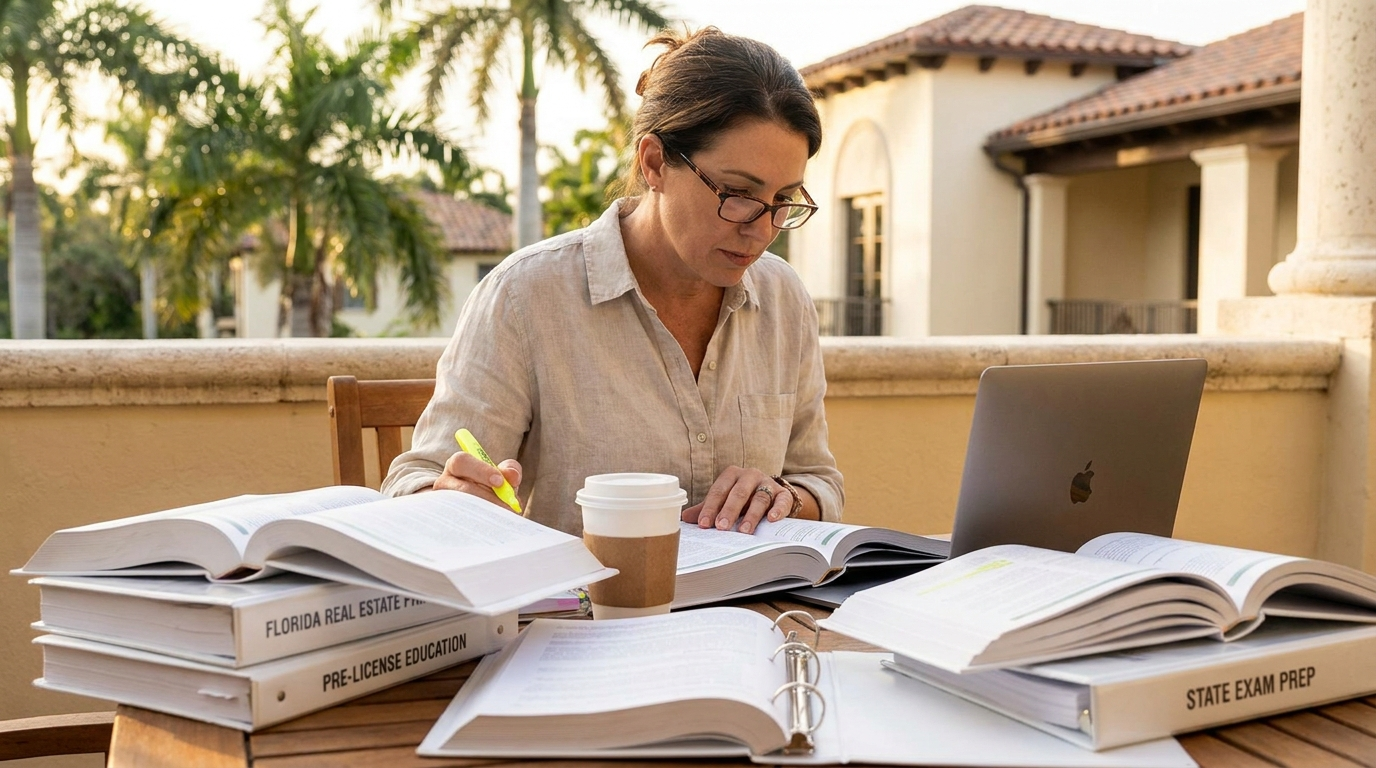
Step 1: pre-license education (63 hours)
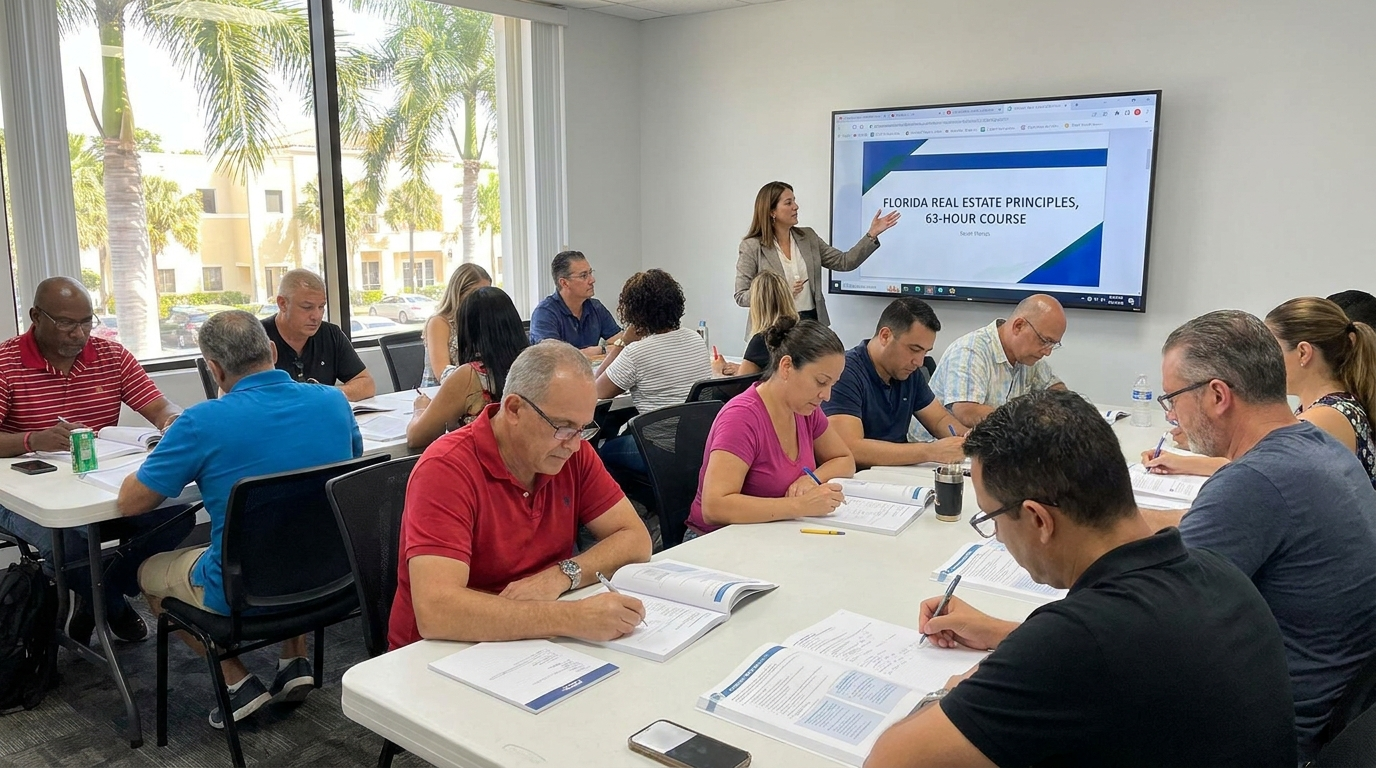
Florida requires a 63-hour pre-license education course from a state-approved provider before you can sit for the state exam. The course covers real estate law and licensing requirements, property ownership rights and interests, valuation and market analysis, mortgages and financing, agency relationships and brokerage operations, contracts and closings, Fair Housing and ethics, and property management basics.
You can take the course online at your own pace, in person at a school, or in a hybrid format. Tuition runs from $99 to $500 depending on the provider. Most students finish in four to six weeks while working full-time.
At the end of the course you take a school final exam. Most schools require a 70 percent score to pass and allow multiple attempts.
Step 2: background check and application
Before or after completing your pre-license course, submit a license application to the Florida Department of Business and Professional Regulation (DBPR) and complete a criminal background check through fingerprinting. The application fee runs roughly $83 to $105. Florida reviews applicants with criminal history on a case-by-case basis. Disqualifying offenses typically involve fraud, theft, or crimes of moral turpitude.
Step 3: the Florida real estate state exam
Once you complete the pre-license course and receive course completion approval from the DBPR, you can schedule the state exam through Pearson VUE. The exam is 100 multiple-choice questions with a 3.5-hour time limit. You need 75 correct answers to pass. The exam fee is approximately $57.
First-time pass rates for the Florida sales associate exam typically fall between 50 and 60 percent, so preparation matters. Practice tests and the school final are the most useful study tools.
Step 4: activate your license with a brokerage
A Florida real estate sales associate license cannot be activated independently. You must work under a licensed Florida broker. After passing the exam, activate your license through a brokerage. The brokerage submits an activation fee to the state, and your license becomes active for two years.
Continuing education: maintaining your license
Florida requires 45 hours of post-license education during your first renewal period, which falls within 18 to 24 months of initial licensing. After that, 14 hours of continuing education is required every two years. The renewal fee is approximately $64.
The total cost to get licensed in Florida, including the pre-license course, background check, application, and exam, typically runs $400 to $700. For a career that can generate $100,000 or more annually in South Florida, that is a low barrier to entry. Interested in joining Pure Equity? We work with new agents and experienced producers across all eight South Florida counties.
Ready to start your real estate career in South Florida?
Pure Equity is actively growing its agent team. We offer training, mentorship, and a collaborative culture across Palm Beach, Broward, Miami-Dade, and beyond. Contact us to learn about joining the team or learn more about who we are.
Frequently asked questions
How long does it take to get a real estate license in Florida?
Most people complete the full process in three to six months. The 63-hour pre-license course takes four to six weeks for someone working full-time. Add a few weeks for the DBPR application, background check, and scheduling and passing the state exam, and you are looking at roughly 90 to 120 days from start to finish.
Do I need a college degree to become a real estate agent in Florida?
No. Florida only requires a high school diploma or GED. There is no college degree requirement for a sales associate license.
How much does it cost to get a real estate license in Florida?
Total costs typically run $400 to $700, covering the pre-license course ($99 to $500 depending on provider), the DBPR application fee ($83 to $105), fingerprinting (around $50), and the Pearson VUE exam fee ($57).
What is the pass rate for the Florida real estate exam?
First-time pass rates typically fall between 50 and 60 percent. Students who complete the full pre-license course and work through practice exams consistently do better than those who rush through the material.
Can I get a Florida real estate license with a criminal record?
Florida reviews each application individually. Certain offenses, especially those involving fraud, theft, or dishonesty, are more likely to result in denial, but having a record does not automatically disqualify you. Contact the DBPR directly or consult an attorney if you have questions about your specific situation.
What is the difference between a sales associate and a broker in Florida?
A sales associate is the entry-level license. You must work under a licensed broker. A broker license requires 24 months of active experience as a sales associate, an additional 72-hour pre-license course, and passing the broker exam. Brokers can run their own firms and supervise other agents.
How do I find a brokerage to activate my license in South Florida?
After passing your exam, reach out to local brokerages directly. Many offer training programs and mentorship for new agents. Pure Equity works with new and experienced agents across South Florida. Contact us to learn more.
Education is a ladder, not a one off
Most articles stop at getting licensed, which is the first rung of four. Understanding the whole ladder prevents the most common and most avoidable licensing problem.
- Pre licensing education. A state approved course you must complete before sitting the sales associate examination.
- Post licensing education. A separate, longer course required before your first renewal. This is not continuing education and it does not substitute for it.
- Continuing education. Required for every renewal after the first, on a recurring cycle, and typically including a mandated core law component.
- Broker education. Additional coursework required if you progress to a broker licence, on top of an experience requirement.
Hour counts, renewal cycles and the composition of each requirement are set by the state and are amended from time to time, so confirm the current position with the DBPR rather than relying on any published summary including this one.
The mistake that costs people their licence
Confusing post licensing with continuing education is the single most consequential error in this field, and it happens to a meaningful number of new agents every year.
Post licensing is a specific requirement before your first renewal. Completing continuing education instead does not satisfy it. An agent who does the wrong course, in good faith, can reach their first renewal having not met the requirement.
The consequence is serious. Failure to complete post licensing by the first renewal can mean the licence is no longer valid to practise under, and recovering from that generally means retaking pre licensing education and the state examination. Diarise your first renewal date on the day your licence is issued, and confirm with the DBPR exactly which course satisfies it.
Inactive, involuntarily inactive, and null
These three states get used interchangeably in conversation and they are genuinely different.
A voluntarily inactive licence is one you have chosen not to register under a broker. You may not practise, and the licence remains alive subject to renewal and education requirements.
An involuntarily inactive licence is one that lapsed because a requirement, usually education or renewal, was not met. It can generally be reactivated by satisfying what was missed, within a period set by the state.
Beyond that period a licence can become null, meaning it is gone rather than dormant, and returning to practice means starting the whole process again. The distinction matters most to people who step away for a few years and assume they can simply return.
Choose the school on format, not on outcome
Schools teach the same state mandated content, so the meaningful differences are practical rather than qualitative.
Online self paced suits disciplined self starters and costs less. Classroom or live online provides pace and a cohort, which matters more than people expect if you have not studied in a while. Check that any provider is state approved before paying, and check what examination preparation is included, since the state examination tests statute, arithmetic and definitions precisely and practice questions are what prepare you for it.
Designations are optional and occasionally worth it
Beyond the state requirements sit voluntary designations and certifications from industry bodies, covering areas such as buyer representation, luxury, seniors, commercial and property management.
They do not change what you are licensed to do. Their value is the training itself and, in some niches, credibility with a specific client type. Treat them as professional development rather than as a route to more business, and prioritise them well behind knowing your market and building your database.
More common questions
Is post licensing the same as continuing education?
No, and confusing them is the most common way new agents lose the ability to practise. Post licensing comes first and is separate.
What happens if I let my licence lapse?
It depends how long. Reactivation is generally possible within a period set by the state; beyond that the licence can become null and you would start again.
Does a degree shorten any of this?
Certain qualifications can affect specific requirements, so ask the DBPR about your own circumstances rather than assuming either way.


