

What Is TI in Real Estate? Tenant Improvement Allowances Explained
June 9, 2026 · 6 min read · By Onias Derilus, Broker
TI stands for tenant improvement, an allowance provided by a commercial landlord to help a tenant build out or customize the leased space. Here's how TI works and why it matters for commercial tenants in South Florida.
If you've ever negotiated a commercial lease in South Florida for an office, retail space, medical suite, or industrial unit, you've almost certainly encountered the term TI, or tenant improvement. TI real estate negotiations are often the most financially significant part of a commercial lease. Understanding how TI works can save tenants real money and gives landlords a tool to attract quality occupants. Here's what you need to know.
What is a tenant improvement allowance?
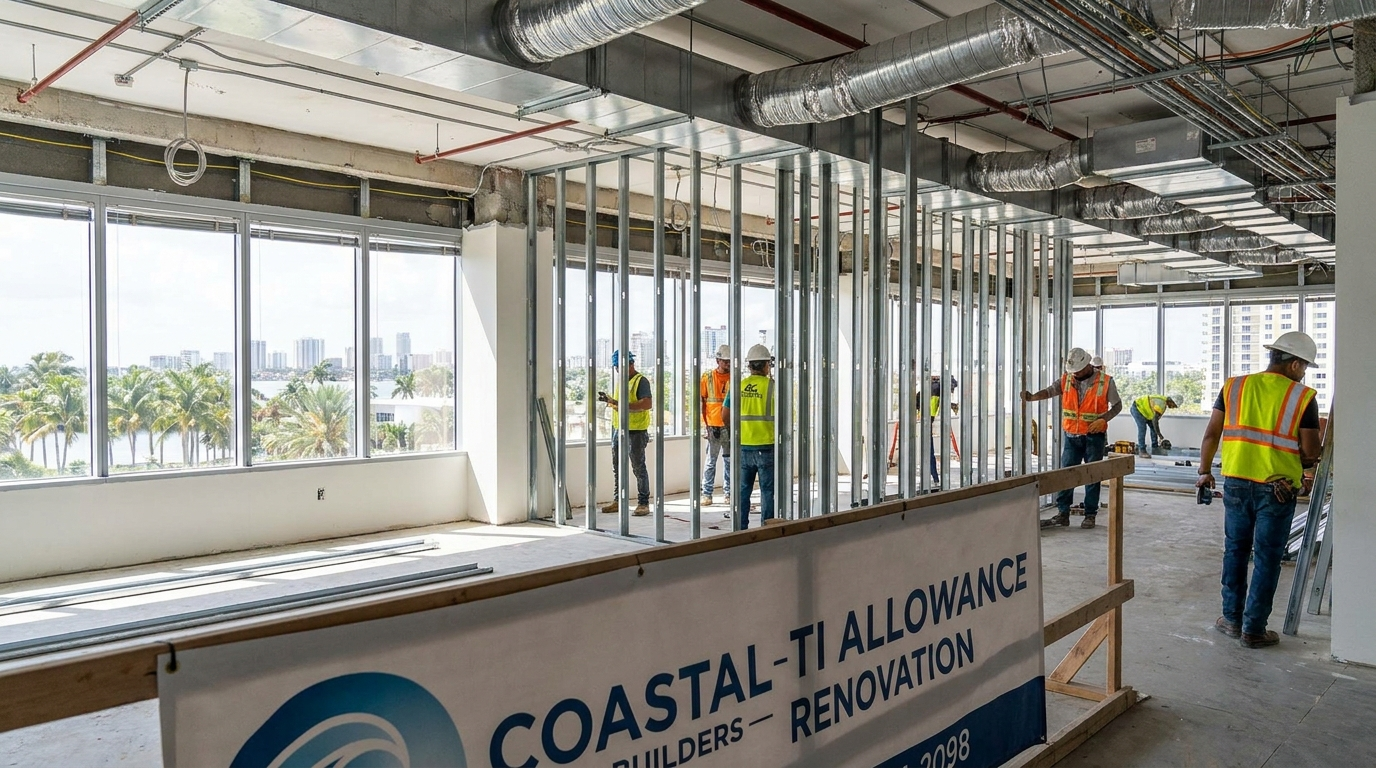
A tenant improvement (TI) allowance is a sum of money a commercial landlord agrees to contribute toward the cost of building out or improving the leased space to suit the tenant's specific needs. It's typically expressed as a dollar amount per square foot. For example, $30/SF TI on a 2,000 SF office space means the landlord contributes $60,000 toward the buildout.
TI covers a wide range of improvements depending on the space and the lease terms: new walls or partitions, flooring, ceiling systems, lighting, HVAC modifications, plumbing (for medical or food service uses), electrical upgrades, paint, millwork, and signage. The specific eligible uses are defined in the lease agreement. Read that section carefully before you sign anything.
How TI allowances are structured
TI allowances are disbursed in a few different ways depending on how the lease is written:
- Landlord-managed buildout: The landlord hires and pays contractors directly, delivering a completed space. The tenant has input on specifications, but the landlord manages the process.
- Tenant-managed buildout with landlord reimbursement: The tenant hires their own contractors, completes the work, submits invoices, and the landlord reimburses up to the TI amount. This approach gives the tenant more control but requires upfront capital.
- Rent credit: In some deals, the TI allowance takes the form of a rent abatement period rather than a direct cash contribution to construction costs.
TI in South Florida's commercial market
South Florida's commercial real estate market has historically offered competitive TI allowances, especially in Class A and B office space across Boca Raton, Fort Lauderdale, and Miami. As of 2026, TI negotiations vary considerably by submarket and asset type:
- Office space: $40 to $80/SF is common for credit tenants on five-year-plus leases in Class A buildings
- Retail space: TI is typically lower ($15 to $40/SF) and more focused on landlord-controlled improvements
- Industrial/flex: Minimal TI unless the tenant needs a significant office build-out within the industrial shell
- Medical office: TI requirements run high here. Complex plumbing, electrical, and ADA compliance needs push build-out costs to $80 to $150/SF for full medical suites

Key TI negotiation points for South Florida tenants
When negotiating TI in a South Florida commercial lease, focus on the details that actually move money:
- Eligible uses: Define exactly what costs are covered. "Hard costs only" versus "hard and soft costs including architect and permit fees" is a meaningful financial difference.
- Disbursement timing: When and how is the money released? Requiring upfront receipts before reimbursement can strain cash flow, particularly for smaller tenants.
- Unused TI: If the buildout comes in under budget, do you forfeit the balance? Some leases allow unused TI to convert to rent abatement. Many do not.
- Recapture provisions: Early lease termination may trigger a requirement to repay a prorated share of the TI the landlord already funded. Know these terms before you sign.
- Approval process: Most landlords require sign-off on contractor selection and construction plans before releasing funds. Build that review timeline into your buildout schedule or the delays will cost you.
Negotiating a commercial lease in South Florida? Our team works with commercial tenants and investors across Palm Beach, Broward, Miami-Dade, and surrounding counties. Contact Pure Equity for guidance on commercial lease strategy or to discuss commercial investment opportunities in our market.
Frequently asked questions
Is a TI allowance the same as free rent?
No. Free rent is a period where no rent is owed, often granted at the start of a lease to allow move-in time. A TI allowance is money specifically designated for construction and improvements to the space. Some deals include both, and some leases convert unused TI into free rent, but they are separate concessions.
Who owns the improvements after the lease ends?
In most commercial leases, improvements funded by a TI allowance become the landlord's property at lease end. The lease may also require the tenant to restore the space to its original condition, depending on the scope of the buildout. Confirm this in the lease before construction begins.
Can I negotiate TI even in a tight South Florida market?
Yes, though the amount and structure depend heavily on your lease term, credit profile, and the landlord's current vacancy situation. Longer commitments, stronger financials, and longer vacancy periods at the property all improve your negotiating position. A commercial broker familiar with local submarket conditions can tell you what's realistic before you go to the table.
What if construction costs exceed the TI allowance?
Any costs above the TI amount are the tenant's responsibility. This is called a tenant overrun. Budget carefully and get competitive contractor bids before signing. Locking in a GMP (guaranteed maximum price) contract with your contractor limits exposure if material costs shift during the project.
How the allowance is paid decides whether it helps you
The headline figure matters less than the mechanism, and tenants routinely negotiate the number while ignoring the terms that determine whether they ever see it.
Reimbursement is the most common structure: you fund the work, then submit invoices and lien releases and the landlord repays you. That means you need the cash first, which is a real constraint for a small business.
Landlord build means the landlord performs the work to an agreed specification. You avoid the cash outlay and you give up control over cost and schedule. A turnkey arrangement goes further, with the landlord delivering a finished space to a defined plan.
Ask which applies, and if it is reimbursement, ask what documentation triggers payment and how quickly. An allowance paid ninety days after completion is a different offer from one paid in stages.
It is not free money, it is amortised rent
This is the reframing that changes how you negotiate. In most cases the landlord recovers the allowance through the rent over the lease term, so a larger allowance generally means a higher rent.
That has a practical consequence. Compare offers on total occupancy cost across the full term rather than on the allowance or the rent alone. A larger allowance at a higher rent can cost more than a smaller one at a lower rent, and the arithmetic is straightforward once you lay both out.
It also means an allowance you do not use is money left with the landlord. If your build is simpler than the allowance covers, negotiate to apply the unused portion to rent abatement instead, which is a common and reasonable request.
Who owns the work when you leave
Improvements generally become part of the building and remain when the lease ends. That is the default and it is worth understanding rather than resenting.
The clause to find is restoration. Some leases require the tenant to return the space to its original condition at the end of the term, which can mean removing improvements you paid for. On a specialised fit out that obligation can be substantial, and it arrives at the moment you are least willing to spend.
Negotiate it at signing. A reasonable position is that improvements approved by the landlord during the term need not be removed, with restoration limited to anything unusual or specifically identified.
The Florida construction lien exposure applies here too
If you are managing the build, the same lien law that affects homeowners affects you, and on a commercial fit out the sums are not small.
Subcontractors and suppliers who work on the property can record a lien even where you have paid your contractor in full, if that contractor did not pass the money on. Notices to owner from parties you never engaged are the signal that this exposure exists.
The defence is the same discipline: release payment against lien waivers at each stage, reconcile the notices you receive against the waivers you hold, and never fund substantially ahead of completed work. Your landlord will care about this too, since a lien attaches to their property, which is why leases typically require you to keep the premises free of them.
What else to negotiate alongside it
The allowance is one term among several, and the others frequently move more easily.
Free rent during the construction period is standard rather than generous, since you cannot trade from a building site. A longer term generally supports a larger allowance, so if you are confident in the location that is a lever. Renewal options protect the investment you are about to make in someone else's building. And an assignment or sublease clause matters more than it seems, because a fit out you cannot transfer is a fit out you cannot recover if your plans change.
Ask what happens if construction costs exceed the allowance, since the answer is almost always that the excess is yours, and knowing that before you design is the point.
More common questions
Is a TI allowance the same as free rent?
No. They are separate concessions and it is normal to negotiate both, since free rent covers the period you cannot trade and the allowance covers the build.
Who owns the improvements afterwards?
Generally the landlord, as part of the building. Check the restoration clause, since some leases require you to remove them at your own cost.
What if the build costs more than the allowance?
The overage is normally the tenant's, so establish that before designing and price the fit out against the allowance rather than against ambition.


