

How to Find Real Estate Wholesalers in South Florida (2026 Guide)
June 9, 2026 · 6 min read · By Onias Derilus, Broker
The best deals in South Florida never hit the MLS. Wholesalers control the off-market pipeline, here's exactly how to find reliable ones and get on their buyers list.
If you want to flip houses or build a rental portfolio in South Florida, you need to find real estate wholesalers. A wholesaler is an investor who puts a property under contract, usually distressed or off-market, then sells that contract to another buyer for an assignment fee. The best deals in this market come through wholesale channels far more often than they show up on Zillow.
What a real estate wholesaler actually does
A wholesaler finds motivated sellers (divorces, estates, pre-foreclosures, tired landlords) and gets a property under contract below market. They then assign that contract to an end buyer, a flipper or landlord or developer, for a fee that usually runs $5,000 to $25,000 in South Florida. The buyer gets a discounted property. The wholesaler gets paid without ever owning the home.
Good wholesalers know their numbers. They pre-screen properties so the deals they pass along clear basic investment criteria. Weak ones inflate the ARV and lowball the repairs to make a deal look better than it is. That is exactly why you need to run the math yourself before you buy from anyone. Our 70 rule calculator guide walks through how.
Where to find real estate wholesalers in South Florida
These are the channels that consistently produce introductions:
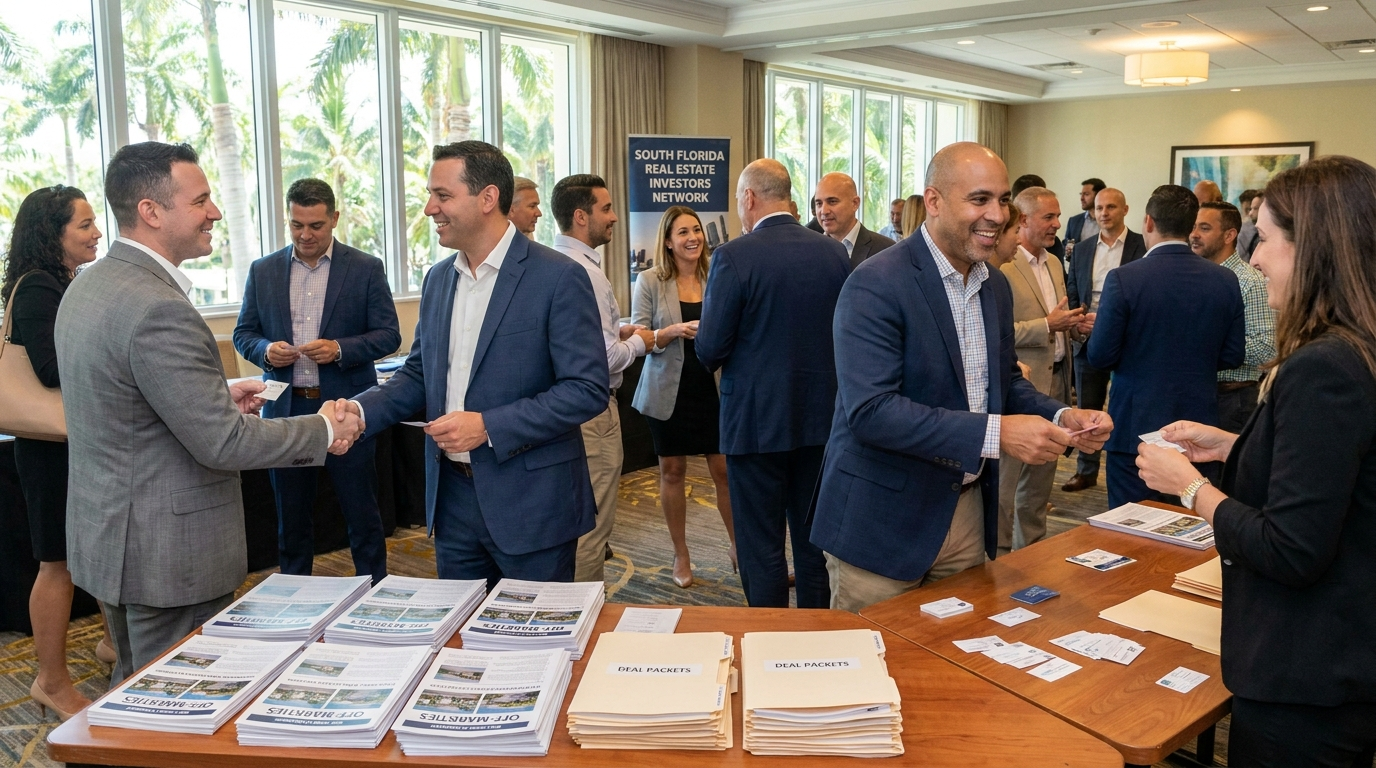
- REIA meetups. The Palm Beach Real Estate Investors Association, Broward Real Estate Investors Club, and South Florida REIA all hold regular meetings. Wholesalers attend to build their buyers lists. Show up consistently and introduce yourself as an active cash buyer.
- BiggerPockets local forums. The South Florida forums on BiggerPockets stay active. Post that you want to connect with wholesalers who source in your target counties.
- Facebook groups. Groups like "South Florida Real Estate Investors" and county-specific investment groups often have wholesalers posting deals directly.
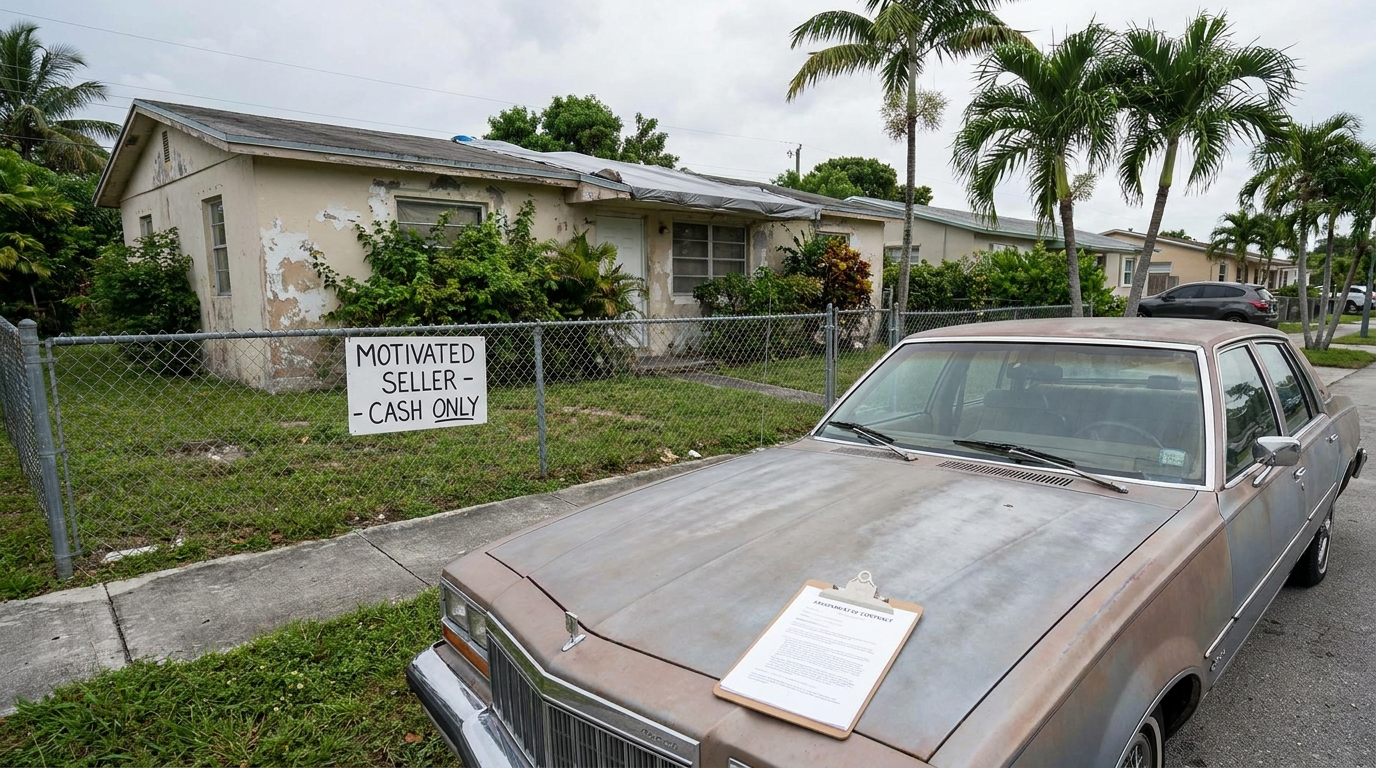
- Direct mail responses. Many wholesalers reach sellers through direct mail. Getting on their buyers list is often as simple as responding to a "We Buy Houses" sign or mailer you see in your target neighborhood.
- Your real estate agent. Investor-friendly agents in South Florida know which wholesalers bring real deals and which ones bring wishful pricing. Ask for introductions.
How to get on a wholesaler's buyers list
Wholesalers push their best deals to buyers who close quickly and reliably. To land on that short list:
- Have proof of funds ready, either a bank statement or a hard money pre-approval
- Be specific about your buy box: neighborhoods, property type, price range, and how much condition you will tolerate
- Close a deal with them and leave a good review, because reputation travels fast in this community
- Respond to their deals quickly even when you pass, and tell them why you passed
How to vet a wholesaler before you buy
Not every wholesaler plays it straight. Before you wire money on a deal:
- Confirm the assignment contract is actually assignable, and review it with a real estate attorney
- Get your own ARV from a local agent or appraiser. Do not use the wholesaler's comps
- Run your own renovation estimate with your contractor before you commit
- Make sure the seller's title is clean by ordering a title search prior to closing
- Ask for references from other buyers who have closed with this wholesaler
Our team at Pure Equity works with vetted South Florida wholesalers and can help you evaluate a deal before you buy. Get in touch and tell us what you are looking for, or set up your buyer criteria to get off-market opportunities sent directly to you. For the legal side of assignment contracts in Florida, see the Florida Realtors legal resources.
Looking for off-market deals in South Florida? Pure Equity connects buyers with vetted wholesalers across Palm Beach, Broward, and Miami-Dade counties. Contact us to get on our off-market buyers list, or tell us your buy box and we will send deals that match.
Frequently asked questions
Is wholesaling legal in Florida?
Yes. Wholesaling is legal in Florida as long as the wholesaler is marketing the contract, not the property itself. Florida law does not require a real estate license to assign a contract you are a party to. That said, having an attorney review the assignment agreement before you close is a reasonable step.
How much do wholesalers charge in South Florida?
Assignment fees in South Florida typically run $5,000 to $25,000 per deal, though fees on larger or higher-value properties can go higher. The fee is built into the deal, so what matters is whether the all-in cost (purchase price plus assignment fee plus rehab) leaves enough margin for your strategy.
Can I work with a wholesaler and a real estate agent at the same time?
Yes, and many investors do. Agents surface on-market and expired listings; wholesalers bring off-market contracts. Having one investor-friendly agent who also knows the local wholesale network is often the most efficient setup.
What is an assignment fee?
An assignment fee is what the wholesaler charges to transfer their position in the purchase contract to you. You take over the contract, close with the seller at the agreed price, and pay the wholesaler their fee, usually at closing through the title company.
How do I know if a wholesale deal is priced right?
Pull your own comps from a local agent, run the numbers through the 70% rule, and walk the property with your contractor before committing. If the wholesaler's ARV does not hold up or the repair estimate is too thin, pass. There will be another deal.
What you are actually being offered
Before finding wholesalers it is worth being precise about the transaction, because the structure determines every risk that follows.
A wholesaler typically has a property under contract and assigns that contract to you for a fee. You are not usually buying from the wholesaler, you are stepping into their position as buyer and completing with the original seller.
That means the terms of the original contract become your terms. The price, the closing date, the deposit already placed and any conditions were negotiated by someone else with different priorities. Read the underlying contract rather than the marketing sheet, because that document is what you are actually acquiring.
Vetting the wholesaler, and vetting the deal
These are separate exercises and both matter, since a competent wholesaler can still bring you a bad deal.
- Do they actually control the property? Ask to see the executed contract with the seller. Someone marketing a property they have no contract on is a serious warning.
- Does the contract permit assignment? If it does not, the deal cannot be delivered as described.
- What is the assignment fee, and is it disclosed? You should know what you are paying for the assignment as distinct from the property.
- Who is the title or closing agent? A named, verifiable closing agent is a good sign. Vagueness here is not.
- What is the closing date, and is it achievable for you? Inherited deadlines are frequently tight and you did not negotiate them.
Then vet the deal itself exactly as you would any purchase. The wholesaler's repair estimate and after repair value are their figures, produced by someone whose income depends on you accepting them. Get your own contractor estimate and your own comparable closed sales.
Do your own diligence in the time you actually have
The pressure in these transactions is speed, and speed is what causes the losses.
Establish how much time you have before closing and what you can realistically complete in it. At minimum: view the property yourself, get a contractor through it, run comparable closed sales rather than active listings, and get title work started so liens and encumbrances surface before you are committed.
In Florida also get the insurance answer early. Roof age and opening protection can make a property expensive or difficult to insure, and on a distressed house that is a common outcome rather than an unlikely one.
If the timeline does not allow that work, the honest answer is to decline. There is another deal next month, and no discount compensates for buying something you did not examine.
The legal position is worth understanding
Assigning a contract you hold is generally lawful. Marketing property you do not own can cross into unlicensed brokerage activity, which Florida regulates, and the line depends on what is actually being advertised and to whom.
As a buyer you are not the person taking that risk, and it should still inform how you choose who to work with. A wholesaler operating carefully, with signed contracts, clear disclosure and a real closing agent, is a different proposition from one advertising properties they have no interest in.
If anything about a structure seems unusual, take advice from a Florida real estate attorney before signing rather than after. That is a modest cost against the size of the transaction.
Where to actually find them
The reliable routes are relationship based rather than advertised. Local real estate investor meetings are the most direct, since wholesalers attend specifically to build buyer lists. Title companies and closing agents who handle investor volume see who closes reliably. And investor focused agents generally know which wholesalers deliver and which waste time.
Once on a list, be specific about your buy box. Respond quickly even when you plan to pass. Wholesalers send first to buyers who reply. Being easy to deal with is what gets you the early call rather than the third one.
More common questions
What is a typical assignment fee?
It varies widely and should be disclosed. What matters is whether the total you pay works against your own underwriting, not whether the fee seems large.
Can I use my own agent as well?
Yes, and an investor experienced agent is useful for pulling comparable closed sales independently of the wholesaler's figures.
How do I know the price is right?
Run your own numbers on closed sales and your own contractor estimate. Never underwrite from the marketing sheet.


