

How to Be a House Flipper in South Florida: A Beginner's 2026 Guide
June 9, 2026 · 8 min read · By Onias Derilus, Broker
House flipping in South Florida is a real business, not a TV show. Here's the honest step-by-step guide to becoming a flipper: how to find deals, fund them, renovate them, and sell for a profit.
How to be a house flipper is one of the most searched real estate questions, and one of the least honestly answered. The reality sits somewhere between the overnight riches of HGTV and the doom-and-gloom warnings about guaranteed losses. In South Florida's market, flipping works for investors who approach it like a business.
What it actually means to be a house flipper
A house flipper buys a property below market value, renovates it to increase its value, and sells it for a profit, usually within 3 to 12 months. The profit comes from three sources: buying below market, adding value through renovation, and selling at or above market comps. Miss any one of those and the profit disappears.
In South Florida, you're competing with experienced operators who've done this dozens of times. That doesn't mean you can't succeed as a beginner, but it does mean you need to be sharp, conservative, and disciplined from day one.
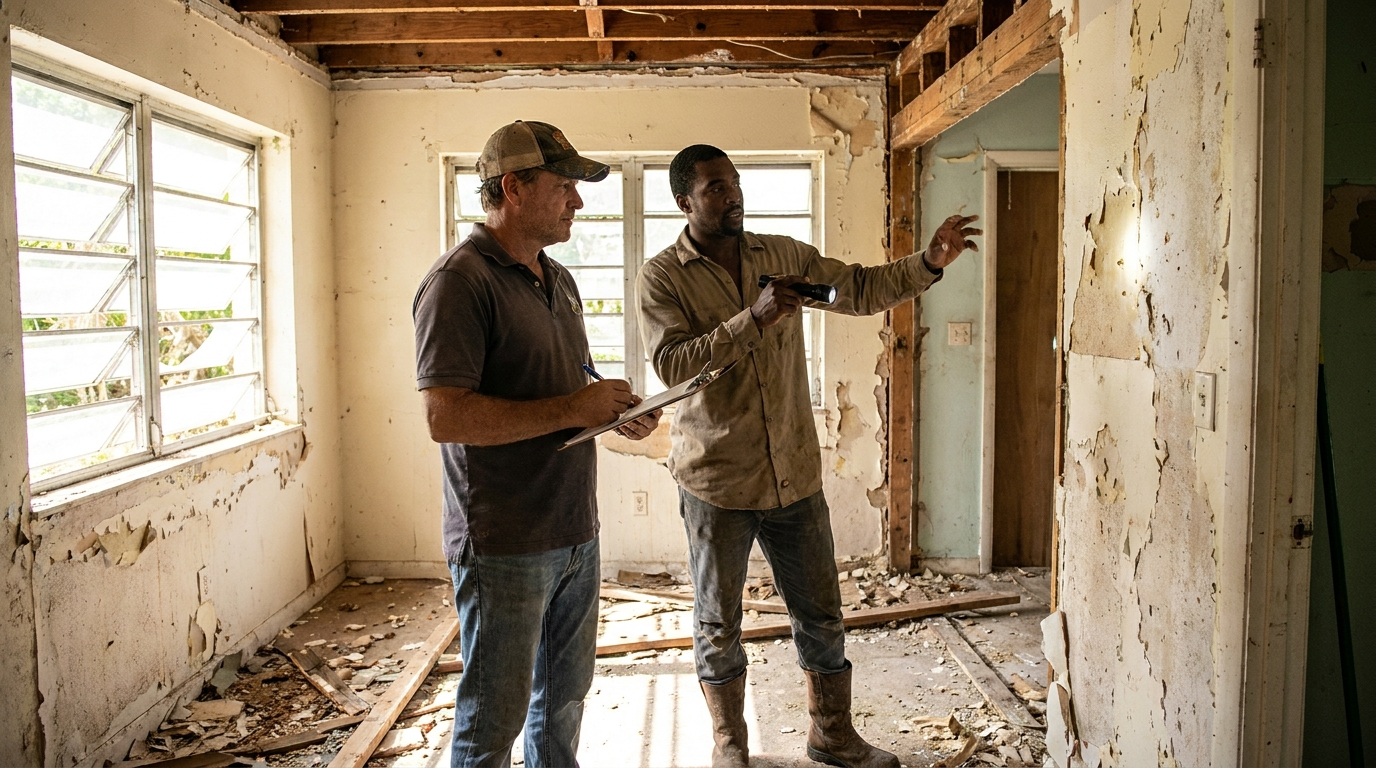
Step 1: learn your target market cold
Before you buy anything, spend 60 to 90 days studying your target submarket. Know what renovated 3/2s sell for in Deerfield Beach. Know what buyers in Hialeah expect for $350,000. Know which neighborhoods have rising comps and which are stagnant. This knowledge is what separates investors who price deals correctly from those who overpay.
Drive your target neighborhoods. Tour open houses, not to buy, but to train your eye on what finished products look like and what they sell for. Talk to local agents. By the time you make your first offer, you should be able to estimate ARV within 5% without pulling a single comp.
Step 2: master the numbers before you touch a deal
Learn to run the 70 percent rule in your sleep. Know your holding cost assumptions: financing rate, expected days-to-sell, insurance, taxes. Have a trusted contractor who can give you reliable renovation estimates. Without these tools, you're guessing, and guessing with six figures on the line is how investors lose money.
Use our Fix & Flip / BRRRR Calculator to model full deal returns, not just the ARV calculation, but projected net profit after all costs.
Step 3: find your first deal
The best flip deals in South Florida don't come from Zillow. They come from:
- Wholesalers: investors who find distressed properties and assign contracts to flippers. Building relationships with a handful of active South Florida wholesalers is one of the fastest paths to deal flow.
- Direct mail: targeting absentee owners, probate properties, and delinquent tax lists in your target zip codes
- MLS alerts: properties that have been sitting 60+ days, expired listings, and estate sales often have motivated sellers willing to negotiate
- REO and foreclosures: bank-owned properties priced to liquidate, not to maximize value
Step 4: fund the deal
Most beginners use hard money loans, which are short-term, asset-based financing products that fund 65 to 80% of purchase price plus some or all of rehab costs. Hard money is expensive (10 to 14% interest, 1 to 3 points) but fast and flexible. The cost goes into your deal analysis upfront, so it shouldn't surprise you at closing.
As you build a track record, private money (individual investors lending you capital) and conventional investment loans become available at lower costs. For a first deal, hard money is the standard path.
Step 5: execute the renovation on time and on budget
This is where most flips live or die. Scope the rehab before you close: walk the property with your contractor, get a detailed line-item estimate, and add 15 to 20% contingency. Then manage the project actively with weekly site visits, documented progress, and milestone-based payments to your contractor.
Every extra week you're holding a property costs money. A 5-month flip versus a 7-month flip is often the difference between a profitable deal and a break-even one in South Florida's holding cost environment.
Step 6: sell it right
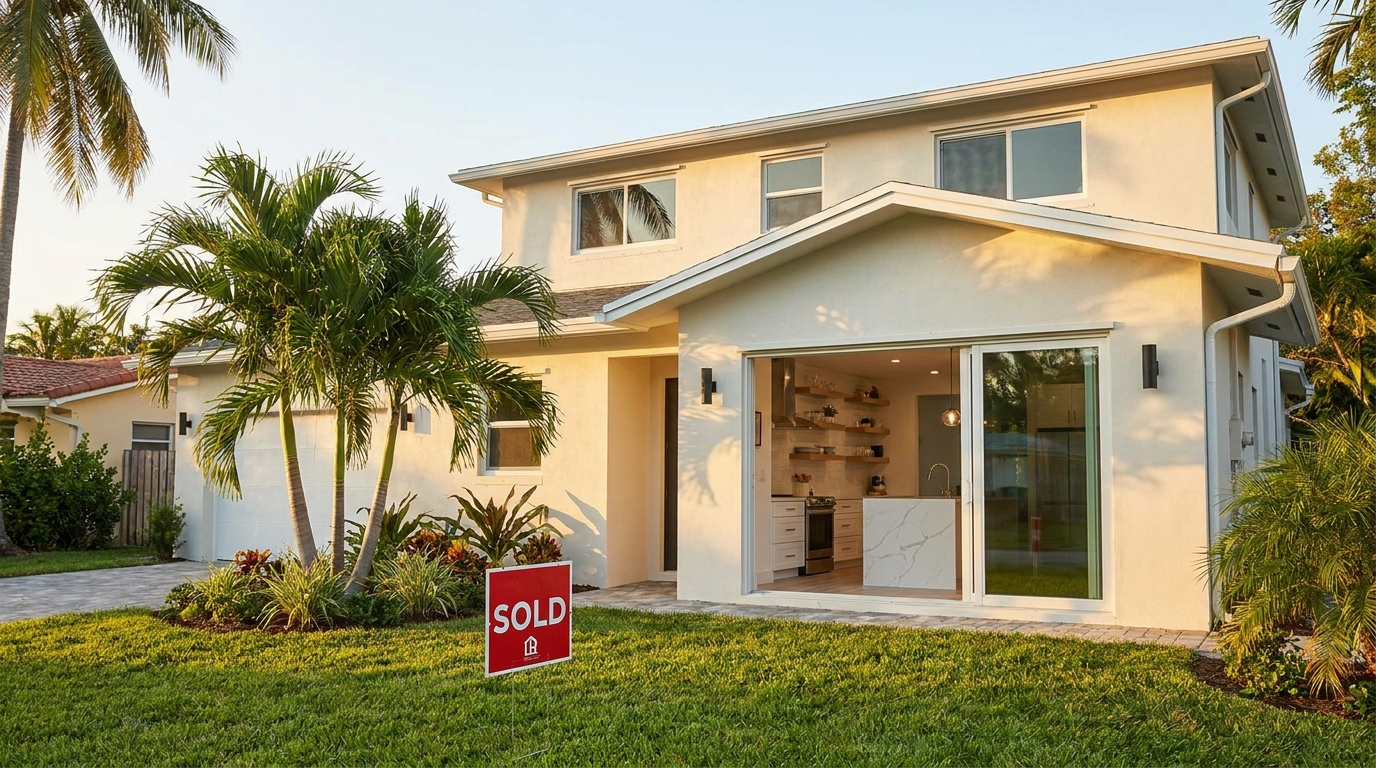
Price it correctly from day one. Overpriced listings accumulate days-on-market and stigma. A sharp price generates competition and often multiple offers. Hire a professional stager, get great photography, and list at the right time (spring and fall are peak buyer seasons in South Florida).
Our team at Pure Equity has helped flippers exit properties across Palm Beach, Broward, Miami-Dade, St. Lucie, Martin, and Highlands counties. Get a pre-list consultation and we'll help you price, prepare, and sell your flip for maximum return. For first-flip financing options, also consider HUD's 203k rehab loan as a low-cost entry point.
Ready to flip in South Florida?
Pure Equity works with investors at every stage, from finding the right acquisition to maximizing exit price. Reach out here or use our Fix and Flip calculator to run your numbers now.
Frequently asked questions
How much money do I need to start flipping houses in Florida?
Most deals require at least 20 to 25% of the purchase price as a down payment on a hard money loan, plus enough reserves to cover renovation overruns and carrying costs. On a $200,000 purchase, plan for $50,000 to $60,000 in cash minimum, plus a contingency buffer.
How long does a typical house flip take?
In South Florida, a clean cosmetic flip typically takes 3 to 5 months from closing to sold. Full gut renovations can run 6 to 9 months. Every extra month adds carrying costs, so staying on schedule directly affects your profit.
Do I need a real estate license to flip houses in Florida?
No. You can buy and sell your own properties without a license. A license does let you save on commission when you list your flip, but most investors work with an agent and factor that cost into their deal analysis.
What is the 70 percent rule?
The 70% rule says you should pay no more than 70% of a property's after-repair value (ARV) minus renovation costs. If a house will sell for $300,000 fixed up and needs $50,000 in work, your max purchase price is ($300,000 x 0.70) minus $50,000, which equals $160,000. It's a quick filter, not a substitute for a full cost analysis.
Where are the best markets to flip houses in South Florida right now?
Palm Beach County, Broward County, and Miami-Dade all have active flip markets, though entry prices are high. St. Lucie and Martin counties offer lower purchase prices with solid ARVs, which can produce better margins for investors willing to work slightly further north.
Doing this repeatedly makes you a business
The step by step accounts treat flipping as a project. Once you do it more than occasionally, it becomes a business with consequences that no renovation guide mentions, and they change the arithmetic.
The most significant is how the profit is characterised for tax. Someone who buys and improves property with the intention of reselling is treated differently from someone holding an investment. That treatment affects the rate applied to the gain and whether self employment considerations arise. It also affects whether the deferral tools available to long term investors are available to you at all.
The distinction turns on facts about how you operate rather than on what you call yourself, and it is genuinely consequential. Someone budgeting a project on an investment tax assumption and then being treated as a dealer has lost a meaningful share of the profit they planned for.
This is not something to work out from an article. Speak to a CPA who handles real estate before your first project rather than at the following April, because several of the relevant decisions are made at purchase and cannot be revisited afterwards.
Know which work you may legally perform
The second business question is licensing, and it is where inexperienced flippers get into genuine trouble in Florida.
Construction contracting in this state is licensed, and there are limits on what may be performed and on who may perform it, including on work done on a property you own. Certain trades have their own requirements. Pulling permits as an owner carries obligations that people accept without reading.
The practical consequences of getting it wrong are not minor. Unpermitted work has to be disclosed and frequently has to be opened up and redone. An unlicensed contractor can leave you without recourse and without the protections that licensing exists to provide. And work done outside what the permit covers surfaces at the buyer's inspection, at the worst possible moment for your timeline.
Verify licensing yourself with the state rather than accepting a card, confirm what each permit covers before work starts, and close every permit out. A property sold with open permits is a problem you have handed to your buyer and, in practice, back to yourself.
Finish to the buyer who exists, not the one you imagine
The most common way a competent renovation loses money is a finish level that does not match the market it is being sold into.
Over improving is the classic version. A kitchen specified two tiers above what the neighbourhood supports does not return its cost, because the buyer who wants that kitchen is shopping in a different price bracket and the buyer who is shopping here will not pay for it.
Under improving fails the other way, leaving the property competing with unrenovated inventory while carrying renovation costs.
The method is to establish the target buyer before the specification. Look at what has actually sold recently in that immediate area at your intended price, go and see the finish level in those properties, and match it rather than exceeding it. Then put the money you saved into the things that decide whether a buyer can proceed at all: a roof they can insure, systems that pass an inspection, and permits that are closed.
In this market that last group matters more than in most, because insurability determines whether a financed buyer can complete. A beautifully finished house with an uninsurable roof is a cash sale at a discount.
Price the holding period honestly
Every projection assumes a sale date, and the difference between the assumed date and the real one is where profit disappears.
While you hold, you are paying financing costs, insurance, property tax, utilities and any association fee. Those accrue whether or not anyone is looking at the house, and on borrowed money they accrue quickly.
So build the projection on the actual absorption of the specific area rather than on a general assumption. Days on market vary widely across our counties, from around 90 in parts of the Treasure Coast to around 206 inland, and a project modelled on three months in a market that takes seven is not a smaller profit, it is frequently no profit.
Then add a margin. Permits take longer than expected, trades run late, and a buyer's financing can fail after two months of contract. Model the outcome where everything takes half again as long and confirm the deal still works. If it only works on the good version, it is not a plan.
More common questions
Is flipping treated differently for tax than investing?
It can be, substantially, depending on how you operate. Speak to a real estate CPA before your first project, since several decisions are made at purchase.
Can I do the work myself?
Only within what Florida's contractor licensing permits. Verify licensing with the state, confirm what each permit covers, and close every permit before selling.
What is the most common renovation mistake?
Finishing above what the neighbourhood supports. Match the level in properties that have actually sold nearby at your intended price.


