

Why Real Estate Is the #1 Wealth Builder for South Florida Millionaires
June 9, 2026 · 7 min read · By Onias Derilus, Broker
The data is clear: most American millionaires built their wealth through real estate. In South Florida's dynamic market, the path from earner to wealth-builder has never been more accessible, if you take it seriously.
There's a commonly cited statistic that 90% of millionaires have built their wealth through real estate. Whether or not that exact figure holds up in every survey, the underlying point is consistently supported by wealth research: real estate is the most common path to millionaire status for Americans who didn't inherit their wealth. In South Florida, where property values have appreciated dramatically and rental demand is structural, understanding how millionaires build wealth through real estate is practical, not aspirational. The market is accessible to investors at multiple price points.
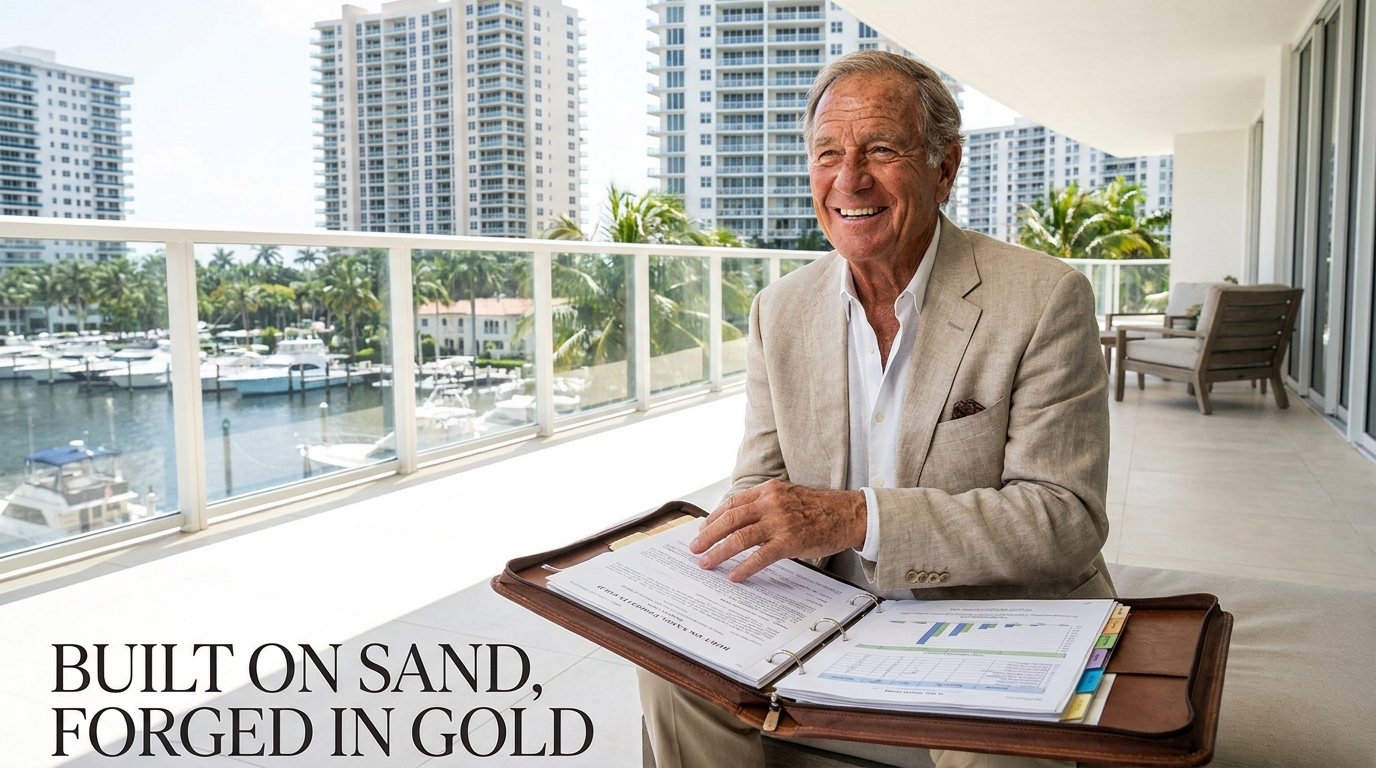
Why real estate builds millionaires reliably
Real estate has wealth-building characteristics that other asset classes don't replicate at the same time:
- Leverage: You can control a $500,000 asset with $100,000 of your own money. A 10% appreciation on that asset represents a 50% return on your invested capital. No other mainstream investment allows this level of leverage at conventional interest rates.
- Forced savings through amortization: Every mortgage payment builds equity. Your tenant's rent pays down your loan balance, creating equity you own without actively saving it.
- Tax advantages: Depreciation reduces taxable rental income. 1031 exchanges defer capital gains taxes indefinitely. Mortgage interest deductions reduce taxable income further. These advantages compound over time.
- Inflation hedge: Real property values and rents generally increase with inflation, protecting purchasing power in ways that cash savings cannot.
- Multiple return streams: A South Florida rental property generates cash flow, equity buildup, market appreciation, and tax benefits at the same time. That combination typically outperforms a single-dimension return source like dividends or interest.
The South Florida millionaire path: a 20-year model
Consider a South Florida investor who starts in 2026 with their first investment property. Say it's a $400,000 duplex in a strong Broward County rental market, purchased with 20% down ($80,000):
- Year 1: Property generates modest cash flow, mortgage pay-down begins building equity
- Year 5: Property has appreciated 15-20%, equity has grown through pay-down and appreciation. A cash-out refinance funds the next acquisition.
- Year 10: Portfolio of 3-4 properties, combined equity of $400,000-$600,000, meaningful monthly cash flow
- Year 20: Properties substantially paid down, combined equity of $1.5M-$2.5M depending on appreciation, cash flow covers a significant portion of living expenses
This is not a fantasy scenario. It's the straightforward math of leveraged real estate in an appreciating market, repeated by thousands of South Florida investors across all six of our counties.
What the data actually shows about millionaire wealth
The mechanism, stated plainly
Property builds wealth through four separate channels working at once, and it is worth separating them because they behave differently.
Appreciation grows the asset. Loan paydown converts a tenant's rent into your equity. Cash flow provides income while you wait. Tax treatment, including depreciation on investment property, can shelter part of that income. Any one of these alone is unremarkable, and together over long periods they compound.
Leverage is what amplifies the result. Put twenty percent down and a five percent gain on the property value is a twenty five percent gain on your invested capital, before costs. That multiplier is the reason property appears so often in wealth statistics.
The part the success stories leave out
Leverage is symmetrical and nobody writes articles about that half. The same multiplier that turns a modest gain into an impressive return turns a modest decline into a serious loss.
A twenty percent fall in value on a property bought with twenty percent down erases the equity entirely, while the loan balance is unchanged. Anyone who owned Florida property through 2007 to 2011 saw exactly that.
So the honest version of the mechanism is that leverage rewards people who can hold through a downturn and punishes people who cannot. Reserves, not returns, decide which group you are in.
What actually forces a sale
Values falling does not by itself cost you anything, because a paper loss on a property you keep is not realised. What forces a sale is running out of cash.
The usual causes are ordinary rather than dramatic. An extended vacancy, a major repair such as a roof or an air conditioning system, an insurance premium increase, or a job loss on the owner's side. In Florida the insurance line has been the most common recent shock, and it lands regardless of how well the property performs.
The defence is liquidity. Holding several months of expenses per property in reserve is unexciting and it is the difference between weathering a bad year and selling into one.
A more honest model
Twenty year projections tend to assume steady appreciation and continuous occupancy. Reality includes vacancy, turnover costs, capital expenditure and periods where values move sideways or down.
Build the model with those included. Assume some vacancy every year, set aside a genuine allowance for capital items rather than pretending roofs last forever, and test what happens if values are flat for five years. A plan that survives that is a plan. One that only works on a straight line is a hope.
Why it still works for patient people
None of this argues against property, and the reason is time. A thirty year loan on a property that keeps pace with inflation is repaid in money worth progressively less, while rents adjust upward.
Long holding periods also smooth out the cycles that damage short holders. The people who did best from Florida property over the last twenty years were rarely the cleverest buyers. They were the ones who bought something reasonable and did not have to sell at the wrong time.
Starting sensibly in our market
Entry costs vary enormously across the region. Median list prices currently run about $274,900 in Okeechobee and $309,000 in Highlands, against $480,000 in Palm Beach County and $599,000 in Miami-Dade.
Cheaper entry is not automatically better. Inland markets take considerably longer to sell, with Highlands averaging around 206 days against 107 in Palm Beach, so your exit is slower and your money is committed for longer. Weigh the lower entry against the reduced liquidity rather than treating the price as the whole story.
Primary residence counts too
Discussions of property wealth jump quickly to rentals, which skips the asset most people actually build wealth in. A primary residence pays down a loan every month and, in Florida, carries two protections worth understanding.
The homestead exemption reduces taxable value, and the Save Our Homes cap limits how fast assessed value can rise while you keep the homestead. Over a long ownership that cap becomes substantial, which is exactly why a long term owner's tax bill can look so low next to a recent buyer's on the same street.
Those benefits reward staying put. They are also why a buyer should never estimate their own future tax bill from the seller's current one, since the assessment resets after purchase.
More common questions
Is property better than the stock market?
They behave differently rather than one being better. Property offers leverage and control alongside illiquidity, transaction costs and management. A sensible answer usually involves both.
How many properties does it take?
Fewer than most people assume, held for longer than most people manage. Three properties owned for twenty five years generally beats ten traded over five.
What is the most common mistake?
Buying with no reserve. It converts every ordinary problem, including a roof or an insurance renewal, into a forced sale at the worst possible time.
sourcesThe Thomas Stanley research ("The Millionaire Next Door" and subsequent studies) consistently finds that the majority of American millionaires built wealth through a combination of disciplined saving, business ownership, and real estate investment. Very few became wealthy through stock market speculation or inheritance alone.
The profile that appears most often: someone who earned a solid but not extraordinary income, lived below their means, used their surplus to fund real estate purchases over 10-20 years, and let leverage and time do the work. South Florida's population includes thousands of people who fit this description exactly. Quietly wealthy through systematic property acquisition, not flashy income.

How to get started in South Florida
The barrier to entry is lower than most people think. You don't need $1 million to start building toward it. What you do need:
- Sufficient income to qualify for a rental property loan or owner-occupant financing
- A down payment (as little as 3.5% with FHA house hacking, or 20% for a conventional investment loan)
- A long-term mindset and a willingness to hold through market cycles rather than selling at the first dip
- Local knowledge from an advisor who can identify properties that meet the actual financial criteria
At Pure Equity, we work with investors at every stage of the wealth-building journey. That includes first-time buyers using an FHA loan to house hack their way into multifamily, as well as experienced portfolio owners optimizing a collection of South Florida properties across all six counties. Use our Rental ROI Calculator to start modeling what a South Florida rental investment would look like for your situation, then contact our team to take the next step.


