

10 Real Estate Businesses to Start in South Florida in 2026
June 9, 2026 · 7 min read · By Onias Derilus, Broker
Real estate isn't just buying and selling homes, it's an entire ecosystem of businesses. Here are 10 real estate business models that work in South Florida's active market.
Real estate is one of the broadest business sectors in the economy, and South Florida's active, high-volume market creates opportunity across an unusually wide range of business models. Whether you want to build a service business, a portfolio, or a hybrid operation, there are real estate businesses to start that match nearly every skill set, capital level, and risk tolerance. Here are ten proven models worth considering in 2026.
1. Licensed real estate agent or team
The most direct path. Get your Florida real estate license (63-hour pre-license course, pass the state exam), join a brokerage, and build your business from your sphere of influence. South Florida's transaction volume and high average prices make this one of the highest-income potential licensed professions in the state. Top producers in Palm Beach and Miami-Dade earn $500K to $1M or more annually.
2. Real estate photography and videography
Every listing needs professional photography, and South Florida's volume of luxury listings creates premium demand for drone footage, twilight photography, and virtual tours. No license required. Starting equipment costs run $3,000 to $10,000. Experienced real estate photographers in South Florida charge $250 to $800 or more per shoot.
3. Property management company
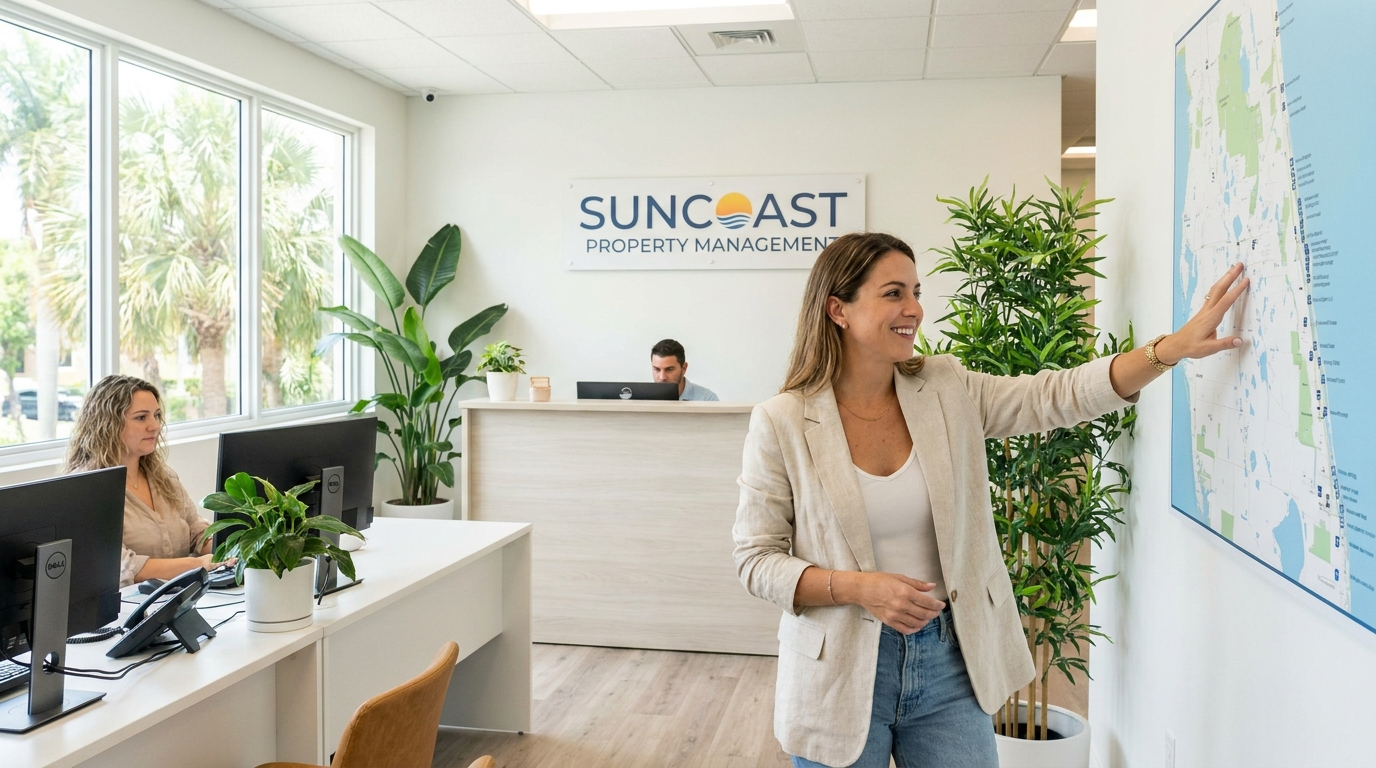
Florida requires a real estate broker's license (or work under one) to manage properties for others for compensation. Property management is a recurring revenue business with relatively predictable income, typically 8 to 12 percent of monthly rent per door. South Florida's large investor-owned rental inventory creates a large addressable market.
4. Fix-and-flip operation
Buy distressed properties, renovate them, and sell for a profit. South Florida's aging housing stock, particularly in Broward County, western Palm Beach County, and inland Miami-Dade, creates a steady supply of value-add opportunities. No license required to buy and sell your own properties. Use our Fix and Flip Calculator to model deal profitability.
5. Real estate wholesaling
Find deeply discounted off-market properties, get them under contract, and assign the contract to an investor buyer for a fee. No renovation risk, no license required with proper structure, and low capital requirements. The model is marketing-heavy. You need systems for finding motivated sellers and cash buyers, and that takes time to build.
6. Short-term rental management
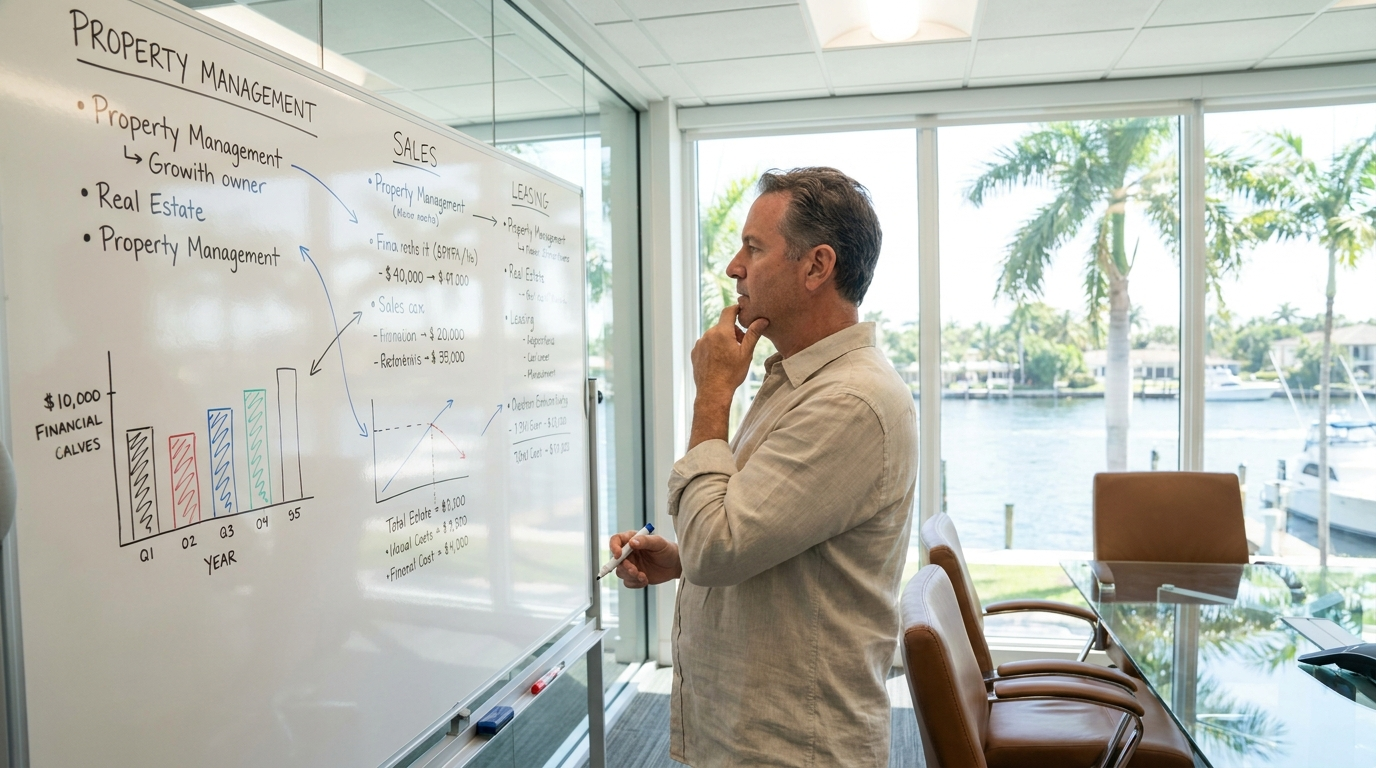
Manage other people's Airbnb and VRBO properties for a percentage of revenue, typically 20 to 30 percent. South Florida's tourism economy creates consistent short-term rental demand in Broward, Miami-Dade, and coastal Palm Beach. This business has grown significantly as individual property owners want professional management without selling their assets.
7. Real estate investor (buy-and-hold)
Build a rental portfolio using strategies like BRRRR, house hacking, or direct purchase. This is a capital allocation business, not a service business. South Florida's strong rental demand and long-term appreciation history make it one of the country's more compelling buy-and-hold markets.
8. Home staging business
Stage vacant or occupied homes to maximize sale price and reduce days on market. South Florida's competitive listing environment creates strong demand for staging, particularly in the $500K to $2M price range. Startup costs include furniture inventory and transportation. Most operators launch with $20,000 to $50,000 in staging assets.
9. Real estate education and coaching
If you have verifiable expertise as an investor, agent, or lender, packaging that knowledge into courses, coaching programs, or seminars can become a meaningful income stream. South Florida has a large population of aspiring investors and agents who want local market knowledge from someone who has actually done it here.
10. Title and escrow company
Title companies are required in every real estate transaction and hold up well during active markets. Starting one in Florida requires significant regulatory compliance, but working in or partnering with a title operation is a solid business model for experienced real estate professionals who want recurring deal flow without carrying property.
Ready to build your South Florida real estate career? Talk to the Pure Equity team about agent opportunities, joint venture possibilities, or investment partnerships across our six-county service area.
Explore more real estate business resources
Browse our real estate calculators for fix-and-flip, BRRRR, DSCR loans, and more. See active homes for sale in South Florida or read the Pure Equity Journal for local market insight.
Frequently asked questions
Do I need a license to start a real estate business in Florida?
It depends on the model. You need a Florida real estate license to represent buyers or sellers, manage properties for compensation, or operate a brokerage. Buying and selling your own properties, wholesaling (with proper contract structure), and service businesses like photography or staging do not require a license.
How much money do I need to start a real estate business?
It varies widely. Wholesaling and photography can be started for under $5,000. A fix-and-flip operation typically needs $50,000 to $100,000 or more depending on the market. A rental portfolio requires capital for down payments plus reserves. Getting licensed as an agent is one of the lower-cost paths with high income potential.
Which real estate business is best for beginners?
Getting licensed as an agent or starting in real estate photography are two of the most accessible entry points. Both have relatively low startup costs, defined skill-building paths, and real income potential within the first year. Wholesaling has a low capital barrier but requires significant marketing effort to find deals consistently.
Is South Florida a good market to start a real estate business?
Yes, for most models. Transaction volume in Palm Beach, Broward, and Miami-Dade is consistently high, average prices are above the national median, and the tourism economy supports short-term rental demand. The market is competitive, but the volume of deals means there is room for new operators who focus on a specific niche or geography.
Screen the list on four dimensions before choosing
A list of options is only useful once you can sort it. These four questions eliminate most of the menu for any given person within about ten minutes.
- Capital required. Some of these need almost nothing beyond time. Others need six figures before the first dollar arrives. That single line removes most options for most people.
- Licensing. Some require a real estate licence, some a different licence entirely, and some none at all. Getting this wrong is not a mistake you can correct later, since operating unlicensed carries real consequences.
- Time to first income. Service businesses can invoice in the first month. Agency work typically produces nothing for six to twelve months. Investment can take years.
- Whether it scales past you. Photography and staging are largely you doing the work. Property management and buy and hold build something that continues without your daily presence.
Rank the options against your own answers rather than against which sounds most appealing, because the appealing ones are usually the ones with the highest capital requirement.
The low capital, fast income group
If you need income quickly and have little to invest, the service businesses are the honest answer, and they are usually skipped because they are less glamorous than investing.
Photography and video, staging, cleaning and turnover services, and administrative or transaction coordination support all share a shape: modest startup cost, income within weeks, and a customer base of agents and investors who buy repeatedly. None require a real estate licence, since you are providing a service rather than acting for a party in a transaction.
They also put you inside the industry while you learn it. A photographer who shoots two hundred listings a year sees more property, and more pricing outcomes, than most new agents do.
The licensed group
Agency work, property management for others and brokerage all involve acting on someone else's behalf, which is where licensing requirements attach.
Property management deserves particular attention because it is frequently misunderstood. Managing property for other owners is regulated activity in Florida, and it is a different business from managing your own. It also has a genuine advantage over agency work: recurring monthly revenue rather than transaction by transaction income, which makes it far easier to plan around.
Whatever you are considering, confirm the current requirements with the DBPR rather than relying on a summary. Requirements change and the consequences of operating without the right licence are not commercial, they are regulatory.
The capital intensive group
Flipping, buy and hold investment, land and development all need money before they need skill, and the capital requirement is usually larger than the content around them suggests.
A flip needs the purchase, the full renovation budget, six months of holding costs and a reserve for overruns. Buy and hold needs a down payment plus reserves per property. Development needs the land or an option on it plus the professional fees for an application that may fail.
These are the businesses people want to start and the ones least suited to starting with nothing. If capital is the constraint, the service businesses above generate it while teaching you the market.
The Florida specific opportunities
A few niches are unusually available here because of conditions specific to this state.
Insurance and inspection related services matter more in Florida than almost anywhere, since wind mitigation and four point inspections are routine parts of transactions. Storm preparation, shutter installation and roof related trades have steady demand. Seasonal rental management is a genuine business in areas with a winter population, and condominium heavy markets create demand for services around reserve studies, document preparation and association support.
Each of those has its own licensing position, so check before you build a plan around one.
More common questions
Which requires the least capital?
The service businesses: photography, staging, cleaning and transaction coordination. Modest startup and income within weeks rather than months.
Do I need a licence to manage rentals?
Managing property for other owners is regulated in Florida. Managing your own is not. Confirm the current position with the DBPR before taking on third party work.
Which is best for a beginner?
Whichever matches your capital and your income timeline. A business that fails because you ran out of money before it matured was the wrong choice regardless of its merits.


