

How Hard Is It to Be a Realtor in Florida? (2026 Honest Guide)
June 9, 2026 · 6 min read · By Onias Derilus, Broker
Getting a Florida real estate license is surprisingly easy. Building a sustainable career as a realtor is genuinely hard. Here's the honest difference, and what it takes to thrive in South Florida.
How hard is it to be a realtor? The answer depends on which part of the job you're asking about. The licensing process is accessible. Almost anyone with the time and about $500 can get a Florida real estate license. Building a career that pays real money is a different challenge entirely.
How hard is the Florida real estate license exam?
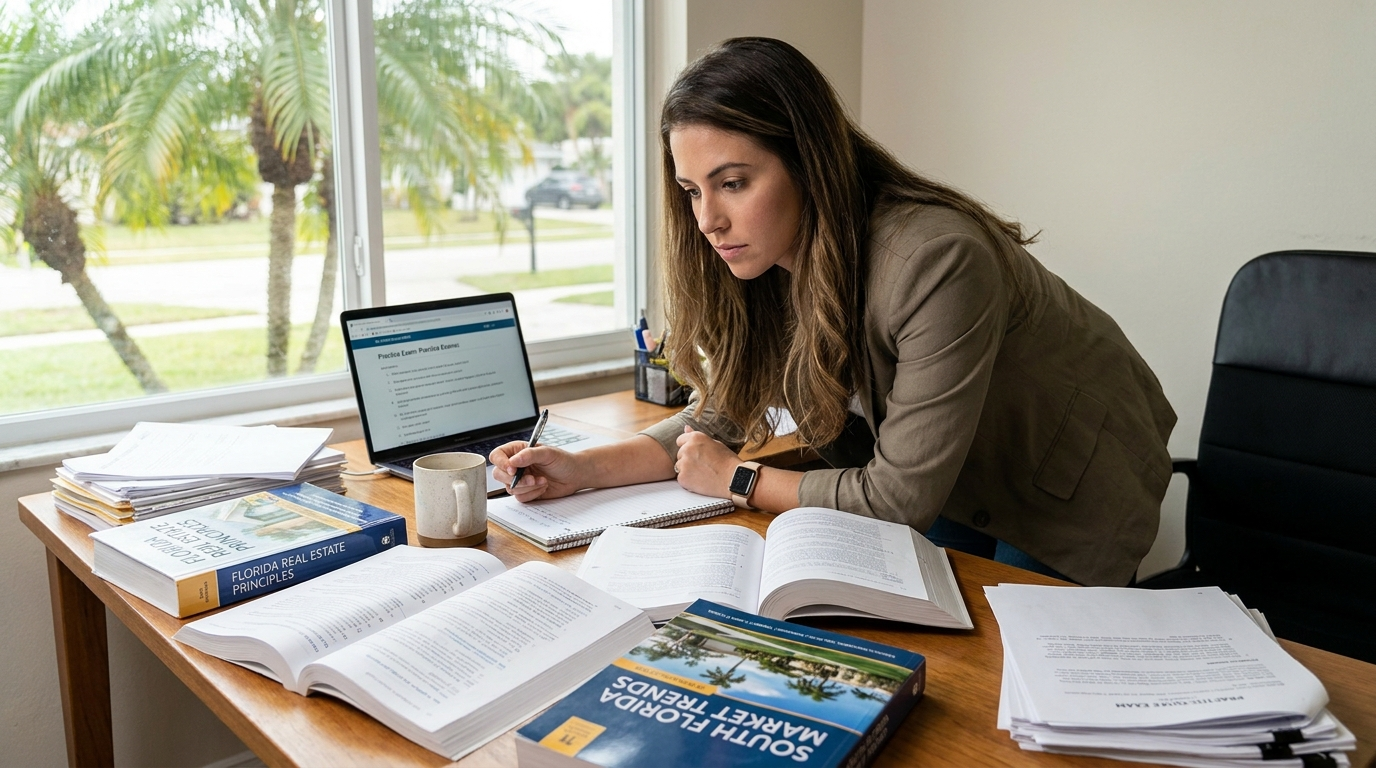
The Florida real estate sales associate exam has a pass rate around 50 to 55 percent on the first attempt. That's not a typo. Roughly half of test-takers fail their first time. The exam covers real estate law, contracts, finance, appraisal, and math. It's not impossible, but it requires genuine study.
The path to licensure:
- Complete 63 hours of approved pre-license education (available online)
- Pass the state exam (100 questions, 70% passing score required)
- Submit fingerprints for a background check
- Activate your license under a sponsoring broker
Total cost: $500 to $800. Total time: 4 to 12 weeks. The license itself is not hard to get if you commit to the coursework.
How hard is it to build a real estate career?
This is where the real difficulty lives. The National Association of Realtors consistently reports that roughly 80% of new agents leave the business within their first two years. The reasons are predictable: they underestimate how long it takes to build a client pipeline, they overestimate the income from early transactions, and they run out of runway before momentum kicks in.
In South Florida, the market is intensely competitive. Palm Beach, Broward, and Miami-Dade counties have some of the highest agent-to-listing ratios in the country. Standing out requires a niche, a network, or a marketing budget. The agents who really pull ahead usually have all three.
What separates agents who make it from those who don't
After observing hundreds of careers across the South Florida market, the patterns are clear:
- Lead generation consistency. Top agents treat real estate like a sales job. They prospect daily, follow up relentlessly, and never stop adding to their pipeline even when they're busy.
- A defined niche. Being "the luxury condo agent in Fort Lauderdale Beach" or "the relocation specialist for Northeast transplants in Palm Beach County" is far more effective than being a generalist. A clear identity makes referrals easy.
- Financial runway. Successful agents budget 12 to 18 months of living expenses before their first deal closes. Real estate is commission-only with irregular income. Plan for that reality from day one.
- Mentor or team structure. Joining a team as a buyer's agent is one of the fastest ways to earn early commissions while learning the business from experienced producers.

Is being a realtor worth it?
For the right person, yes. The top 10% of South Florida agents earn six figures with real flexibility in how they structure their day. The independence, the income ceiling, and the ability to build a client-for-life business are genuinely appealing. But it requires treating real estate like a business from day one, not a side hustle with flexible hours.
If you're considering a career in South Florida real estate and want to talk through what it actually looks like day to day, we're happy to have that conversation. Reach out here. And if you're already in the business and looking to grow, check out how Florida Realtors education resources can support your career development.
The licence is the easy part
Florida's pre-licensing education and state exam are a genuine hurdle, and they are also the most straightforward thing about this career. The material is learnable, the timeline is defined, and passing is largely a function of preparation.
Nothing in that curriculum teaches you how to find a client, which is the entire job. New agents are routinely surprised to discover that they have been certified in law and principles and left to work out business generation alone. That gap, rather than the exam, is what makes the career hard.
What the first year actually looks like
Commission-only income with a lag. A transaction takes 30 to 45 days to close after going under contract, and that clock starts only once you have a client under agreement. So the real sequence is months of prospecting, then a client, then a contract, then a wait, then a payment.
Meanwhile the costs continue: association and multiple listing service dues, errors and omissions insurance, brokerage fees, marketing, a vehicle, and self-employment tax. Those arrive regardless of production, which is why so many licences lapse inside two years. People leave for cash flow reasons, not because the work is beyond them.
The parts nobody describes in advance
- The hours are other people's leisure time. Evenings and weekends are when clients tour, which reshapes your personal life more than the workload itself does.
- Emotional labour. You are handling the largest financial decision most people make, often during divorce, death, relocation, or financial stress. Managing that well is a real skill and it is tiring.
- Deals collapse. Financing falls through, inspections uncover problems, buyers change their minds. Weeks of work vanish and nobody pays you for it.
- You are running a business. Marketing, bookkeeping, tax, and compliance are all yours, and none were covered in the licensing course.
South Florida specifics that raise the difficulty
This market is more technical than most. Condominium association finances, milestone inspections, and reserve funding now decide whether units are financeable. Insurance is a live issue on nearly every transaction and can end a deal after inspection. Flood zones, seawalls, and dock rights come up constantly near the water. International and cash buyers are a meaningful part of the market and transact differently.
An agent who does not understand those subjects will lose deals and, worse, will give clients advice that costs them money. The learning curve here is genuinely steeper than the licensing process suggests.
What makes it survivable
Financial runway first. Everything else is downstream of being able to pay your bills while the pipeline matures, because financial pressure produces the exact behaviours that prevent a pipeline forming.
Then a defined market you can know street by street rather than a three-county spread. Then a brokerage that will actually train you, review your first contracts, and answer the phone when a transaction goes sideways. And then consistency: the business rewards steady prospecting far more than intensity, and most of the difference between agents is who kept going through quiet months.
Is it worth it?
For the right person, genuinely yes. The work is varied, the autonomy is real, income is uncapped, and helping someone through a major transition well is satisfying in a way that few jobs are.
For the wrong person it is a lesson in how expensive an unstructured career can be. The honest test is whether you can handle irregular income, self-direction, and rejection, and whether you can fund the runway to find out.
If you are weighing it and want a frank conversation about the first eighteen months at a small South Florida brokerage, we are glad to have one before you enrol in anything.
Common questions
How long does licensing take in Florida?
The education and exam can be completed relatively quickly. Building a business that pays you takes far longer, and that is the timeline that matters.
Can I do it part-time?
Yes, and many start that way. Momentum builds more slowly, but the financial pressure that ends most new careers is removed.
What is the hardest part?
Consistent business generation with no income during the build. Nearly every agent who leaves does so for that reason.
Does a bigger brokerage make it easier?
Not automatically. What helps is genuine training, mentorship, and contract support. Ask specifically what those look like in practice before joining anywhere.
What the first ninety days should look like
If you do decide to start, the early structure matters more than effort. Pick one geography small enough to learn properly. Tell everyone you know, plainly and once, what you are now doing. Preview inventory constantly, because you cannot advise on a market you have not seen. Sit open houses, including other agents' listings, since that is where buyers without representation actually appear.
Track conversations rather than closings. Closings are a lagging indicator and will discourage you long before the pipeline matures, while conversation count is something you control daily and is the only honest early measure of whether the business is being built.
The honest summary
Licensing is straightforward. Building a business that pays you is hard, slow, and unstructured, and the South Florida market adds genuine technical complexity around insurance, associations, and coastal property. People who succeed here are usually those who funded a real runway, chose one market and learned it properly, and kept prospecting through the months when nothing closed. If that describes how you work, it is a career worth considering seriously.


