

How to Become a Rich Real Estate Agent in South Florida (2026 Roadmap)
June 9, 2026 · 7 min read · By Onias Derilus, Broker
Most real estate agents make modest incomes. A small percentage earn extraordinary ones. The difference isn't luck, it's a specific set of decisions made early in their career. Here's the roadmap.
How to become a rich real estate agent is not a mystery. It is a sequence of decisions. The agents who build real wealth in South Florida real estate follow a predictable playbook. The ones who struggle make predictable mistakes. Understanding the difference is the first step.
What "rich" looks like as a real estate agent
In South Florida, a high-performing independent agent earning $500,000 or more in GCI (gross commission income) is achievable, but it usually takes 5 to 10 years of consistent execution. A team leader running 3 to 5 agents and closing 100-plus transactions annually can generate $800,000 to $1.5M or more in GCI. Top luxury producers in Palm Beach, Coral Gables, and Boca Raton routinely earn $2M to $5M annually.
None of these numbers happen by accident, and none happen in year one. Set a five-year benchmark, not a five-month one.
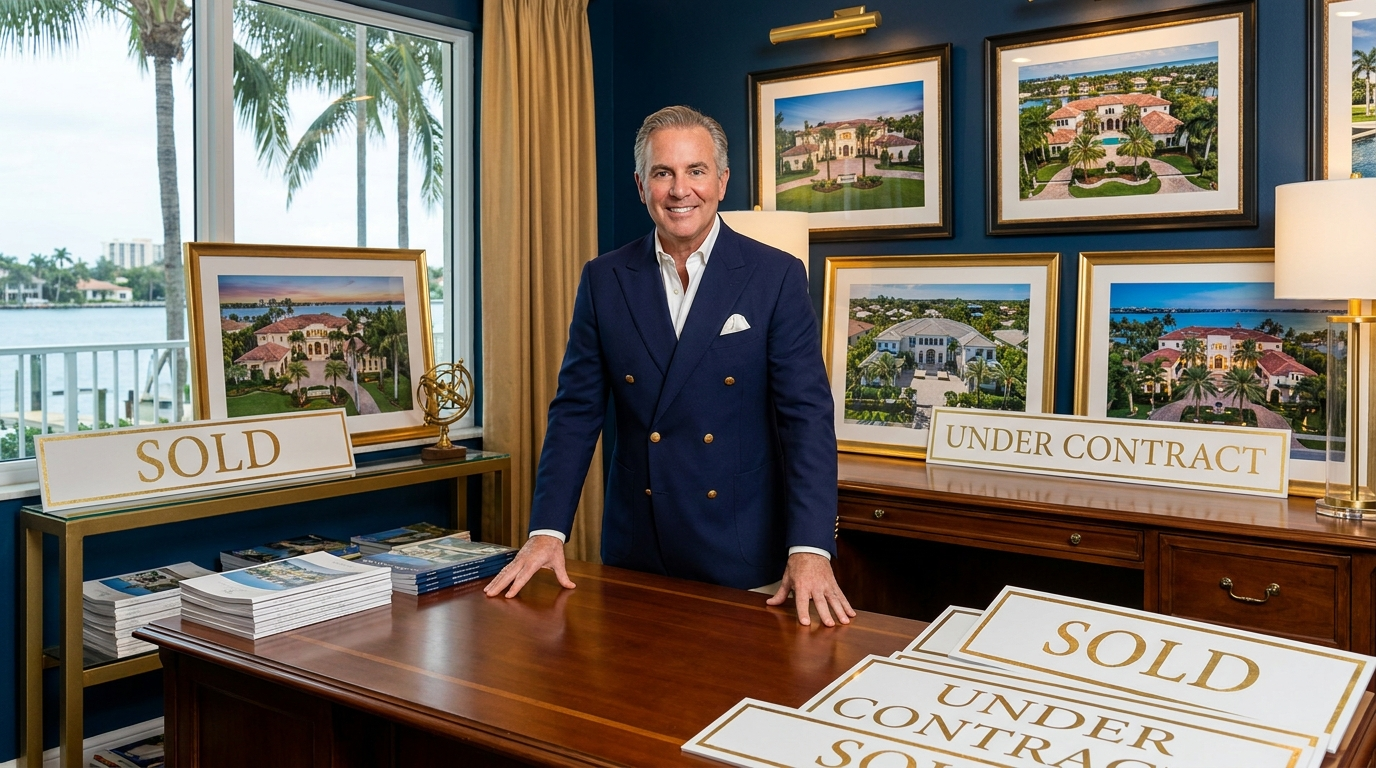
The decisions that separate rich agents from average ones
1. Pick a niche and own it
The fastest path to high earnings in South Florida real estate is becoming the clear expert in one specific area. "Luxury waterfront in Palm Beach County," "pre-construction condos in Brickell," "investment multifamily in Broward," "relocation buyers from New York and New Jersey." These are all defensible positions that generate referrals and repeat business. Generalists compete on price. Specialists command a premium.
2. Build your database obsessively
Rich agents treat their CRM like a business asset, because it is one. Every person you meet is a potential client or referral source. Agents doing 50-plus transactions a year almost always have a database of 2,000 or more contacts they communicate with regularly. If you are not building your database every day, you are building someone else's business.
3. Learn to generate leads, not just service them
Waiting for referrals is a slow path. Rich agents invest in lead generation: paid channels like Google ads, Zillow Premier Agent, and direct mail, or organic approaches like social media content, SEO, and neighborhood farming. The goal is to control deal flow, not wait for it.
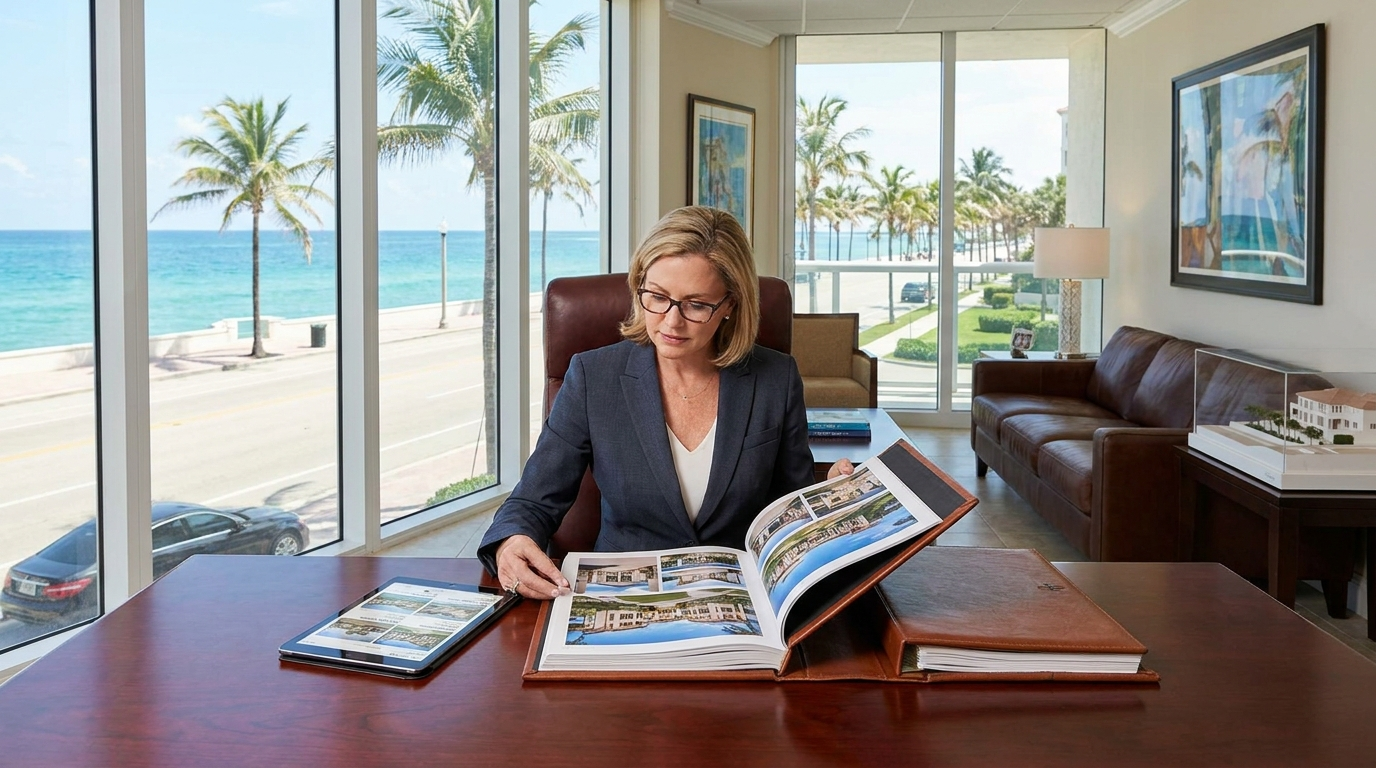
4. Build a team as soon as you can afford to
An individual agent is capped at roughly 30 to 40 transactions per year before quality and health suffer. A team of 3 to 4 agents, a transaction coordinator, and an assistant can close 100-plus transactions annually. Rich agents build teams. Average agents stay solo and wonder why income has stalled.
5. Invest your own commissions in real estate
The wealthiest real estate agents in South Florida are not just earning commissions. They are also building their own portfolio. Use your market knowledge and deal flow to buy investment properties. Use our Rental Property ROI Calculator and Fix & Flip Calculator to evaluate opportunities before you buy.
Timeline: what to expect year by year
- Year 1: License, join a team or a coaching-heavy brokerage, close 6 to 12 transactions, build database, invest in education
- Years 2 to 3: Develop a niche, build referral network, close 20 to 35 transactions, GCI $100,000 to $175,000
- Years 4 to 5: Launch your own team or move to a high-split independent structure, close 50-plus transactions, GCI $250,000+
- Year 5 and beyond: Scale the team, invest in your own portfolio, build leverage
If you are serious about building a real estate career in South Florida and want to talk strategy, reach out to our team. We have seen what works in this market, and what does not. For official licensing requirements in Florida, visit the Florida DBPR Real Estate Commission.
The number that gets quoted, and the number you keep
Agent income is almost always discussed as gross commission income, and that figure is close to meaningless on its own. Work it through once and the career becomes much easier to plan.
Take twelve closings a year at the current Palm Beach County median of $480,000. At a three percent listing side commission that is $172,800 of gross commission income, which sounds like a strong living.
Now apply the deductions in order. A seventy thirty split with your broker leaves $120,960. Self employment tax, which you pay in full because you are not an employee, takes roughly fifteen percent before income tax. Board and association dues, multiple listing service fees, errors and omissions insurance, marketing, photography, signage, a vehicle and continuing education realistically absorb $15,000 to $25,000.
What remains is somewhere near $75,000 to $85,000 before income tax. That is a respectable income for twelve transactions, and it is less than half the headline.
Why the first year is the hard one
Costs start immediately and income does not. You pay for licensing, board membership, insurance and marketing from the first month, while a transaction started today may not fund for sixty days or more.
Plan for six to twelve months of living expenses before the business supports you. The agents who fail are rarely bad at the work. They run out of money before the pipeline matures, which is a financing problem rather than a talent problem.
Listings are the leverage
Buyer work is linear. You drive, you show, you write offers, and each transaction consumes a fixed amount of your time that you cannot compress much.
Listings behave differently. A listing markets itself while you sleep, generates enquiries that become buyer clients, and can be run in parallel with other listings. Ten listings is a workload. Ten buyers is a schedule.
That is the real reason experienced agents drift toward seller representation. A seller focused business compounds, while a buyer focused one plateaus at the limit of your calendar.
The database is the asset
Most agents chase new leads while neglecting the people who already know them. Past clients and their circles generate repeat and referral business at a fraction of the acquisition cost of a cold lead.
Contact them consistently and usefully rather than seasonally and promotionally. A note about what their neighbour's house actually closed for is worth more than a calendar magnet. It is information they cannot get elsewhere, and it demonstrates you still watch their market.
Where agents genuinely build wealth
Very few agents become wealthy purely on commission, because commission stops the moment you do. The ones who build lasting wealth almost always convert income into ownership.
You have two advantages there. You see inventory before the public and you understand local value at a level most buyers never reach. Buying one property every few years with money that would otherwise have been spent is the pattern that separates a good income from an actual balance sheet.
A realistic timeline
- Year one. Learn the market, build the database, expect to lose money. Success is closing anything at all.
- Years two and three. Referrals begin. Income becomes irregular rather than absent, and the first listings arrive.
- Years four and five. The database carries a meaningful share of the business, and negotiating a better split becomes possible because you have production to point at.
- Beyond. Either you specialise deeply, or you add people and become a manager. Both work, and they are different jobs.
Where new agents actually find their first clients
Nearly every new agent starts by asking where leads come from, and the honest answer is that the first several come from people who already know you.
Tell everyone you know that you are licensed, specifically and individually rather than through a single social post. Then pick one repeatable activity and do it consistently for six months, whether that is open houses, a farm area, or working expired and withdrawn listings. Consistency beats variety here, because most lead sources only work once people have seen you several times.
Open houses remain the cheapest source of buyer contacts for someone with no database, and they put you in front of neighbours who may sell later. Treat every visitor as a potential future seller rather than a buyer for that house, and the arithmetic changes completely.
More common questions
How many transactions do I need to live on?
Work backwards from your own costs rather than a national figure. At the Palm Beach median with a seventy thirty split, ten to twelve closings is a reasonable target for a solid full time income.
Is a better split the fastest way to earn more?
Rarely at the start. Moving from a seventy to an eighty split on six closings is worth far less than getting to twelve closings, and a strong brokerage that generates business is often worth the lower split.
Do I need to spend heavily on advertising to grow?
Not at the start. Paid leads convert poorly for agents with no follow up system, and they are an expensive way to learn that lesson. Spend on consistent contact with people who already know you before spending on strangers.
Should I specialise immediately?
Choose a geography first and a property type second. Knowing one set of neighbourhoods properly beats knowing eight counties vaguely, and it is the fastest route to being genuinely useful.


