

How to Become an REO Listing Agent in Florida (2026 Guide)
June 9, 2026 · 6 min read · By Onias Derilus, Broker
REO listing agents represent banks and lenders selling foreclosed properties. It's a specialized niche with consistent deal flow, here's how to get started in South Florida and what to expect.
An REO listing agent (short for Real Estate Owned) represents banks, lenders, and asset management companies when they need to sell foreclosed properties. It's a distinct niche from traditional residential real estate, with its own processes, clients, and income model. In South Florida, where foreclosure inventory has historically been significant, it can be a highly consistent revenue stream.
What does an REO listing agent do?
When a lender forecloses on a property and takes ownership, they need someone to manage and sell it. That's the REO listing agent's job. Responsibilities typically include:
- Conducting a Broker Price Opinion (BPO), an informal appraisal of the property's value
- Overseeing property preservation: securing the home, coordinating cleanup, and handling basic repairs
- Listing and marketing the property on the MLS
- Managing offers and negotiations on behalf of the bank
- Coordinating inspections, title, and closing logistics
- Submitting detailed status reports to the asset manager
Unlike traditional listings, the "seller" is a corporate entity: a bank, servicer, or government agency. Decisions come from committees and asset managers, not individual homeowners. Expect more paperwork, slower decisions, and strict reporting requirements.
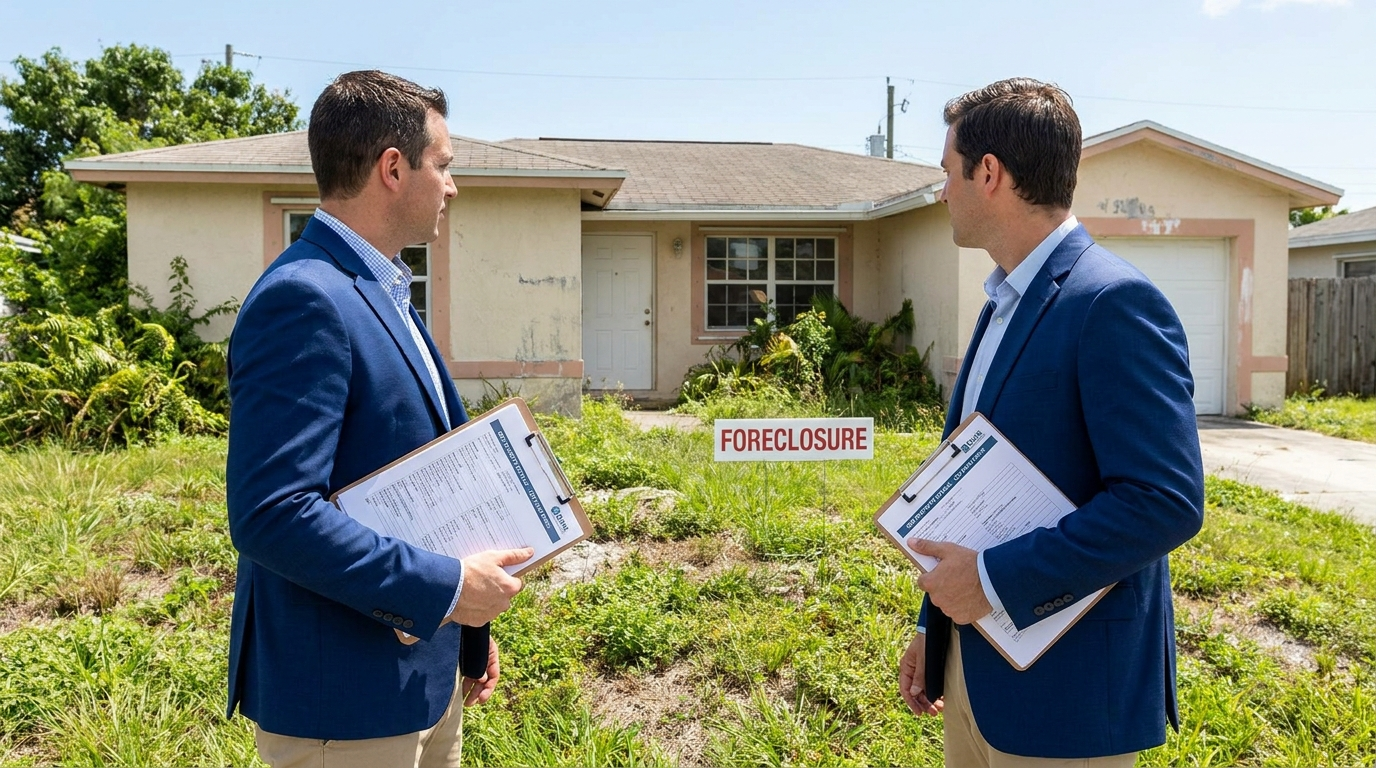
How to become an REO listing agent in Florida
Breaking into REO requires a different approach than traditional residential farming. Here's the path:
- Get your Florida real estate license and at least one to two years of active sales experience. Asset managers want agents who can handle the volume and complexity of REO without hand-holding.
- Complete BPO training. Broker Price Opinions are the entry point. Many agents start by doing BPOs for asset management companies to build a relationship and a track record before listings come their way.
- Register with asset management companies. The major REO assignment channels include Altisource, Ocwen, ServiceLink, Five Brothers, and Safeguard Properties. Each has an online agent registration portal.
- Register with government REO programs. HUD, Fannie Mae HomePath, and Freddie Mac HomeSteps all have agent registration programs. Getting approved takes time but unlocks consistent assignment flow.
- Build relationships with local servicers. Smaller regional banks and credit unions in Palm Beach and Broward counties often assign REO directly to local agents they know and trust.
Is REO worth it for South Florida agents?
The honest answer depends on the market cycle. During the 2008 to 2012 foreclosure wave, REO agents in South Florida were closing 5 to 15 properties per month. In a low-foreclosure environment, the volume is lower but still meaningful.
The advantages of REO: consistent deal flow, no prospecting for individual sellers, and repeat business from the same asset managers. The downsides are lower commission rates (often 2 to 3 percent versus the typical 3 percent), significant administrative burden, and slow-moving corporate decision-making.

REO for investors vs. agents
If you're an investor rather than an agent, REO listings are a reliable source of below-market deals. Bank-owned properties are priced to sell, not to maximize value. Use our 70 percent rule to evaluate whether an REO deal pencils out before you make an offer.
Whether you're pursuing REO as an agent or as a buyer, our team can help you navigate the South Florida landscape. Reach out here. For more on the official HUD REO process, see HUD Homes buyer resources.
Looking for REO listings in South Florida? Our team works with bank-owned and foreclosure properties across Palm Beach, Broward, and Miami-Dade counties. Contact us to get current inventory or to discuss working as a buyer's agent on REO transactions.
Frequently asked questions
How is an REO listing agent different from a traditional listing agent?
A traditional listing agent works for an individual homeowner. An REO listing agent works for a bank or government entity that has taken ownership of a property through foreclosure. The paperwork, decision timelines, and reporting requirements are considerably more complex on the REO side.
Do REO agents make good money?
It depends on volume. Commission rates per transaction are often lower than standard residential deals, but REO agents can close far more transactions per month. In active foreclosure markets, the volume more than offsets the lower per-deal rate.
Can any licensed Florida agent become an REO listing agent?
Any licensed agent can pursue REO work, but asset management companies typically require at least one to two years of experience and a track record with BPOs before assigning listings. Starting with BPO work is the most practical path in.
Are REO properties a good deal for buyers?
Often yes. Banks are motivated sellers and price REO properties to move quickly. That said, properties are typically sold as-is, so buyers need to do thorough due diligence. Working with an agent who knows the local REO market is important.
What buying from an REO seller is actually like
Most coverage of this topic is written for agents seeking the work. The larger audience is buyers wondering whether an REO purchase is a good idea, and the honest answer starts with what the seller is like to deal with.
The seller is an institution rather than a person. Nobody has lived in the property, so there is generally no disclosure of its history in the way an ordinary seller provides, and decisions move through a process rather than a conversation.
That produces a specific transaction shape. Responses take longer, the seller's own addendum usually overrides parts of the standard contract, and there is far less flexibility on terms. Expect the property strictly as is, and expect requests for repairs to be declined as a matter of policy rather than negotiation.
Where the risk sits for a buyer
The discount on these properties is real and so are the reasons for it.
Condition is the first. A property that sat vacant may have plumbing that was never winterised, an air conditioning system that has not run in a year, or damage from the previous occupant. Utilities may need restoring simply to inspect it properly, and that is worth arranging rather than skipping.
Association arrears are the second and they catch people out in Florida. Unpaid association dues can follow the unit, and while there are statutory provisions affecting what a lender acquiring title owes, a buyer needs to establish exactly what is owed and who pays it before closing rather than after.
Then check for open permits and code enforcement liens, both of which attach to the property and become yours.
Inspect harder, not less
The temptation with an as is purchase is to skip inspection because the seller will not fix anything. That reverses the logic. You inspect precisely because nobody will fix anything, so you need to know what you are buying.
Use the inspection to decide whether to proceed and at what price, not to generate a repair list. Get the utilities on, have the roof and air conditioning assessed specifically, and price the work before your inspection period closes.
For agents, the economics are different from a normal listing
REO work is a volume business with an administrative load that ordinary listings do not carry. Property preservation, occupancy checks, utility management, monthly reporting and platform compliance all sit with the listing agent, and asset managers work to their own timelines and systems.
Commission per transaction is frequently lower than on a conventional listing, so the model only works at volume. Registration with asset management companies and platforms takes time and produces nothing until assignments start arriving, which can be many months.
It also depends on inventory that varies with the credit cycle. Building a practice around it means accepting that the pipeline is outside your control in a way a normal listing business is not.
How this compares with the tax deed route
Buyers looking for distressed opportunities often weigh these against tax deed purchases, and they are very different transactions.
An REO purchase is an ordinary sale with an institutional seller. You get title insurance, a conventional closing and the ability to finance. A tax deed purchase gives you a deed that is generally not insurable without a quiet title action, no inspection, and possible occupants.
So the REO route is considerably safer and correspondingly less discounted. Which suits you depends on your tolerance for legal work and delay rather than on which produces a better headline price.
More common questions
Are REO properties genuinely cheaper?
Often somewhat, and less than people expect, because institutions price against comparable sales. The discount usually reflects condition and the as is terms rather than a seller who does not know the value.
Can I finance an REO purchase?
Generally yes, unlike a tax deed. Condition can affect which loan products are available, so discuss the property with your lender early.
Should a new agent pursue REO work?
It is a poor first specialism. The administrative burden is high, the per transaction commission is lower, and assignments take time to arrive.


