Real Estate Investment
How Much Does an Acre of Land Cost in Florida? (2026 Guide)
June 19, 2026 · 8 min read · By Pure Equity Realty
From rural pasture to prime coastal lots, Florida land prices swing wildly. Here's what an acre really costs in 2026, by county, by land type, and why.
So what's an acre of land actually worth in Florida? It depends, and the range is huge. The same single acre can trade for under $2,000 as rough pasture in the interior, or several million dollars as a buildable lot in a coastal city. Location, zoning, and access decide most of it.
This guide breaks down the real numbers for 2026: statewide benchmarks, a South Florida county snapshot, and the factors that move the price per acre in Florida up or down. Whether you're banking raw land or hunting a homesite, here's how to read the market.
Key Takeaways
- U.S. farm real estate averaged $4,350/acre in 2025, up 4.3% year over year (USDA NASS, 2025).
- Florida's irrigated cropland runs about $12,400/acre, roughly double the national cropland average (USDA via DTN, 2025).
- South Florida land sales hit a six-year high of $7.2 billion in 2025 (Miami Realtors, 2026).
- Rural inland acreage sells for a small fraction of coastal land, where prime lots top $1,000 per square foot.
How much does an acre of land cost in Florida?
In 2025, U.S. farm real estate averaged $4,350 per acre, up 4.3% from a year earlier (USDA NASS Land Values, 2025). Florida sits above that line: the state's irrigated cropland averaged about $12,400 per acre, roughly twice the national cropland figure of $5,830 (USDA via DTN, 2025).
Raw grazing land sits at the floor. U.S. pastureland averaged just $1,920 per acre in 2025. Move toward the coast, add zoning for homes, and the number climbs into the millions per acre. So there's no single "Florida price." Land values sit on a ladder, and where a parcel falls depends on what it can become.
The spread is that wide because an acre of cattle pasture and an acre of buildable beachfront are completely different products. They happen to share a unit of measurement.
What does land cost by Florida county?
Across South Florida, land sales reached a six-year high of $7.2 billion in 2025, up 7% year over year (Miami Realtors, 2026). The momentum wasn't evenly spread: Miami-Dade land sales jumped 62% to $2.1 billion, while Martin County fell 22%.
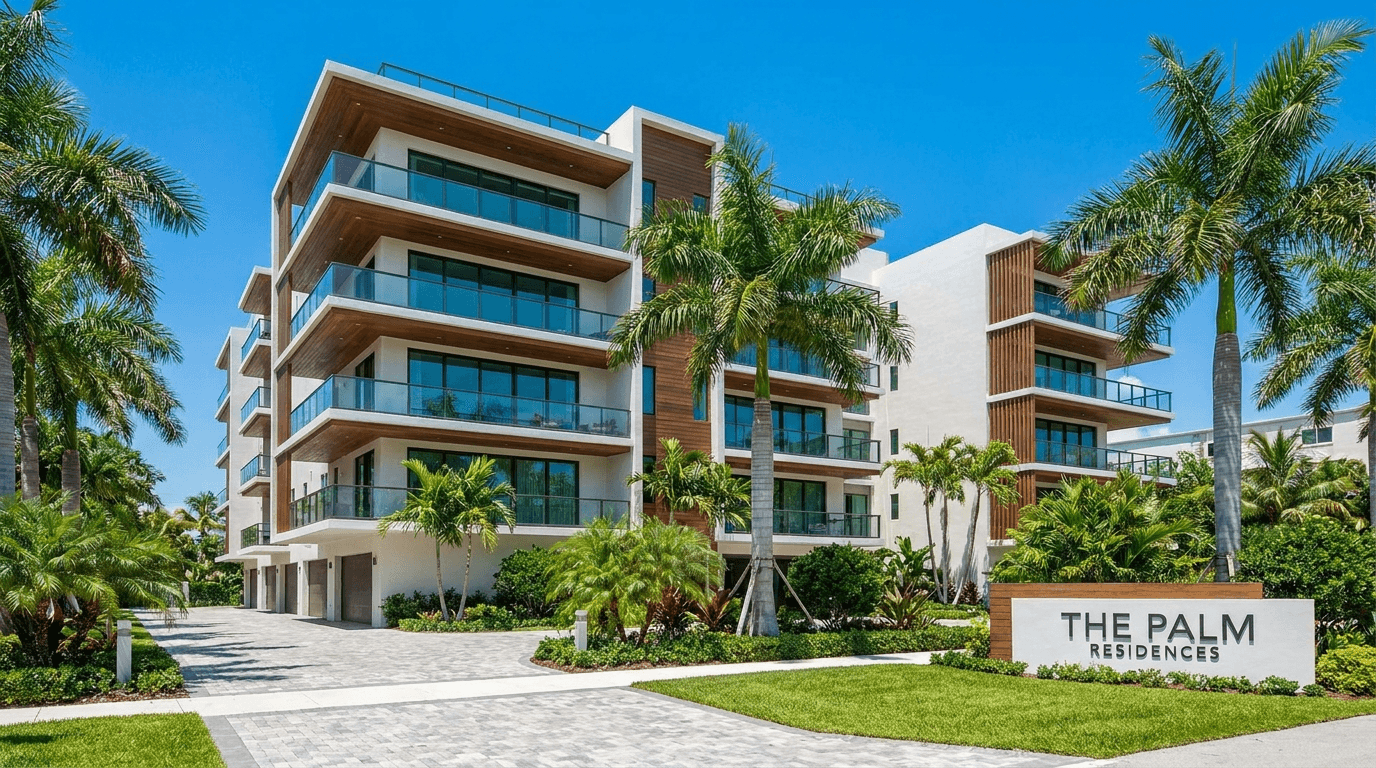
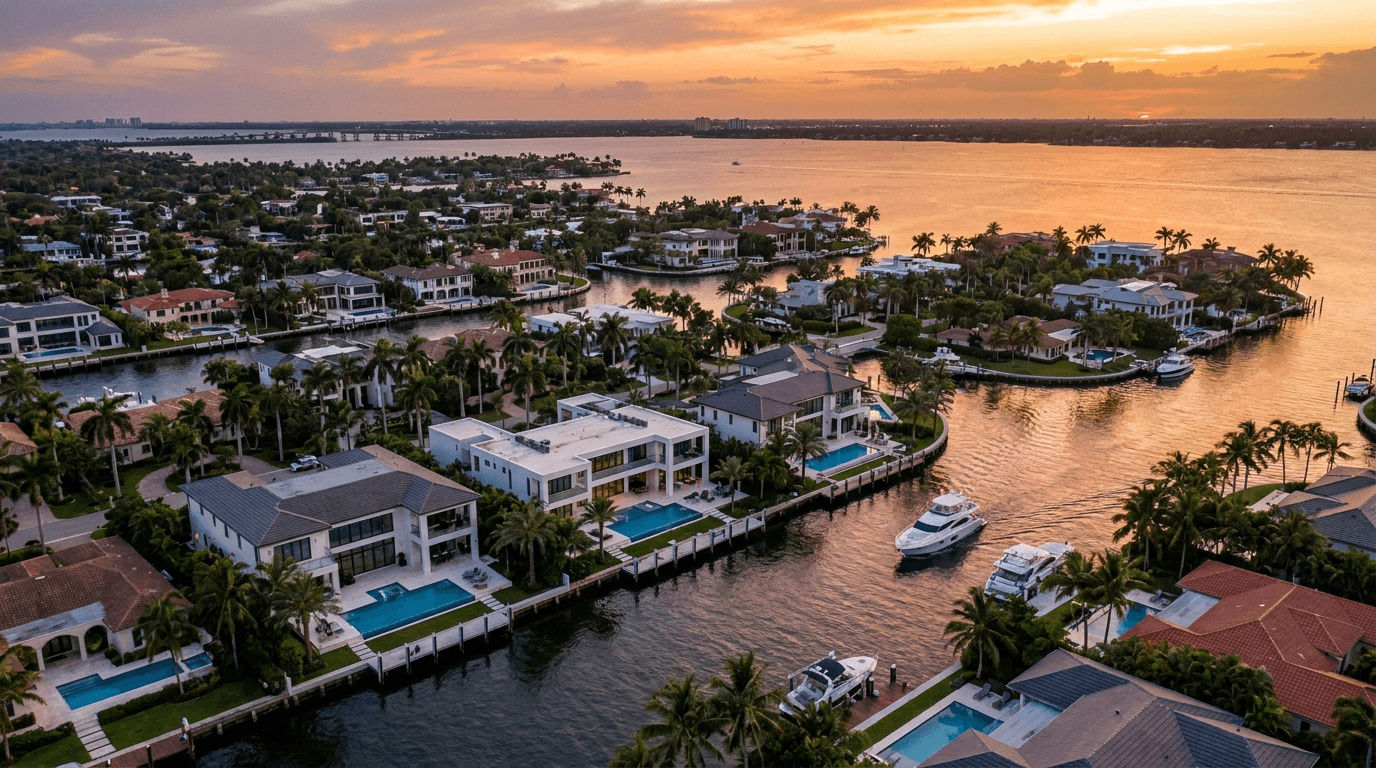
On a per-square-foot basis, the region's median residential land price reached $101 in 2025, about 14 times its 2019 level of $7 (Miami Realtors, 2026). In the town of Palm Beach, land traded at $1,056 per square foot. That's roughly $4.4 million for a single buildable acre.
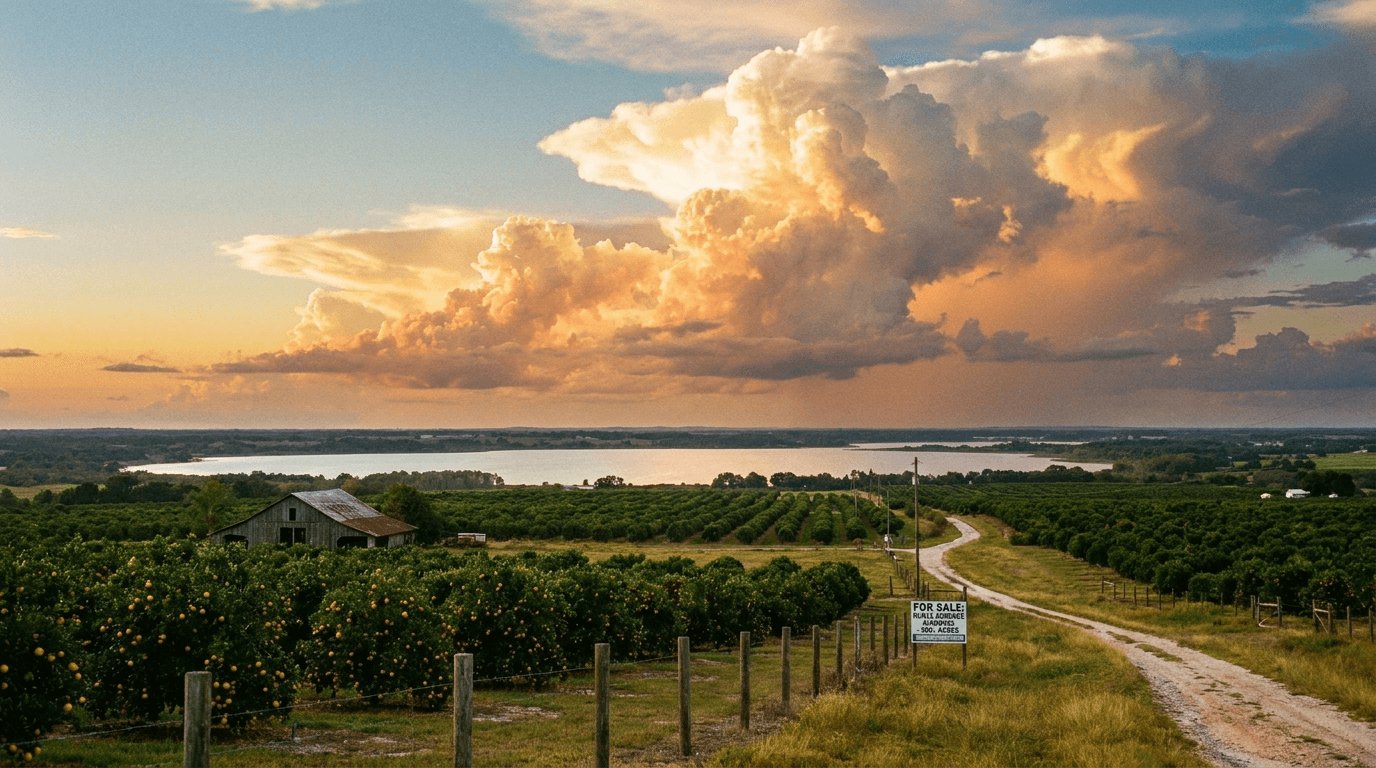
Head inland and the math inverts. In our own deals across Highlands County and Okeechobee County, raw acreage trades for a small fraction of coastal pricing, often a few thousand dollars per acre for large agricultural tracts. Reliable public per-acre medians for these rural counties are scarce, so work with an agent who tracks local closings directly.
Why does the price per acre vary so much?
Two acres can sit a mile apart and differ in price by 50 times. The reason is "highest and best use," meaning what the land can legally become. A parcel you can subdivide into homesites is worth far more than one zoned only for cattle.
Beyond zoning, five factors move value most:
- Utilities. City water and sewer at the road beat a future well and septic.
- Access. Paved, deeded road frontage outranks a dirt easement.
- Wetlands and flood zone. Wetlands shrink usable acreage and trigger reviews by the FDEP and the U.S. Army Corps of Engineers (Eshenbaugh Land Company). A "10-acre" parcel may have only three buildable acres.
- Entitlements. Land that's already permitted and platted commands a premium over raw dirt.
- Location. Proximity to jobs, schools, and the coast. It's the oldest rule in real estate.
That's why a farm or agricultural parcel and a development site carry such different price tags, even in the same county.
How does Greenbelt classification cut your carrying cost?
Florida's "Greenbelt" law can slash the taxes on qualifying land. Agricultural classification assesses property on its use value (what it earns in production) rather than its market or "highest and best use" value (Shutts & Bowen, 2026). For a large parcel, that can cut the taxable value sharply.
There's a catch. You have to apply, and the window is narrow: between January 1 and March 1 each year (Hillsborough County Property Appraiser). The land must be in bona fide agricultural use, such as cattle, timber, or citrus. If you're buying acreage to hold, this exemption is one of the biggest levers on your annual cost. Our farmland buyers factor it into every offer.
Are Florida land prices rising or falling in 2026?
It depends which signal you trust. The USDA's annual survey shows farmland still climbing, with U.S. cropland up 4.7% in 2025. But Farmer Mac's transaction-based Farmland Price Index tells a cooler story, slipping 6% to $7,592 per acre in mid-2025 (Farmer Mac, 2025).
The gap matters: survey data reflects how owners feel, while transaction indices reflect what buyers actually pay. Sentiment stays firm, but the buying frenzy has plateaued. In South Florida, coastal residential land kept rising (about 6% per square foot) while the broader market cooled from its pandemic pace.
For buyers, a plateau is good news. There's less competition and more room to negotiate than a year ago.
How do you buy Florida land at the right price?
Land is priced less transparently than houses, with fewer comps and more variables. That's exactly why a disciplined process pays off. This is how we coach land buyers.
- Verify the use, not the listing. Confirm zoning, allowable density, and any deed restrictions before you fall for the acreage.
- Check buildability. Pull the flood zone, wetland maps, and soil or percolation data. Usable acres, not total acres, set the value.
- Confirm access and utilities. Legal road access and a realistic utility plan can make or break a deal.
- Mind your financing. Banks rarely finance raw land cheaply, which is why owner-financing land is common. Budget for a larger down payment.
- Match budget to market. If coastal pricing is out of reach, affordable inland parcels often deliver more upside per dollar.
Start your search on our Florida land and lots hub, then let a specialist pull true comps for your target area.
Thinking about buying or selling land in Florida? Pure Equity Realty tracks closings across all eight counties we serve and can pull real comparable sales for any parcel. Talk to a land specialist for a no-obligation valuation.
Frequently asked questions
What is the average price per acre in Florida?
There's no single figure. USDA put 2025 U.S. farm real estate at $4,350 per acre and Florida's irrigated cropland near $12,400 per acre (USDA, 2025). Rural pasture can sell for under $2,000, while prime coastal lots exceed several million per acre.
Where is the cheapest land in Florida?
Inland, rural counties offer the lowest prices. Large agricultural tracts in Highlands, Okeechobee, and the interior often trade for a few thousand dollars per acre, a fraction of coastal Palm Beach or Miami-Dade. See our affordable land options.
Why is some Florida land so cheap?
A low price usually signals limits: wetlands, no utilities, poor road access, or zoning that blocks building. A "10-acre" wetland parcel may have only three usable acres. Always verify buildability before assuming a bargain.
Does agricultural land pay less tax in Florida?
Yes. Florida's Greenbelt classification assesses qualifying land on its agricultural use value, not market value, which can cut the tax bill sharply (Shutts & Bowen, 2026). Apply between January 1 and March 1.
The bottom line
The price per acre in Florida is a range, not a single number. It runs from rough pasture under $2,000 to coastal lots worth millions. Zoning, utilities, access, and water rights decide where a given parcel lands on that scale.
Know which type of land you're buying, verify what it can become, and price it against real local closings. Not sure how much ground an acre really is? See how big an acre is. For a deeper look at one of our favorite value markets, read why investors are eyeing Highlands County land, or browse land and lots across South Florida to start your search.
Sources
- USDA NASS, Land Values 2025 Summary (via American Farm Bureau & DTN/Progressive Farmer), August 2025.
- Miami Association of Realtors, "South Florida Land Sales Reach Six-Year High," May 2026.
- Farmer Mac, Q2 2025 Farmland Price Index Update, August 2025.
- Shutts & Bowen LLP, "Agricultural Classification of Land in Florida," 2026.
- Eshenbaugh Land Company, "How Wetlands Impact Land Value and Entitlements in Florida."
Figures retrieved June 19, 2026. Land values vary by parcel; consult a professional before buying.