

How to Get Started Flipping Houses in South Florida (Beginner's Guide)
June 9, 2026 · 7 min read · By Onias Derilus, Broker
Getting started flipping houses in South Florida requires more than YouTube education. Here's the real framework: how to find your first deal, avoid costly beginner mistakes, and build toward consistent profits.
If you want to know how to get started flipping houses in South Florida, the short answer is: learn the numbers first and work backward from there. This goal is one of the most common among local real estate investors, and also one of the most misunderstood. The reality is more demanding than most beginners expect, and more rewarding than most skeptics acknowledge. Here is what actually getting started looks like, step by step.
Step 1: Learn the numbers before you look at properties
The foundation of every profitable flip is the math. Before you tour a single property, you need to understand and internalize these formulas:
- ARV (After-Repair Value): what the property will sell for after renovation, based on comparable sales in the same neighborhood
- The 70% Rule: Maximum purchase price = (ARV x 0.70) minus Estimated Repair Costs. This leaves room for profit after all holding and selling costs.
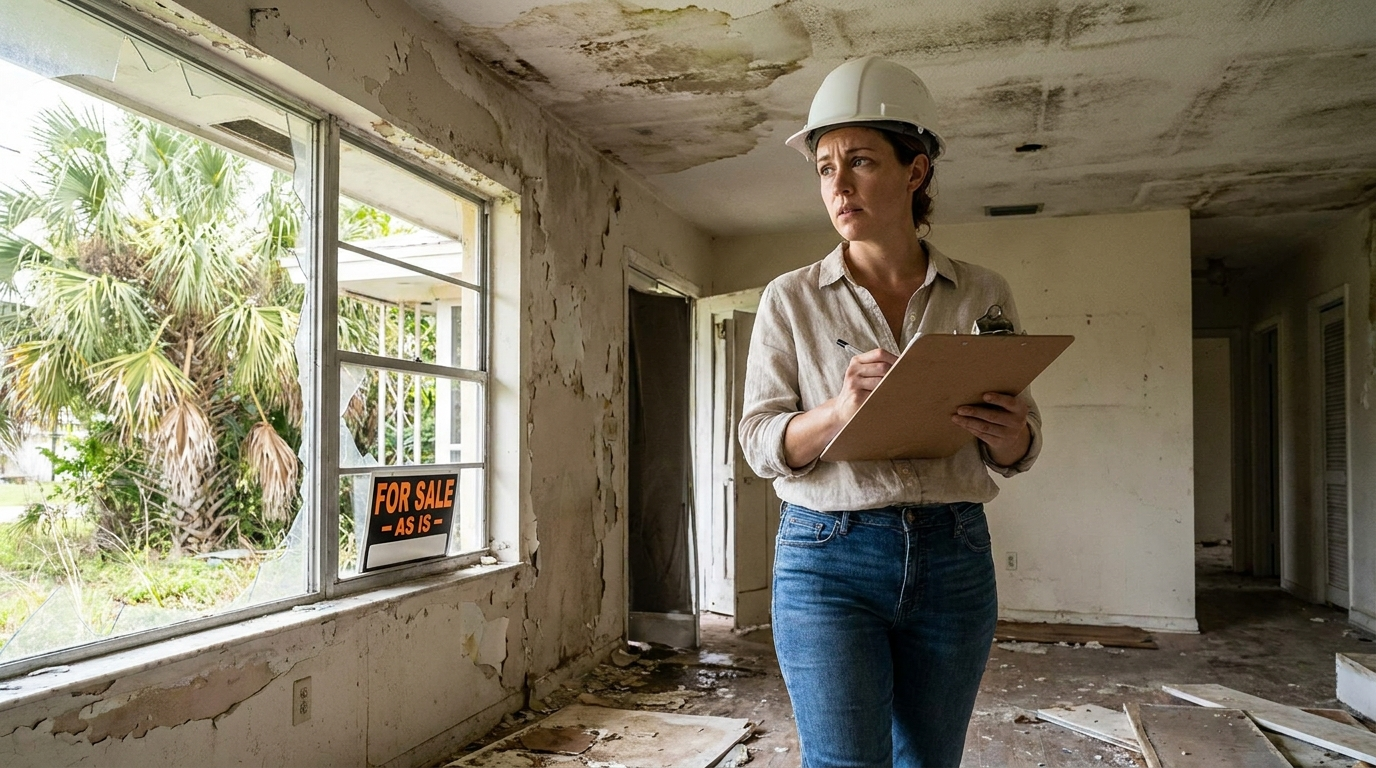
- Repair cost estimation: learn to estimate renovation costs per square foot for different scope levels (cosmetic, moderate, full gut). South Florida costs run higher than national averages.
- Carrying costs: financing, insurance, property taxes, utilities during the renovation period, typically 2 to 4 percent of purchase price per month
Use our Fix & Flip Calculator to run deal analysis before you commit to any property. If the numbers don't work in the calculator, they won't work in reality.
Step 2: Choose the right South Florida market
Not every South Florida submarket works equally well for flipping. The best flip markets have abundant distressed inventory, strong buyer demand at the renovated price point, and clear comparable sales to support your ARV. In 2026, the strongest South Florida flip markets include:
- Broward County: Lauderhill, North Lauderdale, Margate. Distressed 1960s to 1980s stock, strong demand from first-time buyers, comps support flip prices in the $350,000 to $480,000 range.
- Palm Beach County: West Palm Beach, Lake Worth, Riviera Beach. Improving neighborhoods with solid ARVs and available inventory.
- St. Lucie County: Port St. Lucie. More affordable entry point, growing market, good fit for newer flippers with limited capital.
Avoid overheated luxury markets for your first flip. A mistake on a $500,000 acquisition is far more damaging than a mistake on a $200,000 acquisition.
Step 3: Build your team before you close your first deal
Successful flipping is a team sport. Before you close on anything, you need:
- A licensed general contractor you've vetted (met on previous projects, checked references, seen their work)
- A hard money lender or other financing source pre-approved and ready to fund
- A real estate agent experienced with investor purchases and resales who can pull accurate comps
- A real estate attorney for contract review
- An insurance agent who can bind a renovation/vacant property policy quickly
The investors who get burned on their first flip almost always failed to build this team in advance. They found a deal before they had the infrastructure to execute it.
Step 4: Find your first deal
Deal sourcing is where most beginners struggle. The best deal sources for South Florida first-time flippers:
- The MLS: underrated by beginners. Distressed listings, estate sales, and stale listings with deferred maintenance are regularly available. Have your agent set up automated searches for keywords like "estate sale," "as-is," "needs TLC," and "investor special."
- Foreclosures and REOs: bank-owned properties through Hubzu, Auction.com, and direct bank channels
- Tax deed auctions: county auctions of properties with delinquent taxes, available through each South Florida county's tax collector website
- Wholesalers: once you have your buyer criteria established, get on local wholesale lists. You'll receive off-market deals, but analyze each one critically. Wholesale prices already include a margin for the wholesaler.
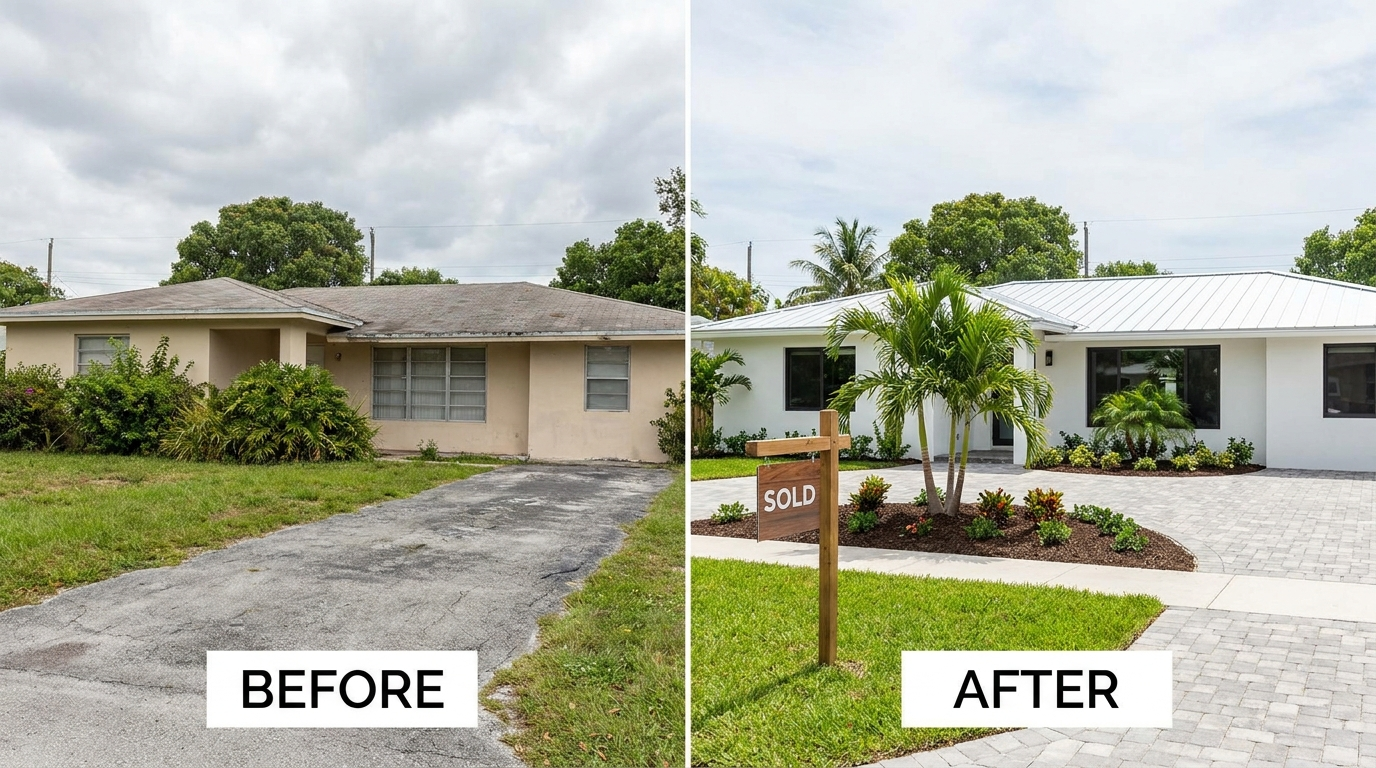
Your first deal should be a manageable cosmetic flip, not a full structural gut. Save the complex projects for after you've completed two or three successful flips. Our team works extensively with South Florida flippers. Connect with us to get plugged into deal flow and let us pull comps on every property you're considering. Also read our 70% rule guide before making your first offer.
Do this before you look at a single house
The first deal is where most of the money is lost, and almost always for reasons that had nothing to do with the house. Three things are worth settling first.
Know exactly how much capital you control, including the reserve you will not touch. Know what your money costs, whether that is hard money at around eleven percent or a partner taking a share. And know your market well enough to recognise a good price without needing anyone to confirm it.
That last item is the one people skip. Look at fifty closed sales in one neighbourhood before you make an offer anywhere. It takes a few evenings and it is the cheapest education available.
Pick one small area and learn it properly
Spreading a search across three counties feels like more opportunity and produces worse decisions. You cannot know what a street is worth if you are looking at forty of them.
Choose an area you can reach easily, since you will visit constantly during renovation. Then learn its price ceiling, its typical buyer, and how long homes there actually take to sell. Palm Beach County averages about 107 days and Highlands about 206, and your neighbourhood will have its own figure that matters more than either.
Build the team before you need it
The worst time to find a contractor is after you own a house that is costing you interest. Line these up first.
- A general contractor or two trusted trades. Get written quotes on a house you are not buying, purely to learn what work costs in your area.
- A lender who has funded renovations before. Ask about points, rate, draw schedule and how quickly they close.
- An agent who works with investors. Someone who can pull comparable closed sales quickly and tell you honestly when a deal does not work.
- An insurance agent. Vacant renovation coverage is a specific product and it costs more than a normal policy.
Make the first deal boring
Choose a cosmetic renovation in a neighbourhood with steady demand. Paint, flooring, kitchen, bathrooms and landscaping are predictable and can be quoted accurately.
Avoid structural work, additions, permit heavy projects and anything requiring a change of use on your first attempt. The goal is not to maximise profit on deal one. It is to complete a full cycle and learn where your estimates were wrong, while the cost of being wrong is small.
Underwrite it properly
Build the numbers from the bottom up rather than trusting a percentage rule. Take the realistic after repair value from closed sales, subtract renovation, buying costs, financing, holding and selling costs, and look at what remains.
Then stress it. Add thirty percent to the renovation, add three months to the timeline, and see whether the deal still works. If it only survives the optimistic version, it is not a deal, and walking away costs you nothing at this stage.
The honest alternatives
Flipping is an active business with real risk and a tax treatment that is generally less favourable than a long hold. It suits people who want a project and can absorb a bad outcome.
If what you actually want is exposure to property, a rental purchase is slower, calmer and considerably more forgiving of mistakes. Partnering on someone else's flip is another way to see a full cycle before risking your own capital. Neither is a failure of ambition, and both have made more people money than an underfunded first flip.
Decide the exit before you buy
Every first deal needs a plan for the version where it does not sell quickly. Interest and holding costs do not pause while you decide what to do.
The usual fallback is renting it. That works only if the rent covers the debt service on whatever financing you would refinance into, so check that figure before you buy rather than discovering it in month eight. Where the numbers do not support a rental, your fallback is a price reduction, and knowing in advance how far you can go before the deal turns negative is what keeps the decision calm.
More common questions
How much money do I need to start?
Enough for the down payment, the entire renovation budget, six months of holding costs and a reserve for overruns. Borrowing the renovation budget and hoping is the most common way first deals fail.
Should I live in it while I renovate?
It cuts holding costs and it lengthens the project, since you are living in a building site. It can also change the tax treatment, so take advice before assuming either way.
Can you help me find a first project?
Yes, and the more useful help is often telling you which ones to skip. We can pull comparable closed sales and realistic days on market for any neighbourhood in the eight counties we serve.


